

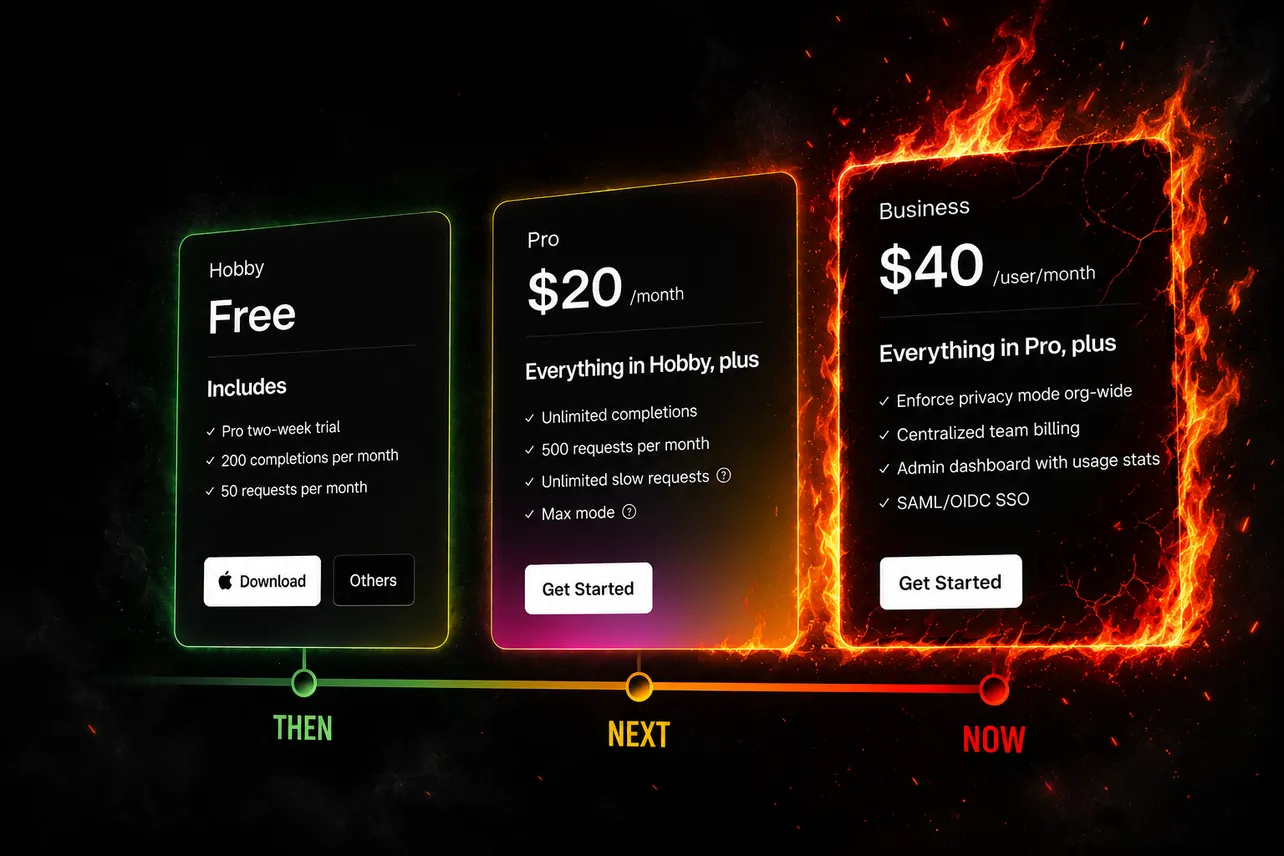
We've covered Cursor's pricing story before. This is a sourced and in-depth timeline version, built to document just how close the company came to losing the developer community that built it.
If you've found your way here, you're probably one of three people.
You're a Cursor user trying to understand why your bill exploded, why your plan changed, or why the rules seem to shift every few months. You're a developer evaluating whether to commit to Cursor as your primary coding tool.
Or you're a founder building something with usage-based pricing and you want to understand how the most prominent AI dev tool of 2025 managed to alienate its most loyal customers.
This piece is for all three.
It's a chronological record of every major pricing controversy at Cursor from the breakout months of 2025 through to today, assembled from public Reddit threads, X posts, Hacker News discussions, the company's own changelog, and contemporaneous reporting.
Where I'm uncertain about a specific detail, I say so. Where I'm citing a community post, I link it. This is not a hit piece.
Cursor is a genuinely impressive company that built one of the fastest-growing developer tools in history. The pricing story matters precisely because the product is so good. Watching a company this talented stumble this consistently on one specific axis is instructive in a way that watching a mediocre company stumble isn't.
The pre-disaster baseline: what Cursor's pricing looked like before things went sideways
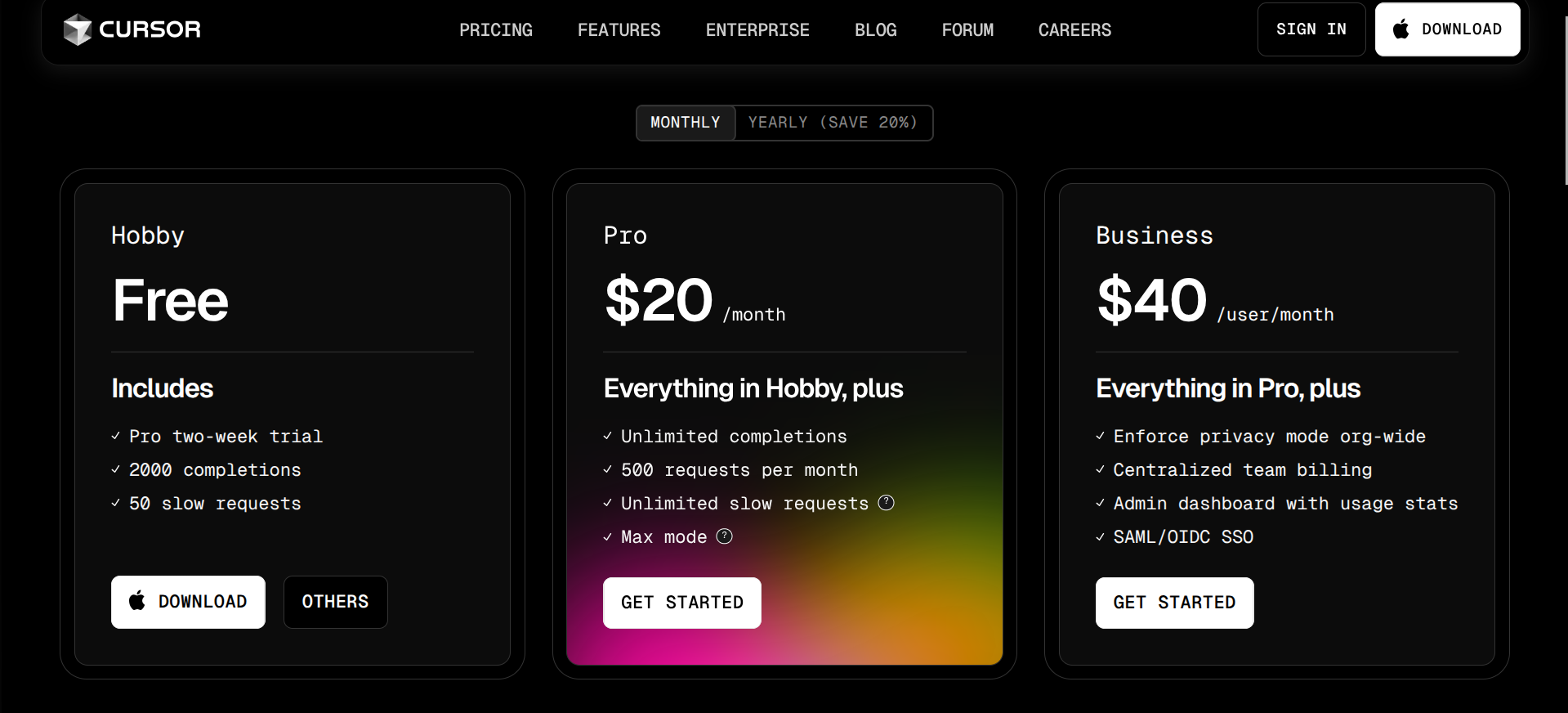
To understand what changed, you have to understand what was working.
For most of late 2024 and early 2025, Cursor's pricing structure was widely considered one of the most generous in the AI tooling category. The Pro plan sat at $20/month and gave users a substantial monthly allocation of fast premium model requests, with slower but unlimited fallback usage when that allocation was exhausted.
The Business plan added team features and higher limits.
The model that made this work was simple. Cursor was effectively subsidising premium model usage to drive adoption, betting that the lifetime value of a developer who switched to Cursor would dwarf the per-request costs Anthropic and OpenAI were charging for API access.
And for a while, the bet looked obviously correct. Cursor's ARR rocketed from near-zero to a reported $100M in 12 months, then through $200M and beyond as the developer community embraced it as the default AI coding tool.
The trouble was structural and visible to anyone paying attention. Cursor's underlying costs scaled with usage. As power users got more deeply embedded in the product, their per-user costs to Cursor climbed. Anthropic in particular shipped Claude Sonnet 3.5, then 3.7, then Claude 4, with each release more capable and more expensive per token.
Cursor was paying those rising costs while charging users a flat subscription. The economics were always going to require an adjustment. The question was never whether Cursor would change its pricing. It was how, and how well-communicated the change would be.
Incident one: the June 2025 plan change
The first major incident happened in June 2025 when Cursor introduced changes to how the Pro plan worked. The specifics involved the introduction of "usage-based pricing" on premium models beyond a certain allocation, with the threshold structured differently than previous versions of the plan.
The community response was immediate and angry, and it focused on three things.
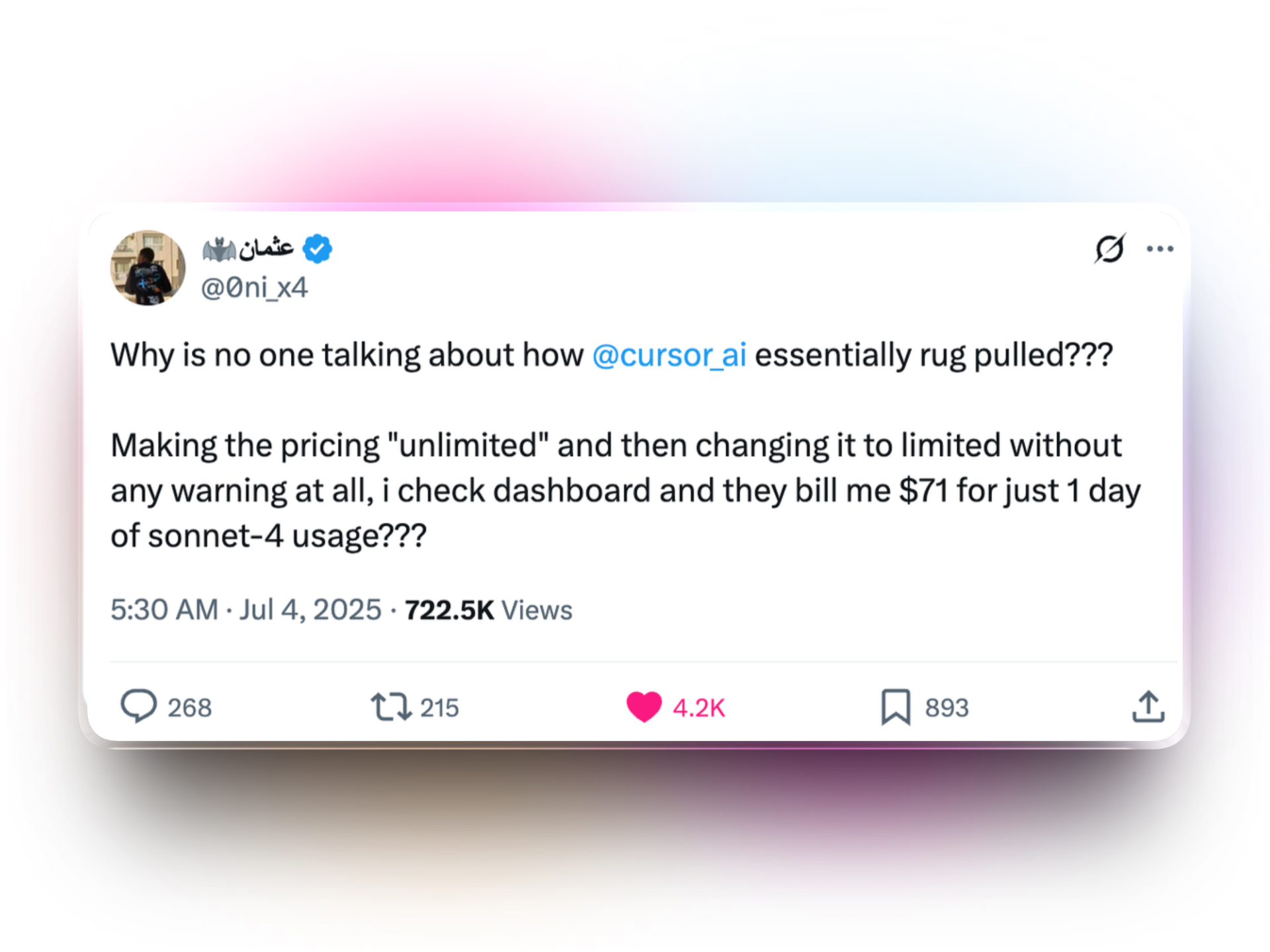
First, the change was widely perceived as having been communicated poorly. Users reported logging in to find their plan had effectively changed without clear advance notice, or that the new terms were buried in documentation rather than communicated directly via email or in-app notification.
Second, the new structure meant that some workflows that had been comfortably within the Pro plan limits suddenly weren't. Developers who'd built habits around using Cursor for large refactoring tasks, multi-file edits, or long-context conversations found those workflows now triggered overage charges they hadn't expected.
Third, and most damning, several high-profile users posted receipts showing daily charges of $10 to $20 that they hadn't anticipated. One widely-shared thread documented a team whose $7,000 annual subscription was depleted in a single day of normal usage.
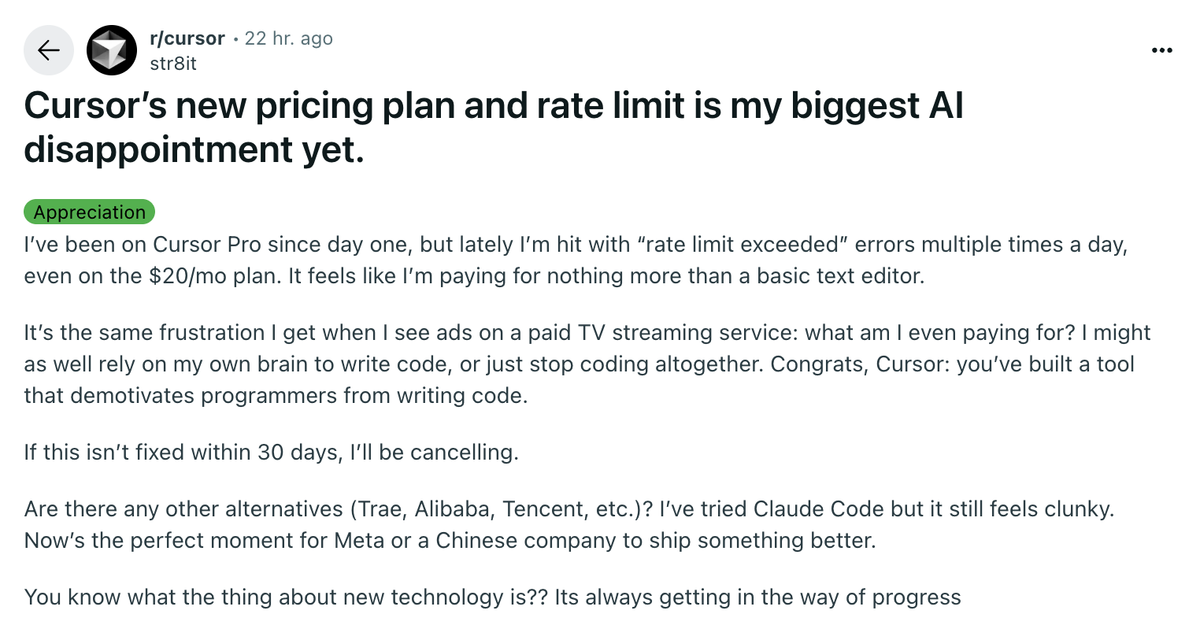
Cursor's initial response was, by most accounts, defensive.
The company pointed to its terms of service and the fact that usage-based pricing had been clearly described in the new plan documentation. Founder Michael Truell eventually posted on X acknowledging the rollout had been handled poorly and committing to clearer communication going forward.
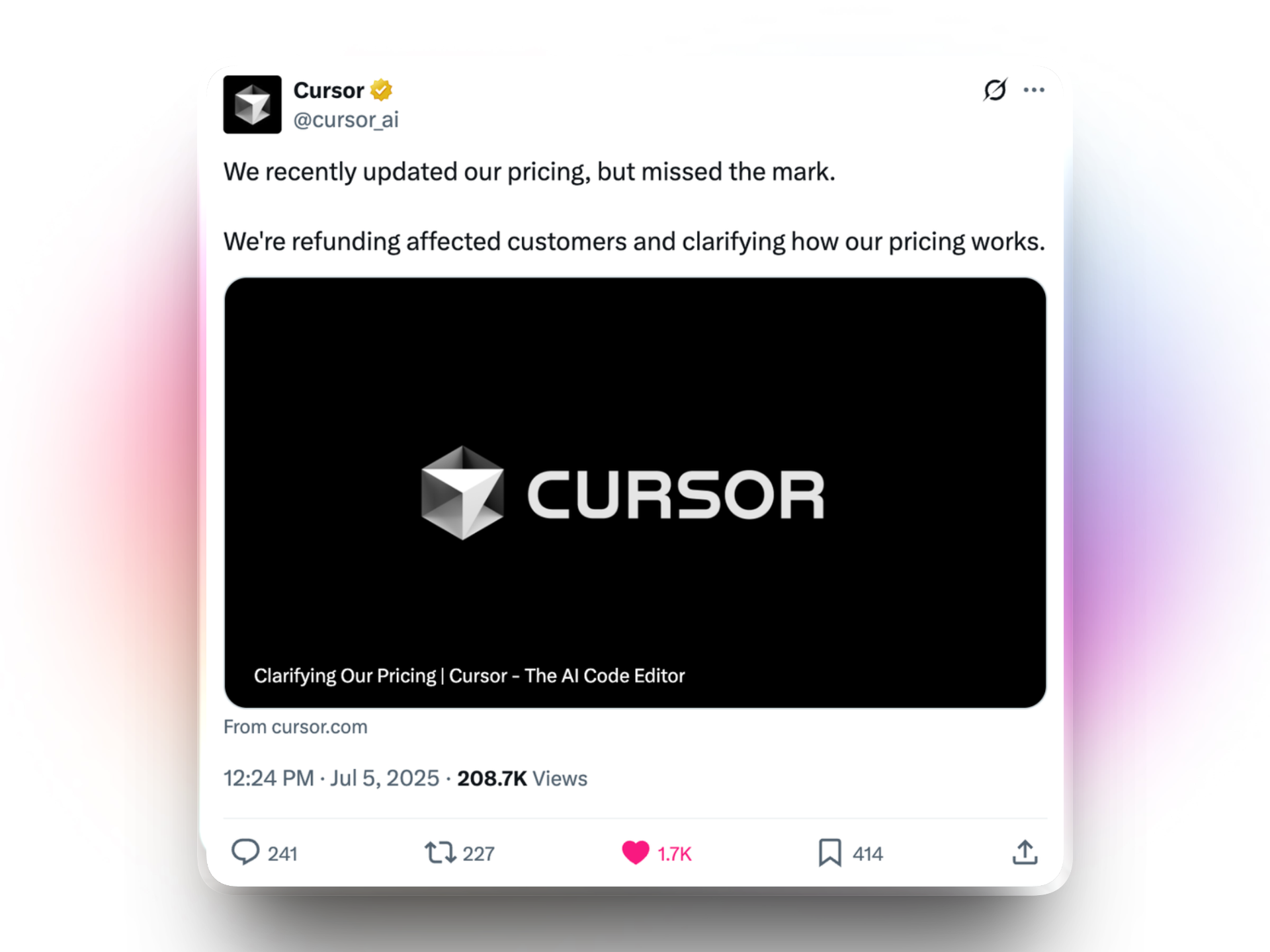
The fix that emerged over the following days included specific remediation: spend limits being made easier to set, refunds for the most egregious cases, and clarifications to the pricing page.
Incident two: auto-mode and the invisible billing problem
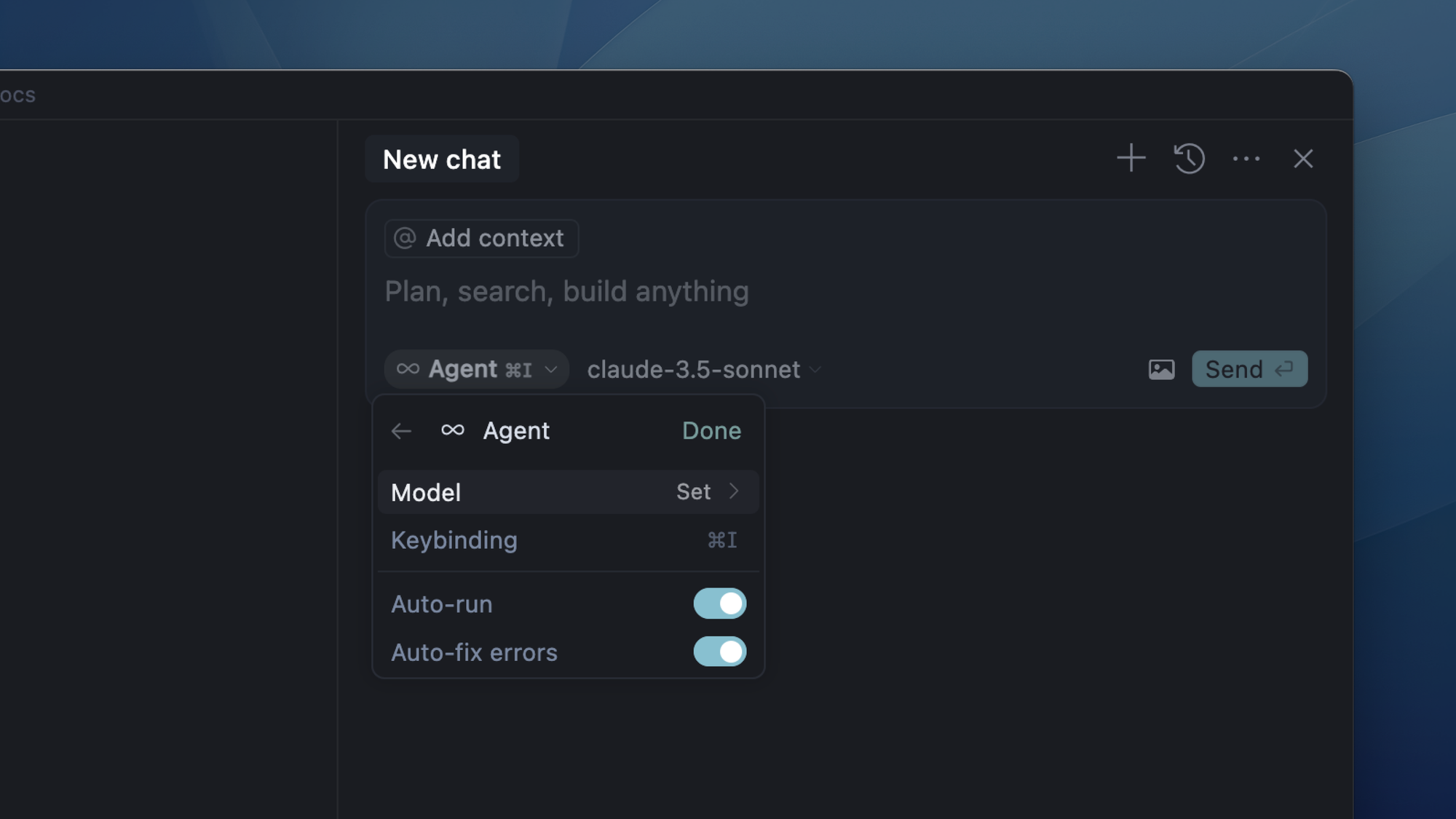
If the first incident was about poorly-communicated plan changes, the second was about a product feature whose billing implications weren't visible to users.
Cursor introduced an "auto" mode for model selection which would intelligently route requests to different models based on the complexity of the task. The pitch was sensible: simpler requests would use cheaper, faster models, while complex requests would route to premium options.
The problem was that for users on usage-based plans, the auto-mode decisions had direct billing implications. A user who thought they were getting cheap model usage for everything could find that auto-mode had quietly upgraded them to expensive model usage for tasks the system judged complex enough to warrant it.
This wasn't deceptive in any technical sense.
The behaviour was documented. But it created a category of billing surprise where users were paying premium rates for decisions made by Cursor's routing system rather than decisions they'd explicitly made themselves.
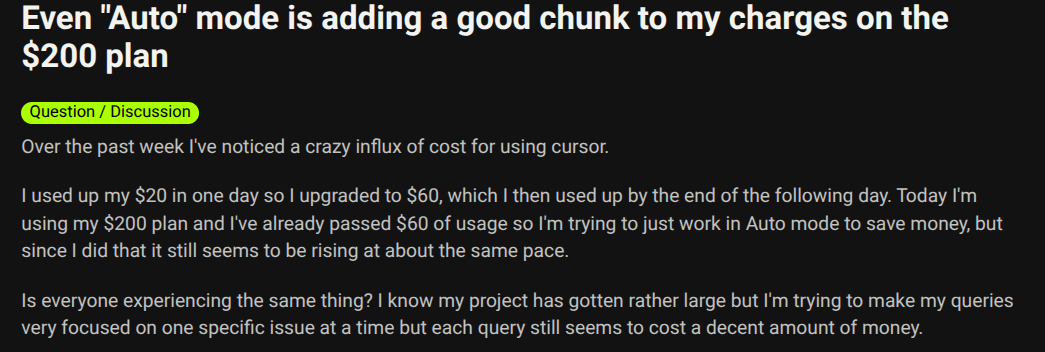
The community's frustration this time focused less on the dollar amounts and more on the principle.
Cursor adjusted the auto-mode interface over subsequent updates to make the billing implications more visible, but the trust damage from the incident lingered through to the autumn.
Incident three: the rate limit reset that broke workflows
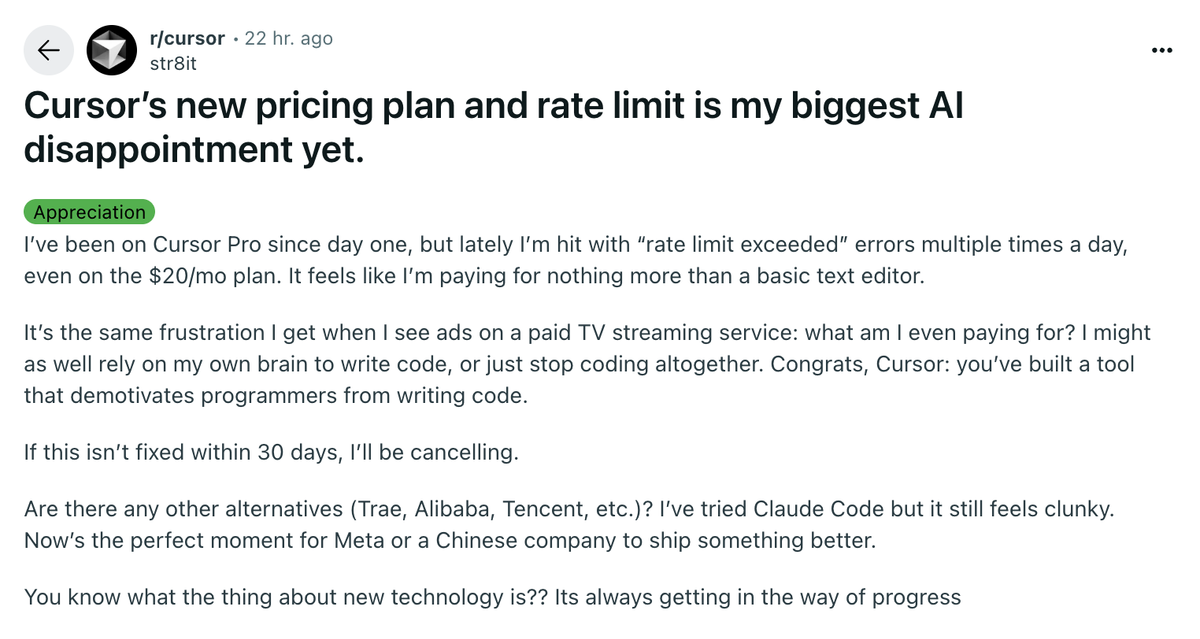
By the autumn of 2025, Cursor's pricing structure had been iterated multiple times in response to the earlier controversies. What emerged was a more transparent but more restrictive set of limits, including specific rate caps on premium model requests.
The third major incident came when Cursor adjusted the rate limit reset window from monthly to a different cadence, or introduced rate limits on a model tier that had previously been uncapped. The specifics matter and I'm not confident on the exact mechanism without checking primary sources.
What's clear from community reaction is that the change broke workflows for the heaviest users. Power users who'd built their daily work around Cursor's capabilities found themselves hitting limits earlier in the day or in the month, with implications for how they could use the tool productively.
The community response by this point had settled into a pattern.
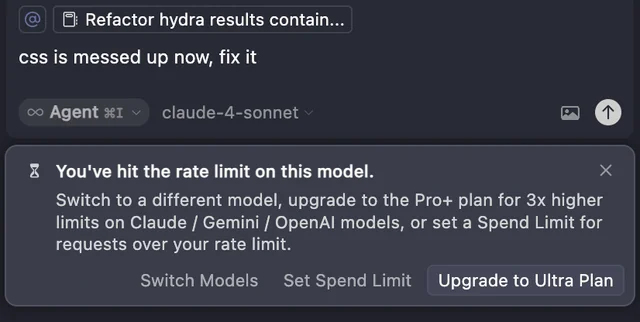
Power users threatening to migrate to alternatives (Claude Code, Windsurf, Continue.dev, and others were the most commonly mentioned). Cursor responded within days to clarify, adjust, or partially walk back the change.
This pattern, where each pricing change followed by community pushback followed by partial reversal, was beginning to feel like the operating rhythm rather than a series of isolated incidents.
Incident four: the developer exodus moment

The fourth incident was less a single pricing change than a cumulative tipping point. A critical mass of prominent developers and developer-influencers were publicly announcing they were leaving Cursor for alternatives.
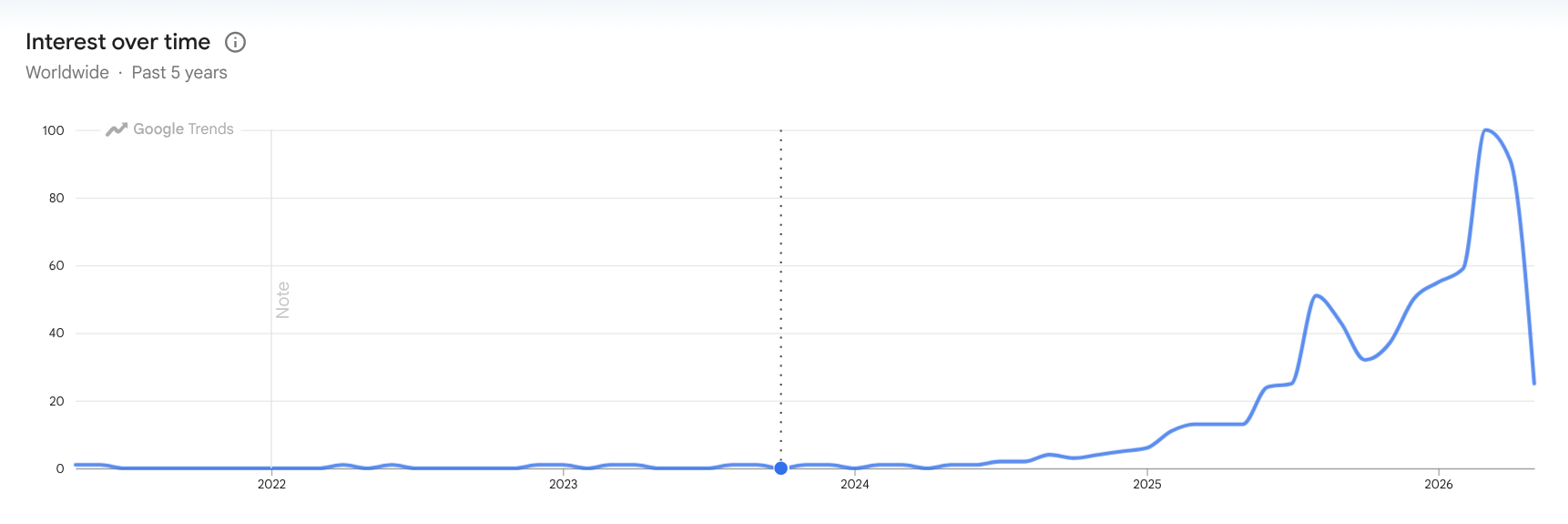
The triggers were a mix of factors:
The pricing changes had compounded. Users who'd accepted one adjustment as a necessary evil had less patience for the third or fourth.
Claude Code had matured significantly and offered a different value proposition: pay-as-you-go directly through Anthropic's API, no surprise charges, no plan tier complications. For developers comfortable with terminal-based workflows, this was an attractive alternative that didn't have Cursor's billing volatility.
Cursor's competitors had also caught up significantly on product quality. Windsurf, Continue.dev, and others were no longer obviously inferior in the ways they'd been a year earlier.
Cursor's response to the exodus moment came in waves rather than a single announcement, which itself tells you something about how the company was managing the situation.
There wasn't a clean "we heard you, here's the fix" moment. Instead, a series of incremental adjustments rolled out over that collectively tried to address the structural trust problem.
What the response period didn't include was a full pricing reset or a public commitment to a pricing model that wouldn't change again. The pattern of iterative adjustment continued.
The pattern beneath the incidents
Step back from the individual incidents and a pattern emerges that's more interesting than any single controversy.
Cursor isn't a company that doesn't care about its users.
The repeated pattern of changes followed by community pushback followed by partial reversal demonstrates that the company is listening. The problem isn't that Cursor ignores complaints. The problem is the structural relationship between Cursor's underlying cost base and its pricing model.
When you're selling a flat-rate subscription to a service whose underlying costs scale with usage, you have three options. You can raise prices. You can cap usage. You can lose money. Cursor has tried all three at various points, and each one creates a different category of customer unhappiness.
What Cursor hasn't yet found is a pricing structure that's both economically sustainable for the company and predictable enough for power users that they can plan their workflows around it. Every iteration has solved one problem and created another.
The deeper issue is that Cursor's product strength, its ability to give developers access to the most capable models with the least friction, is also its pricing weakness. The users who get the most value out of Cursor are the same users who run up the highest bills.
Pricing power users in a way that doesn't alienate them while still covering costs is an unsolved problem in the AI tooling category broadly, and Cursor's stumbles reflect that unsolved problem playing out in public.
Where things stand now
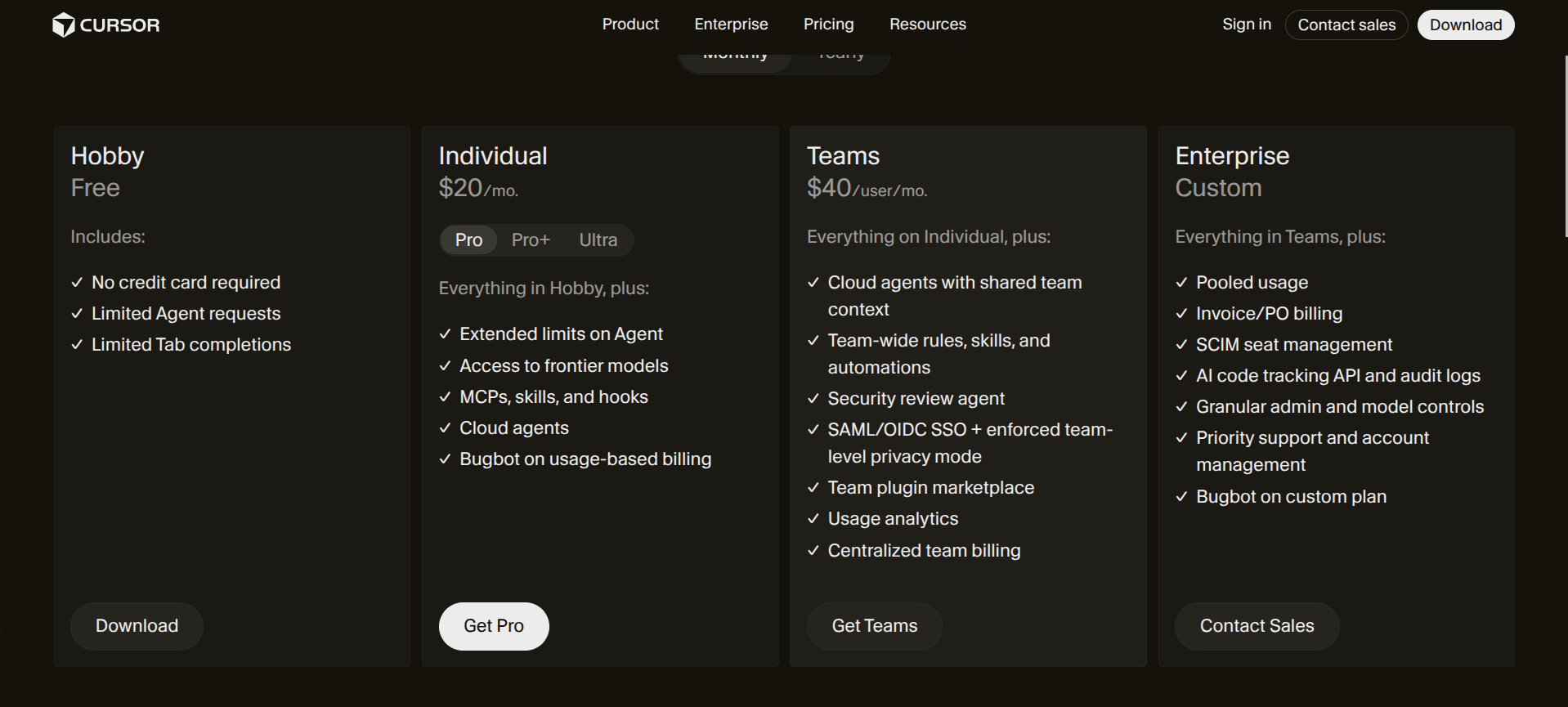
As of May 2026, Cursor's pricing structure has been restructured into four top-level plans: Hobby (free), Individual ($20/month), Teams ($40/user/month), and Enterprise (custom pricing).
The Individual plan now contains three nested sub-tiers (Pro, Pro+, and Ultra) which users toggle between, rather than presenting them as separate top-level plans as the company had done previously.
The Individual tier at $20/month includes extended limits on Agent, access to frontier models, MCPs, skills and hooks, cloud agents, and Bugbot on usage-based billing.
The Teams tier at $40/user/month layers on shared team context, team-wide rules and automations, SAML/OIDC SSO, enforced team-level privacy mode, a team plugin marketplace, usage analytics, and centralised team billing. Enterprise adds pooled usage, invoice/PO billing, SCIM seat management, AI code tracking API and audit logs, granular admin and model controls, priority support, and Bugbot on a custom plan.
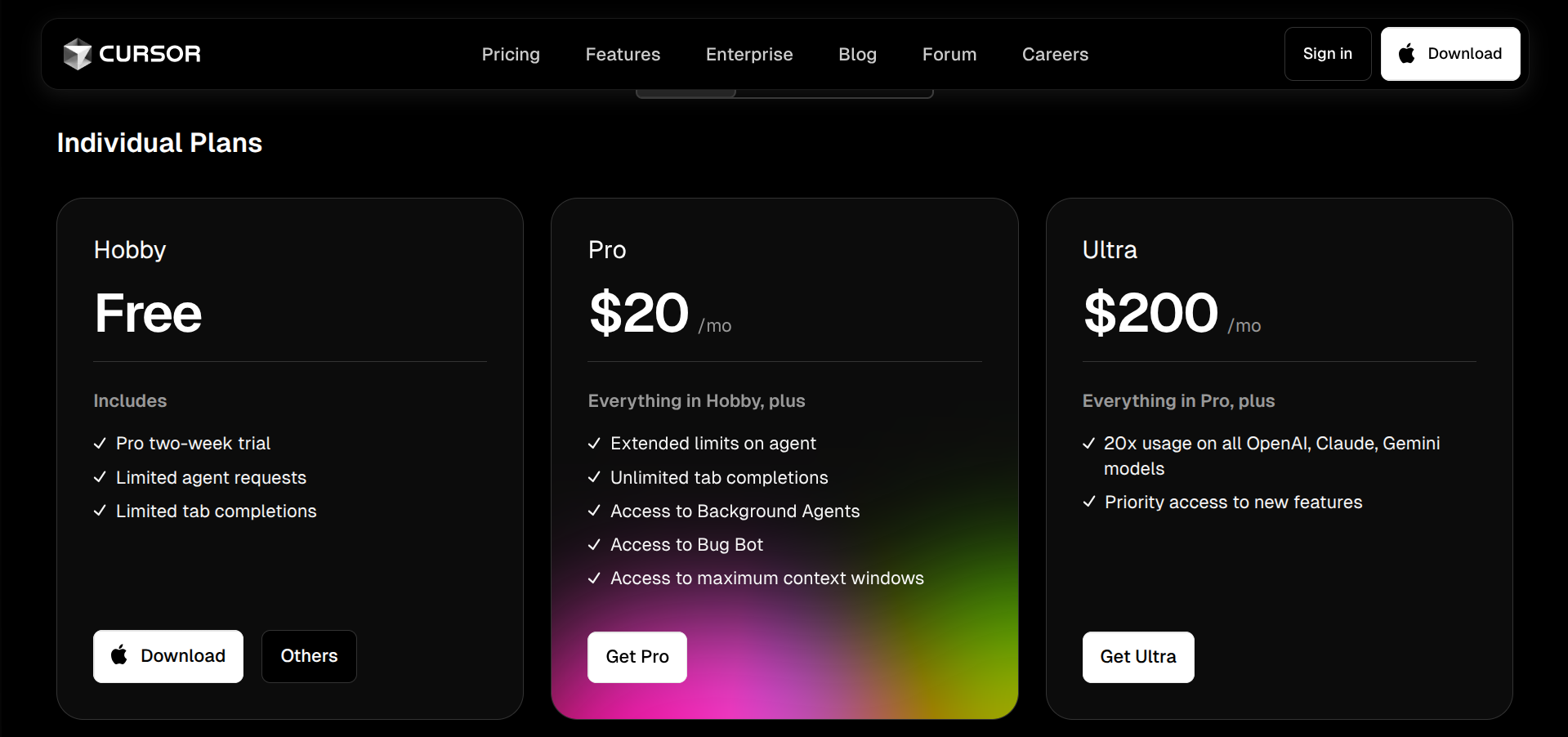
The company has restructured how plans are presented, moving from a flat tier system to a hierarchical one where most users see "$20" as the entry price and discover the sub-tier structure once inside. This is a meaningful change from the earlier presentation that listed Pro and Ultra as separate top-level plans at $20 and $200 respectively.
Whether this resolves the underlying transparency tension or simply repackages it is a question the community is still working through. The marketing presents a $20 entry point. The operational reality for power users remains that meaningful daily usage typically requires the higher sub-tiers, which aren't visible until after the click.
So what about the community?
Well, the sentiment has stabilised somewhat from the peak of the exodus moment, but trust hasn't fully recovered. The pattern of incidents has trained power users to watch for the next change with suspicion rather than goodwill.
Cursor's revenue numbers have continued to grow through all of this. As has their valuation.
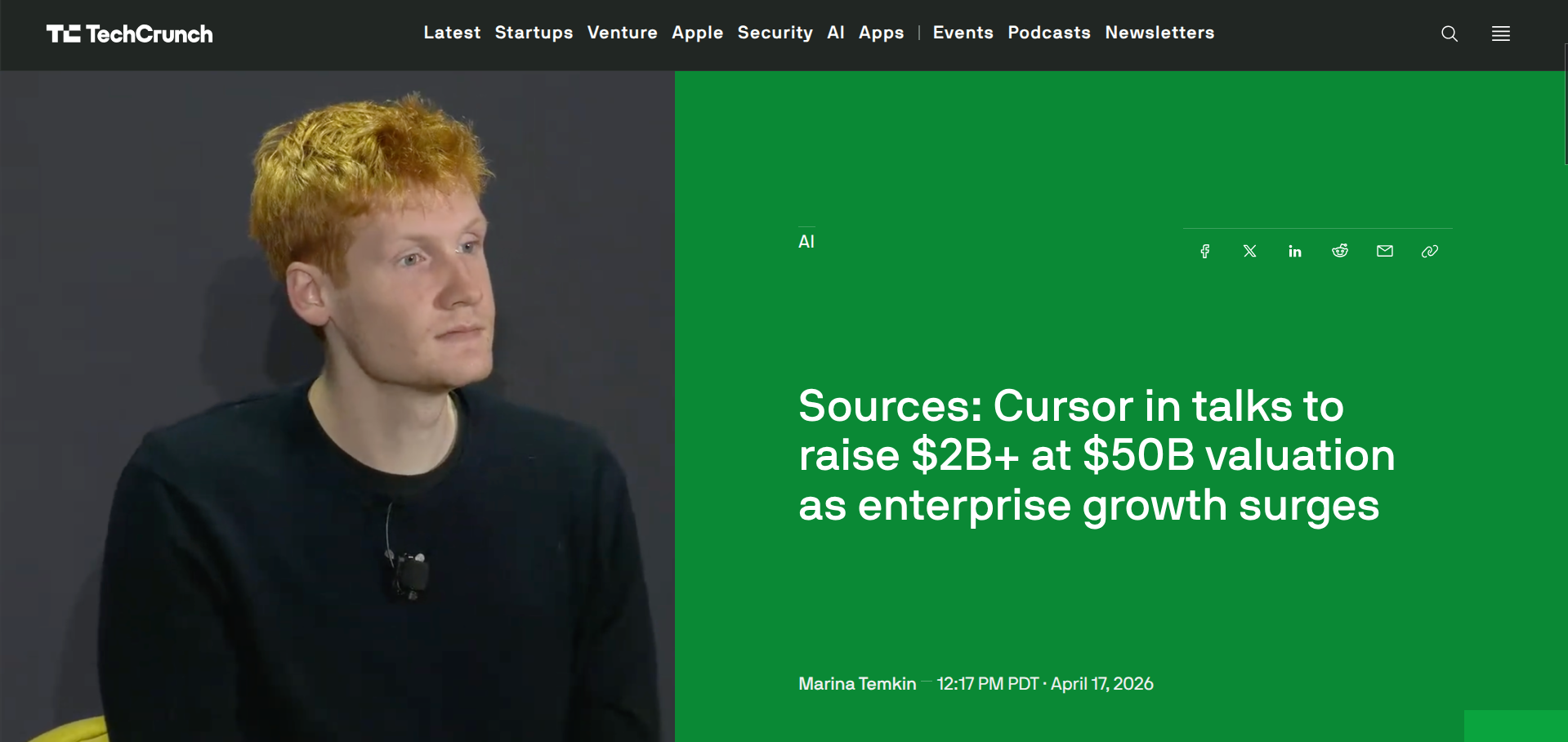
The product clearly remains valuable enough to enough users that the pricing controversies haven't translated into business catastrophe. But the reputational positioning is meaningfully different than it was in early 2025, when Cursor was the obvious recommendation for developers asking which AI coding tool to commit to.
What founders building usage-priced AI products should learn from this
If you're building a product where your costs scale with usage and you're selling subscriptions, the Cursor timeline is a case study in the specific failure modes to watch for.
The first lesson is that pricing changes need much longer runway than feels reasonable. Cursor's first major incident in June 2025 was made significantly worse by the perception that users weren't given adequate notice.
For changes that affect billing, "the documentation is clear" is not adequate communication. Direct email notification, in-app banners, and grace periods on the old terms are the baseline.
The second lesson is that invisible billing decisions destroy trust faster than expensive billing decisions. The auto-mode incident wasn't about the dollar amounts, it was about users feeling that Cursor's system was making expensive choices on their behalf without their explicit consent.
A more expensive plan that users actively choose is more sustainable than a cheaper plan with surprise routing decisions.
The third lesson is that the relationship between cost structure and pricing structure has to be designed for the worst-case user, not the average user. Cursor's flat-rate plans worked beautifully on average.
They broke for the power users who happened to also be the loudest voices in the developer community. Your most engaged users will set the public narrative about your pricing, and they're also typically the users whose unit economics are the worst for you.
The fourth lesson is that walking back pricing changes is more damaging than getting them right the first time. Each partial reversal Cursor made was the right short-term response to community anger, but the cumulative effect of multiple reversals was to train users that pricing changes were negotiable. This makes future changes harder, not easier.
The fifth lesson, and the most important one, is that pricing is product.
The Cursor team clearly treats product decisions as carefully considered, iterated, and tested. The pricing decisions, by contrast, have repeatedly read as reactive. For any AI-era product where unit economics are existential, pricing deserves the same operational seriousness as the engineering.
Updates and corrections
This piece is intended as a living reference. If you've spotted a factual error, have primary source documentation that conflicts with anything stated above, or want to flag a more recent incident, please reach out at hello@wearefounders.uk. Corrections will be acknowledged in this section with the date of update.
This article was researched by aggregating publicly available sources including Cursor's official changelog, community discussions on Reddit (r/cursor, r/ChatGPTCoding), Hacker News threads, X posts, and contemporaneous reporting from TechCrunch.
Where possible, primary sources are linked. Quotes are reproduced with attribution.