

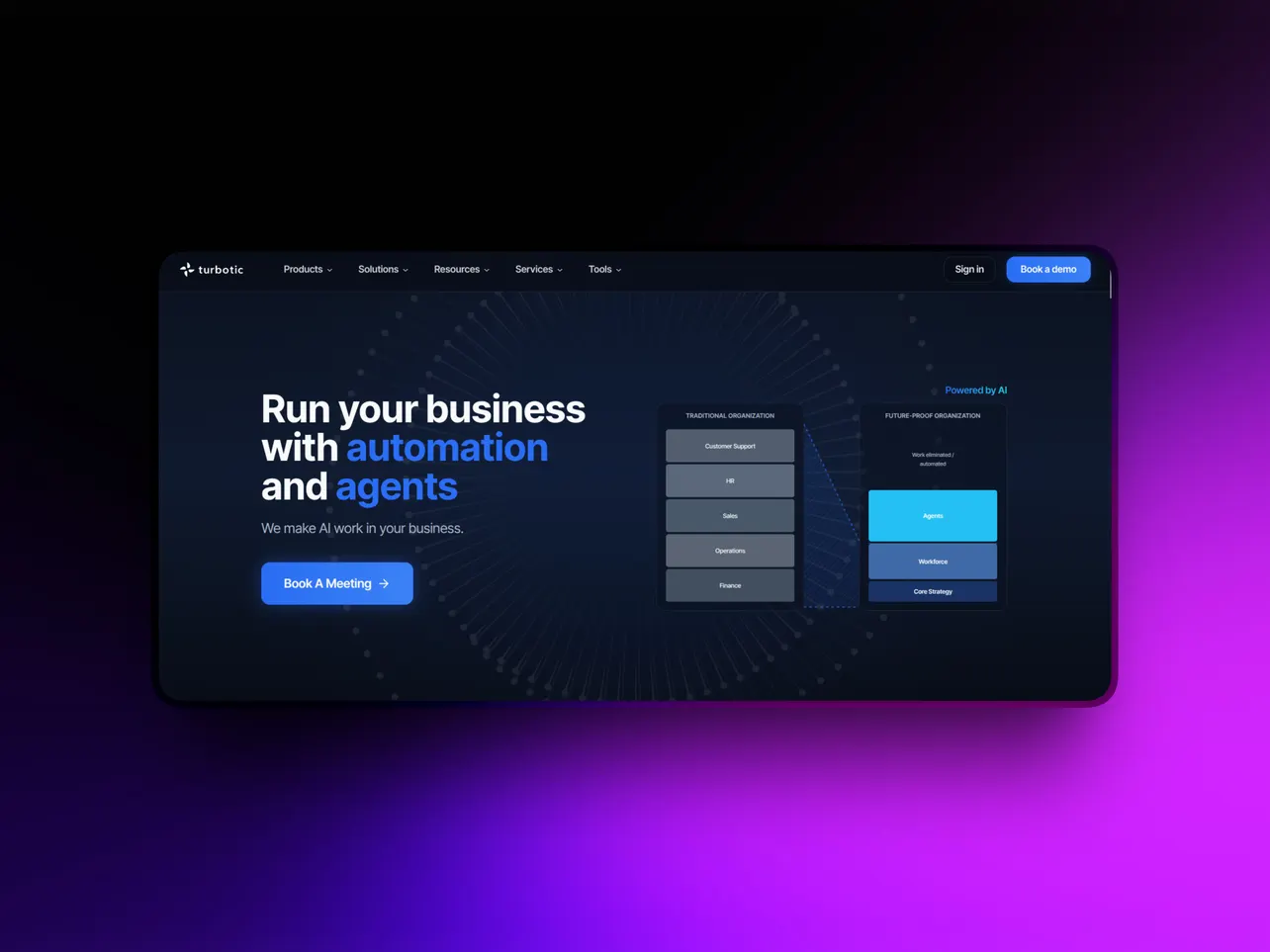
Stockholm has a habit of producing software companies that become category-defining. Spotify came from there. Klarna. Mojang. Now there's a smaller name working its way into the same conversation, and most founders haven't heard of it yet.
Turbotic launched its consumer-facing Automation AI product in late 2025, and the pitch is the kind of thing that sounds too good until you actually use it: type what you want to automate in plain English, and the platform builds, tests, and runs the workflow for you. No nodes to drag, no triggers to configure, no JSON to debug at 11pm.
The interesting part isn't the product though. It's the journey to get there.
From enterprise RPA to AI for everyone
Turbotic was founded in August 2020 in Stockholm by Theodore (Theo) Bergqvist and Alexander Hannerland. Bergqvist isn't a first-time founder.
He launched his first venture, Paradox Interactive, back in 1999 in the gaming industry — today a Nasdaq-listed company. He went on to start GamersGate, then spent years inside Ericsson leading the global AI and Data Strategy, where he's credited with generating over $500M in efficiencies.
That last role planted the seed for Turbotic.
Working inside one of Europe's largest enterprises, Bergqvist saw firsthand how painful it was for big companies to actually adopt AI and automation. Tools were fragmented. Implementation was slow. Most of the value got eaten by the cost of getting there.
Turbotic's first product reflected that experience. It wasn't a friendly consumer tool. It was TurboticOS, an enterprise orchestration layer designed to sit on top of platforms like UiPath, BluePrism, and Automation Anywhere and help large organisations actually track and manage what their automations were doing. Built for the same kind of company Bergqvist had just left.
It worked. The platform got picked up by enterprises across telco, finance, and gaming. It was the right product for 2020.
Then the market shifted.
The pivot that changed everything
By 2022, generative AI was starting to reshape what was possible in automation. Heavy, expensive RPA programs were going out of fashion. Founders, ops managers, and small teams wanted automation they could set up themselves without hiring a consultant or learning a new tool from scratch.
By May 2025, after a year of training and refinement, that accuracy crossed 95%. Good enough to launch.
In November 2025, Turbotic announced its consumer-facing Automation AI product. The framing was deliberate: this wasn't an enterprise tool with a friendlier coat of paint. It was a different proposition built for a different audience, sitting alongside the existing enterprise platform of the same name.
"We realised early on that real transformation only happens when automation becomes accessible to everyone," Bergqvist told TechRound at launch. "When anyone with basic technical understanding can automate their own work, innovation truly scales."
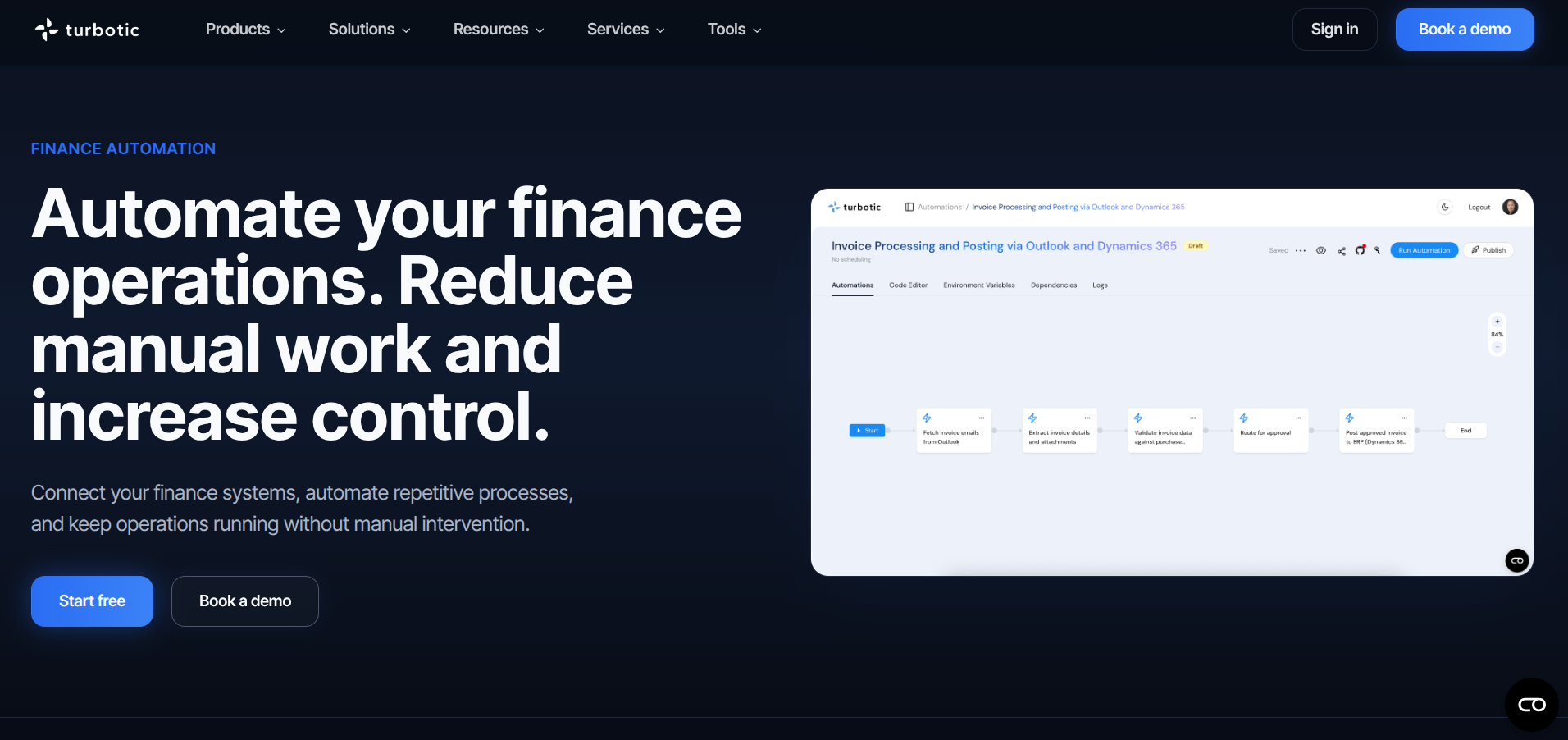
What Turbotic Automation AI actually does
The interface is a chat box. You type something like:
- "Summarise my last five emails and send me a Word doc."
- "When a new lead lands in HubSpot, enrich them, score them, and ping me on Slack if they're hot."
- "Pull yesterday's Stripe revenue and post it to our team channel every morning."
The AI reads your prompt, figures out the steps, connects the integrations, sets up error handling and retries, and runs it. Most automations are live within five minutes of describing them.
A few things stand out once you spend time with it.
Self-healing Automations
When an integration changes (an API endpoint moves, a field gets renamed, an authentication token expires), Turbotic attempts to fix the workflow automatically before flagging it. For solo founders without an ops team, that's the difference between a workflow that runs for a year and one that quietly breaks on Tuesday morning.
Built-in Agents
The platform ships with a meeting agent that transcribes and summarises calls, a document agent that generates business cases and process docs, and the ability to build custom assistants tied to your own data. The agent layer feels less like a feature and more like the direction the whole product is heading.
Enterprise-grade Security from Day One
Built on Microsoft Azure with ISO 27001 and SOC 2 Type 2 compliance. That's a legacy of the original RPA business, and it matters if you're automating anything that touches customer data.
The trade-off, and there is one, is integration breadth. Zapier has been at this for over a decade and has 8,000+ apps in its library. Turbotic has a smaller catalogue. If your stack lives inside niche or older SaaS tools, check the integrations list before you commit.
Pricing without the corporate fog
Turbotic's pricing is closer to a SaaS founder tool than a traditional RPA platform.
Turbotic Automation AI — plans
Free Trial
$0
Time-limited trial of the AI builder. No credit card required. Good for kicking the tyres before committing.
Professional
From ~$15/seat/mo
Full AI builder, monthly credit allowance, built-in agents, and self-healing workflows. Built for founders and small teams.
Enterprise
Custom
Custom credits and integrations, dedicated account manager, SOC 2 Type 2 and ISO 27001. For larger orgs with compliance needs.
The Professional plan starting from around $15 per seat per month puts Turbotic in the same bracket as the cheaper Zapier paid tiers, with the AI-native build experience as the main differentiator. There's no permanent free plan, which is worth knowing if you were hoping to run a long-term automation on a free account.
For a more detailed breakdown, see our Turbotic vs Zapier vs n8n 2026 comparison.
Who's it really for?
Turbotic's official messaging targets "tech-savvy professionals, SMEs and startups that want to automate without relying on developers." That tracks with what the product actually does well.
The sweet spot is teams of 1–20 people who:
- Have a list of small, repetitive workflows they keep meaning to automate
- Don't have a dedicated ops or automation specialist
- Are comfortable describing what they want in plain language
- Want something running in minutes, not days
It's less ideal if you need deep visual control over every step of a workflow, if your stack relies on niche integrations Turbotic hasn't added yet, or if you're already three years deep into a Make or n8n setup that you've optimised to death.
By 2026, Turbotic is targeting 5,000–10,000 paying subscribers, with 80% expected to come from the SME sector. Partnerships across Europe, India, and the Middle East are on the roadmap, alongside more advanced self-healing and a growing ecosystem of AI agents.
Why this matters for founders
The big automation platforms have spent the last decade competing on integration count. The next wave is competing on time-to-first-automation.
That's the bet Turbotic is making. If you can describe what you want and have a working automation in five minutes instead of an afternoon of reading documentation, the calculus on whether to automate something at all changes. Tasks you'd previously written off as "not worth the setup time" suddenly are.
For solo founders and small teams, that's a meaningful unlock. The constraint on automating work has rarely been the technology — it's been the cost of figuring out the technology.
Turbotic isn't the only company chasing this. Lindy is doing similar work with a stronger focus on AI agents, and the established players are bolting AI builders onto their existing platforms. But the Swedish team has a head start on the consumer-facing version of this idea, and the pivot from enterprise RPA gives them a deeper foundation than most AI-first competitors will have for a while.
Worth keeping an eye on, and worth a free trial if you've got automations sitting on your to-do list that have been there for six months.
FAQs
What is Turbotic Automation AI?
Turbotic Automation AI is a no-code automation platform from Swedish startup Turbotic. You describe what you want to automate in plain English and the AI builds, tests, and runs the workflow for you. It launched in November 2025 as a consumer-facing product alongside Turbotic's existing enterprise RPA platform.
Who founded Turbotic?
Turbotic was founded in August 2020 in Stockholm by Theodore (Theo) Bergqvist and Alexander Hannerland. Bergqvist is a serial entrepreneur whose previous ventures include Paradox Interactive and GamersGate, and he previously led global AI and data strategy at Ericsson.
Is Turbotic free?
Turbotic offers a free trial but doesn't have a permanent free plan. The Professional tier starts from around $15 per seat per month and includes a monthly credit allowance for AI executions. Enterprise pricing is quoted separately.
How is Turbotic different from Zapier?
Zapier is integration-first: you connect apps and configure triggers and actions through a visual editor. Turbotic is AI-native: you describe the workflow in plain English and the AI builds it. Zapier has a much larger integration library; Turbotic is faster to set up for common workflows.
What is self-healing automation?
When an integration changes or a step fails — for example, an API endpoint moves or a token expires — Turbotic attempts to repair the workflow automatically before flagging the problem. It's designed to reduce the maintenance burden of running automations long-term.