

The honest answer is somewhere between $1,000 and $250,000, and the gap between those two numbers is almost entirely about how you build, who you hire, and how much patience you have for free tiers.
That's not a useful answer on its own, so this is the breakdown founders actually need: every line item, what it costs in 2026, and where most people overspend in the first six months.
The numbers come from current pricing pages, founder surveys we've run inside the We Are Founders community, and the cost patterns showing up across the SaaS startups we cover.
If you've already validated an idea and just want to know what your bank account is in for, this is the article.
TL;DR: Three Realistic 2026 Budgets
There's no single number for "starting a SaaS" because the term covers everything from a solo developer shipping a Stripe wrapper on a weekend to a funded team building enterprise software. Three scenarios cover most founders:
- Indie / bootstrap MVP: $1,000 to $5,000 to launch, $50 to $250 per month to run.
- Bootstrapped, funded by savings: $30,000 to $80,000 first-year all-in, including basic marketing.
- Seed-funded launch: $150,000 to $500,000 first-year, with team salaries as the dominant line item.
The middle scenario is the most common path for the founders we hear from. The MVP itself is usually cheap; the year of building, marketing, and surviving until revenue catches up is where the real spend goes.
The Build Cost: What Actually Goes Into the Product
The price tag for building the product itself has fallen dramatically over the last two years. AI coding tools have collapsed development time for technical founders, and the modern stack is unrecognizably cheap compared to 2021.
In our recent founder survey, the average bootstrapped MVP cost just $2,800 to launch, with 65% of respondents spending under $50 per month on infrastructure during the MVP phase. That's the floor.
The ceiling depends entirely on whether you're writing the code yourself.
If you're a technical founder
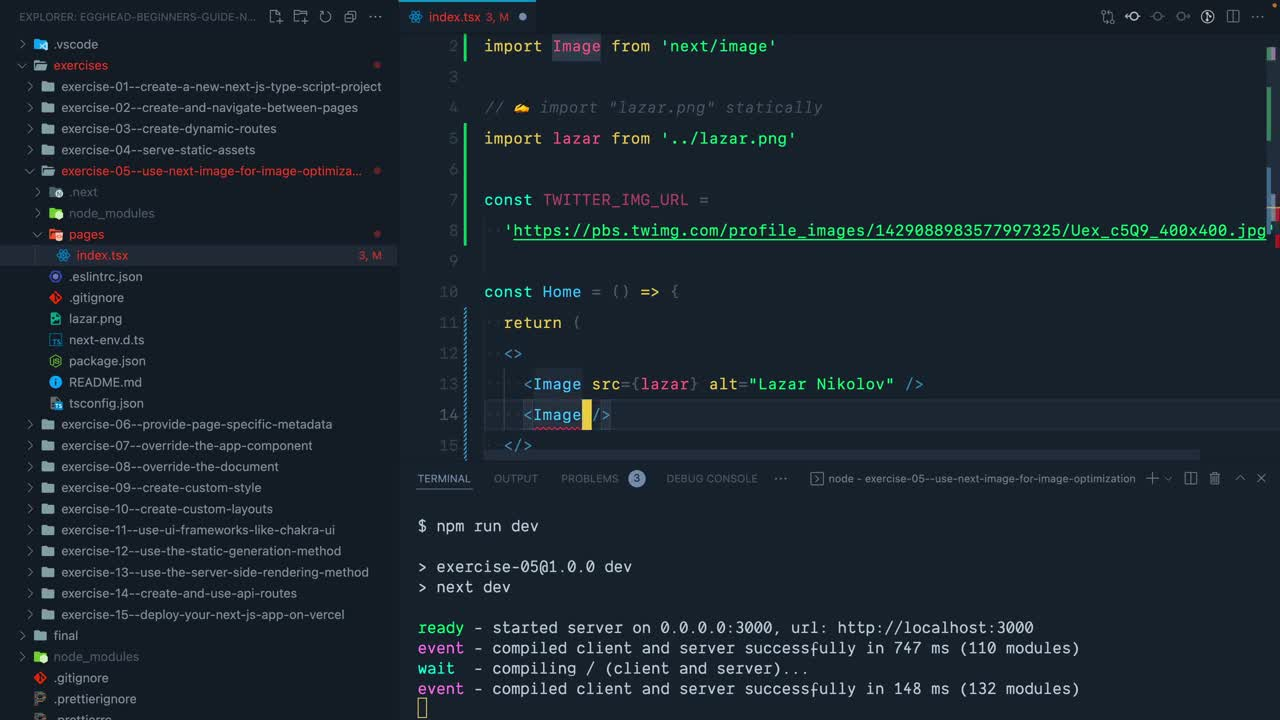
Your build cost is mostly time plus a thin layer of tooling. A realistic monthly stack looks like this:
A solo technical founder using a SaaS starter kit ($199 to $499 one-time) plus the stack above can ship a real product for under $2,000 in the first six months. That's the cheapest path to a working SaaS in 2026, and it's not theoretical: it's what most indie hackers we talk to are doing.
The trade-off is your time. Building solo is free in cash terms but expensive in hours, and those hours come out of your runway one way or another.
If you're hiring out the build
Costs jump significantly the moment you bring in outside help. Current 2026 ranges:
- Freelancer (mid-level, Eastern Europe / Latin America): $40 to $60 per hour, total MVP build $16,000 to $30,000.
- Freelancer (US senior): $100 to $150 per hour, total MVP $50,000 to $90,000.
- Agency: $50,000 to $250,000 depending on scope, with most fixed-price MVPs landing around $80,000 to $120,000.
The biggest mistake non-technical founders make is committing to an agency build before validating demand. Spending $120,000 on a polished product that nobody wants is the most expensive way to start a SaaS, and it happens constantly.
A starter kit plus a single freelancer for $15,000 to $25,000 will tell you whether the idea has legs without burning through your savings.
Legal and Admin: The Costs You Can't Avoid
Here's where the budget always trips founders up. You can build the product for free. You cannot legally run a business for free.
Expect to spend $500 to $1,500 on incorporation, registered agent fees, and banking setup before you process a single payment. Stripe Atlas bundles US incorporation with banking for around $500 plus state fees, which is the cleanest option for most non-US founders launching a Delaware C-corp.
Beyond incorporation, the recurring legal stack looks like:
- Privacy policy and terms of service templates: $50 to $300 (Termly, Iubenda, or similar).
- GDPR compliance setup: $0 to $500 if you're using template-based tools.
- Accountant or bookkeeping software: $30 to $100 per month.
- Business insurance: $40 to $150 per month, depending on jurisdiction.
If you're handling sensitive data or selling into regulated industries, add a security audit ($5,000 to $12,000) and SOC 2 compliance work to the list. Most early-stage SaaS products don't need this until enterprise customers ask for it, but it's worth knowing the line item exists.
The Tool Tax: SaaS to Run a SaaS
This is the budget category founders consistently underestimate. You're building software, but you're also using software to build software, and it adds up.
A realistic monthly tool stack for a small SaaS once you're past the MVP phase:
Add design tools (Figma free or $15/month), a domain ($12 to $50 per year), and an SSL certificate (free with most hosts), and you're looking at $50 to $200 per month in operating tools for a lean setup.
A common waste pattern: founders buying premium tier subscriptions before they have the users to justify them. There's no point paying $99/month for an email marketing tool when you have 47 subscribers. Free tiers exist for a reason, and most are generous enough to carry you to your first $5,000 in MRR.
Marketing: The Real First-Year Spend
The build cost is finite. The marketing cost is the variable that destroys budgets.
You can launch a SaaS for $5,000 in 2026. Getting anyone to use it is where the money actually goes. Customer acquisition cost (CAC) for SaaS in 2026 sits around $50 to $200 per user, and you should plan to spend $5,000 to $15,000 in your first launch month just to validate that anyone wants the product.
Realistic first-year marketing budgets:
- Bootstrap path: $500 to $2,000 per month — content, small ad tests, occasional sponsorships.
- Funded path: $5,000 to $20,000 per month from month two onwards — paid ads, content, partnerships.
The founders who spend least on paid acquisition are the ones who build in public and engage with communities instead of buying ads to an unvalidated product. Our survey showed founders who took this route spent 80% less on paid acquisition. The trade-off is consistent: you trade time for money, and there's no way around it.
If you're going to spend on ads from day one, budget for being wrong about your messaging at least three times before you find something that converts.
The Salary Question: When You Hire
For most bootstrapped founders, the answer is "as late as possible." For funded founders, it's the single biggest line item from month one.
A founding engineer in the US costs $120,000 to $180,000 fully loaded once you account for benefits, taxes, and equipment. A senior engineer in Eastern Europe or Latin America runs $50,000 to $90,000 fully loaded with equivalent skill.
Most early-stage SaaS teams that hire pre-revenue do so because they raised the money to do it, not because the burn rate makes sense otherwise.
If you're bootstrapping, the rule we hear most often from founders who succeeded: don't hire until your first hire's salary is fully covered by recurring revenue, plus six months of runway. That usually means waiting until $15,000 to $20,000 MRR before bringing on a second person.
Seed-Funded vs Bootstrapped: Two Different Games
The cost structure changes completely depending on which path you take. Quick comparison:
| Line item | Bootstrapped | Seed-funded |
|---|---|---|
| MVP build | $1,000–$25,000 | $50,000–$150,000 |
| Team salaries (Y1) | $0 (founder only) | $300,000–$600,000 |
| Marketing (Y1) | $5,000–$25,000 | $60,000–$250,000 |
| Tools & infrastructure | $1,000–$3,000 | $5,000–$15,000 |
| Legal & admin | $1,500–$5,000 | $10,000–$30,000 |
| Total Y1 | $10,000–$80,000 | $400,000–$1,000,000+ |
Both paths can build great companies. The bootstrapped path takes longer (typically 18 to 24 months to $10K MRR versus 12 months for funded). The funded path requires you to grow fast enough to justify the burn, and the failure mode is running out of money before product-market fit.
The Hidden Costs Nobody Budgets For
A few categories worth flagging because they show up in every founder budget post-mortem:
API costs. If your product calls AI APIs, embeddings, or third-party services, this scales with users and gets expensive fast. Budget at least 5% to 15% of revenue for API rent once you're past 100 users.
Compliance creep. Your first enterprise customer will ask for SOC 2, a DPA, and probably HIPAA depending on the industry. That's a $15,000 to $40,000 spend you didn't plan for.
Refunds and chargebacks. Stripe charges $15 per chargeback regardless of whether you win. A few unhappy customers in a single month can wipe out a small founder's profit margin entirely.
Domain regret. Roughly 20% of founders we surveyed spent over $2,000 on a premium .com domain before having a single customer. Most pivoted within three months, rendering the purchase worthless. Start with a cheap domain. Buy the premium one when revenue justifies it.
Tool sprawl. It's easy to end up with 15 monthly subscriptions, none of which you'd cancel individually but which collectively cost $400 a month. Audit quarterly.
What You Should Actually Spend (If We're Being Honest)
For a solo technical founder with savings and an idea worth testing, here's the budget that gets you the furthest:
- Months 1-3: $2,000 to $5,000 — domain, basic stack, starter kit, incorporation, three months of tools.
- Months 4-6: $1,000 to $3,000 — light marketing tests, customer interviews, occasional paid ads.
- Months 7-12: $500 to $1,500 per month — scale what's working, kill what isn't.
Total first-year spend: roughly $15,000 to $30,000, assuming you're not paying yourself a salary. That's the budget the founders we talk to most often hit on the way to their first $10,000 MRR.
If you're not technical and you're hiring out the build, double those numbers. If you're raising a seed round, multiply by ten.
The barrier to starting a SaaS in 2026 has never been lower. The barrier to making one work is roughly the same as it always was: focus, distribution, and the discipline to spend money on the things that actually move the needle.
FAQ
Can you start a SaaS for free in 2026?
Technically yes, if you're a technical founder using free tiers (Vercel Hobby, Supabase Free, GitHub) and a personal domain. You'll spend nothing on infrastructure for the first few months. The catch: free tiers prohibit commercial use in most cases (Vercel Hobby in particular), so the moment you start charging, you need to upgrade. Plan for $50 to $100 per month from launch.
What's the cheapest tech stack for a SaaS in 2026?
Next.js plus Supabase deployed on Vercel is the cheapest production-ready stack. Both Supabase and Vercel have generous free tiers for prototyping, and you can run a paying SaaS on around $45 per month combined ($25 Supabase Pro plus $20 Vercel Pro) until you scale.
How much should I budget for marketing in year one?
For a bootstrapped SaaS, $500 to $2,000 per month is realistic and forces discipline. For a funded startup, $5,000 to $20,000 per month is standard. The biggest predictor of success isn't how much you spend, it's whether you spend on the right channels for your audience. Most founders waste their first $5,000 figuring this out.
Should I incorporate before or after building the MVP?
Build first, validate demand, then incorporate before you take your first payment. Incorporating costs $500 to $1,500 and adds ongoing admin work. There's no reason to start that timer before you know the idea works. Stripe Atlas is the cleanest option for most international founders launching in the US.
How much does it cost to maintain a SaaS after launch?
Budget 15% to 25% of your original development cost annually for maintenance, security patches, and dependency updates. A $30,000 build costs $4,500 to $7,500 per year to keep running smoothly. This is separate from infrastructure costs and excludes new feature work.
Want more on the real numbers behind launching a SaaS? Check out our deep dive on the real cost of launching a SaaS MVP in 2026 and our guide to pricing your SaaS the right way.