

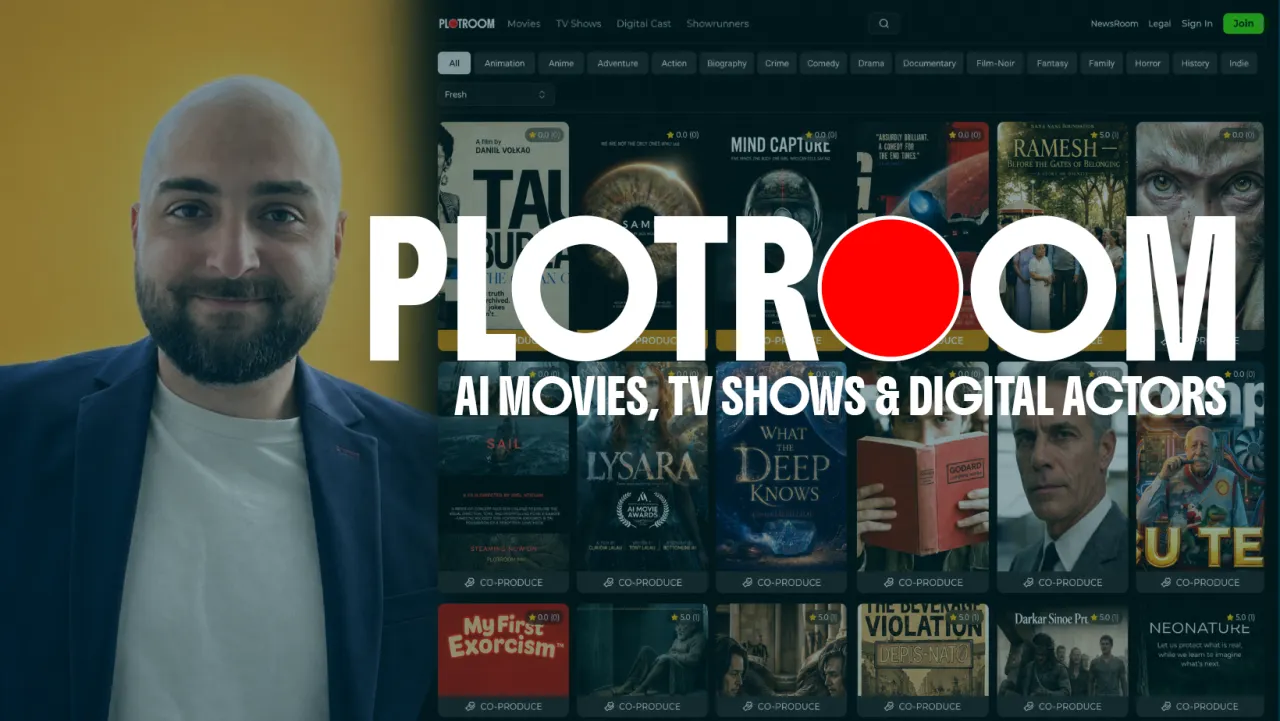
AI filmmaking has exploded in the past two years.
The tools keep getting better. The output keeps getting more ambitious. But the infrastructure around the creators making this work has stayed stubbornly thin. There's nowhere to distribute. Nowhere to monetize. No equivalent of IMDb, Netflix, or a studio system for any of it.
PlotRoom, founded by Tengo Tadumadze and based in London, is trying to be that infrastructure. We caught up with Tengo a month into the company's life to talk about what's built, what the early signal looks like, and why he's so convinced AI-native cinema is a real category rather than a passing aesthetic.
What PlotRoom actually is
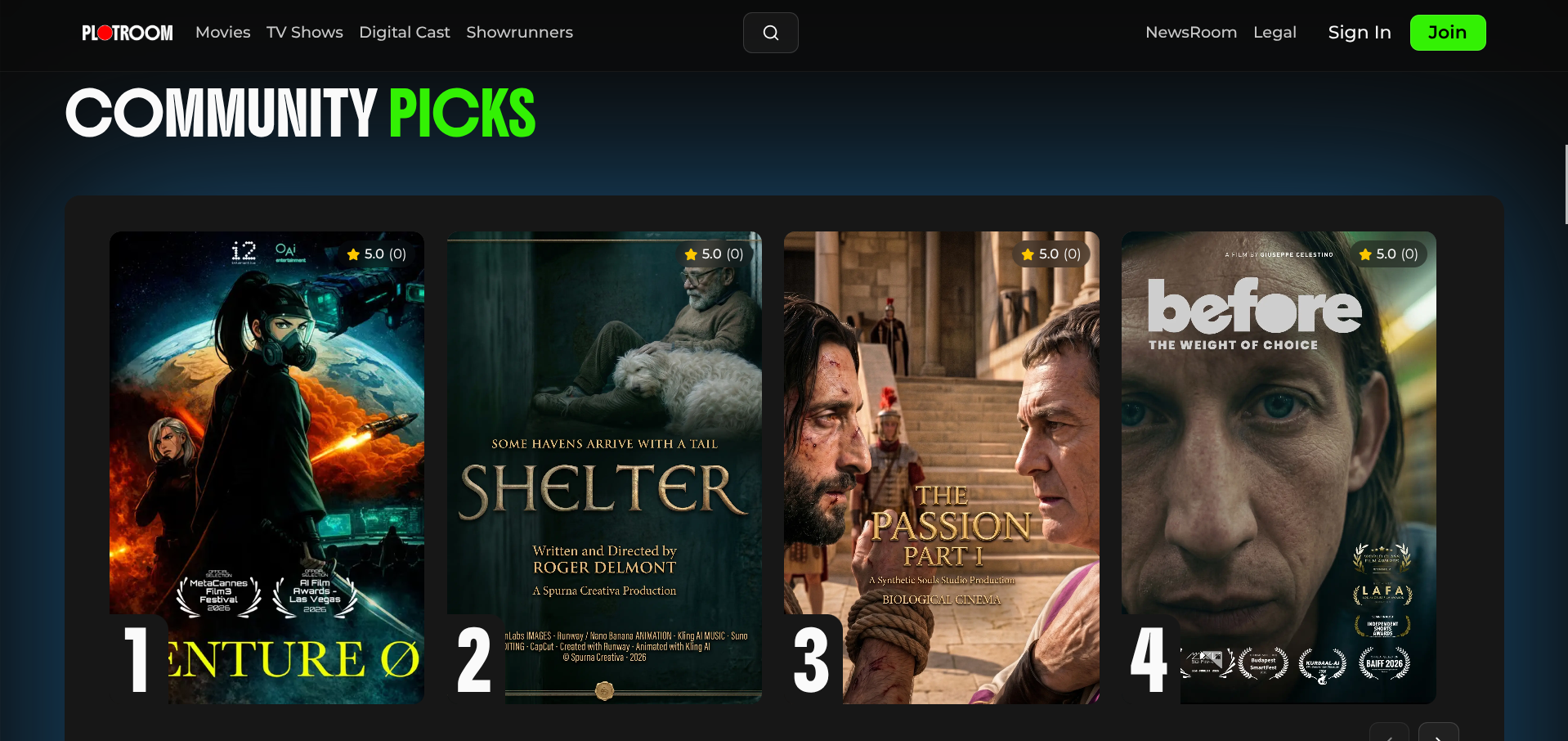
"PlotRoom is building a unified ecosystem, one that brings together AI films, showrunners, and digital actors under a single roof."
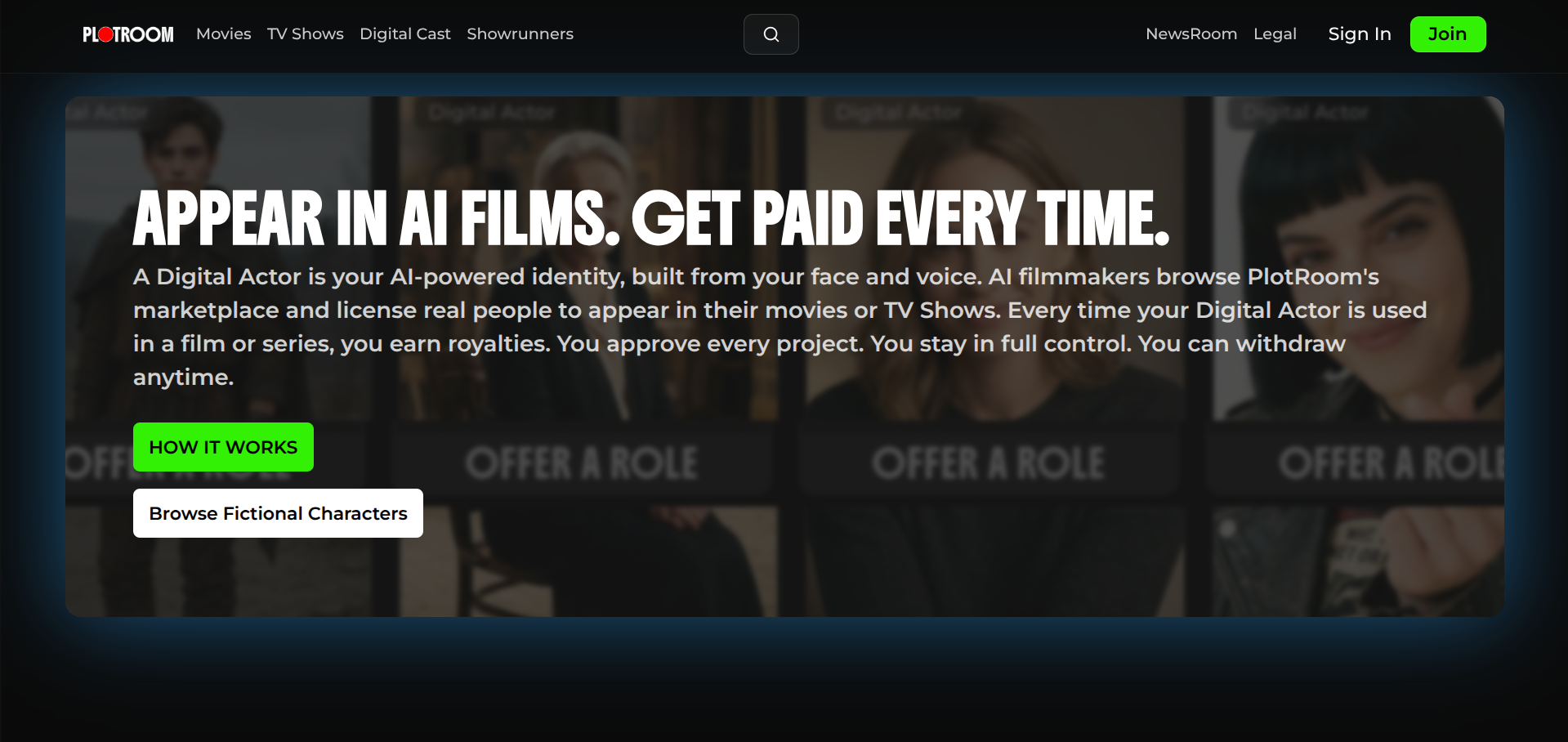
Showrunners on the platform can monetize their content and access funding opportunities. Digital actors are built into the infrastructure as a core part of the system, not an afterthought.
The framing matters as much as the feature list.
"What makes PlotRoom different is the philosophy behind it," Tengo says. "We didn't build a platform and then ask 'how do we get users?' We started with the problems creators were actually facing and built backward from there. PlotRoom is, as far as I'm aware, the only platform genuinely trying to solve the creator's problem first. Everything else follows from that."
The numbers at one month old
PlotRoom is one month into being a live company, and Tengo is already pointing at signal rather than guessing.
- 64 registered AI film creators have uploaded 172 films and series
- 103 registered viewers
- Of people approached about licensing their face and voice as digital actors, 92.9% expressed interest in joining the platform and 71.4% immediately requested waitlist access
- A multiple-choice survey with creators surfaced two dominant pain points: 70% identified monetization as their biggest problem and 52.5% flagged distribution
"These aren't soft complaints," he says. "These are the two things standing between a creator and a sustainable career."
His read on it: the demand is real, it's large, and nobody is properly solving it yet. Creators are making AI films but have nowhere to go with them. Digital actors want to participate in this economy but have no infrastructure to do so. Viewers are showing up. PlotRoom is the system that connects them.
The hardest problem at month one
The honest answer Tengo gives when asked what he's still figuring out is sequencing.
"We know what needs to be built. The question is what order you build it in when everything feels urgent and the market isn't waiting. That's the tension we're living in every day. Any founder who tells you they've got that perfectly figured out at month one isn't being straight with you."
Why he's so convinced AI-native cinema is real
Tengo starts the answer with something personal. He almost applied to film school. He still writes scripts and stories for himself. The thesis sits on top of a long obsession with how cinema evolves.
And when you look at that evolution closely, he says, the pattern is unmistakable. Color. Sound. CGI. Animation. "One day the world woke up and realized that technology could tell extraordinary stories in ways that weren't possible before."
He uses Pixar as the example. Toy Story is now universally loved. At the time, the technology behind it was perceived as a threat, as something wrong, as something that shouldn't exist.
"We are standing in front of exactly that kind of moment again," he says. "AI-native cinema is not a trend, it's the next structural shift in how stories get made and distributed. Denying that, in my view, is simply not a rational position."
His pitch to a skeptical investor focuses on timing rather than technology.
"The industry is changing faster than institutions can respond. The rules haven't been written yet. The dominant players haven't emerged yet. That means right now, while the water is still muddy, is exactly the moment to take a dominant position. Waiting for clarity means waiting until someone else already won."
On building from the UK
PlotRoom is incorporated and operated from London, and Tengo has strong opinions about why that decision matters more than most founders give it credit for.
People assume relocating is the expensive part of building from a new country. According to Tengo, the financial cost was surprisingly low. "Roughly €600 all in, when you add everything up. In pure numbers, the barrier was lower than most people assume."
The decision that actually mattered was where to incorporate. He's emphatic about this, and the advice is worth quoting in full:
"My strong advice to any founder is to be extremely precise about the jurisdiction you choose. And when I say extremely precise, I mean it. We had Delaware and the UK on the table. We didn't just pick one and move on. We ran a detailed comparison across multiple criteria: legislation, tax incentives, data protection requirements, annual compliance obligations, payment processor policies, and a lot more."
The point he wants other founders to take from this: before you register a company, think clearly about where you want to be tomorrow and at most a year from now. Where could you get stuck? Where will investors feel comfortable? Where will the law work for you, not against you?
For PlotRoom, the UK was the clearest answer.
The registration process is straightforward. The legal environment is comfortable to operate in. And the UK has investor incentive schemes like SEIS and EIS that actively encourage people to put money into early-stage companies.
Would he recommend the same path to other founders? Yes, with a caveat: "Only if it makes sense for your specific situation. Don't copy anyone's path. Run the numbers yourself."
Three things he'd tell every founder
PlotRoom is currently bootstrapped, with early-stage funding conversations under way. When we asked Tengo what he'd tell a founder just starting out, he had three things to say, and he meant them seriously.
Be more careful about team. "Team selection is everything. I cannot overstate how much the wrong people in the wrong seats will cost you. Not just in time, but in momentum and energy that you never fully get back."
Stay focused. "The noise is deafening at every stage. There are a thousand things pulling at your attention constantly, and the skill that matters most, and takes the longest to develop, is knowing which signal actually matters and which is just noise. Most of it is noise. Most of it is garbage. But you can only learn to tell the difference by living through it."
Stop waiting for perfect. This is the one he came back to twice in his answer.
"I wasted real time trying to manage things toward some ideal version instead of simply shipping. You can spend more time in the planning and managing than in the actual doing, and then discover that nobody needed what you spent six months perfecting. Every time I'm working on a new update now, my first question is: how do we make this simple enough to launch tomorrow?"
The bigger lesson sitting underneath all three: this is an endless process.
"You fail, you learn. You fail again, you learn again. But eventually, if you keep going, the failures get smaller, or the lessons arrive faster, or the problems stop being big enough to sink you. That's the only real path forward. There's no shortcut to it. You just have to go through it."
What success looks like in May 2027
Tengo doesn't lead with metrics when asked what success looks like a year from now. He leads with a feeling.
"The moment I'll know is when a showrunner tells me they feel at home. That's not a metric, but it's the thing I care about most. I want creators to know that their films are in safe hands, that PlotRoom is genuinely working for them, not extracting from them."
By 2027, he wants PlotRoom to be a fully unified system where creators have access to everything in one place. Distribution. Monetization. Especially the financial side. He wants creators to actually be able to build a living from what they make on the platform.
On the viewer side, he wants people coming back to PlotRoom the way people come back to a streaming service they trust. Not somewhere you browse. Somewhere you return to because something you love lives there.
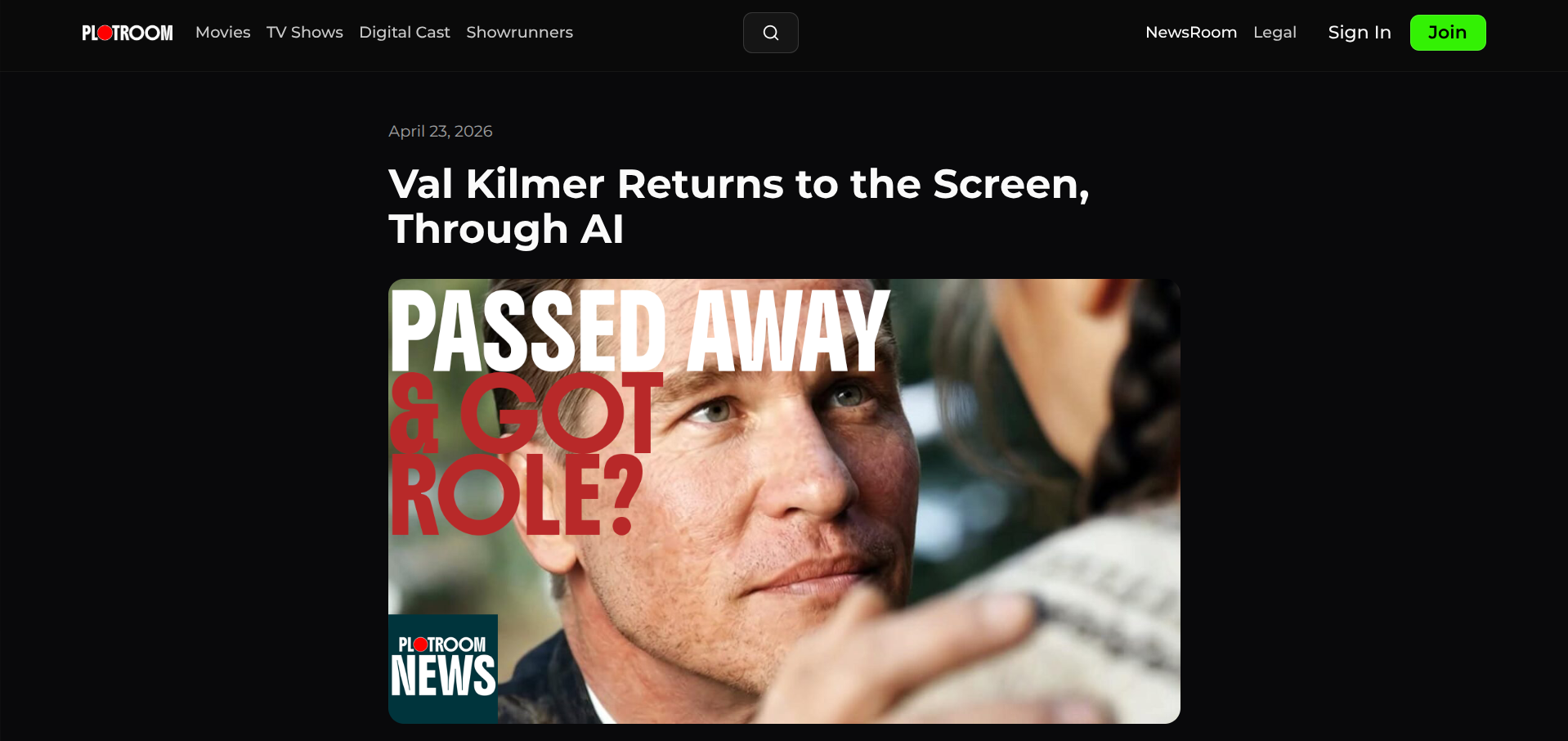
And then there's the digital actor side, which he thinks will be one of the most exciting parts of the story by 2027.
"I genuinely believe that by then, many people will have become what you'd have to call cinema stars through this platform. People who licensed their face and voice, built a presence, and are earning real money from it. That's a new kind of career that didn't exist before. PlotRoom should be the place where that becomes normal."
If all of that is true in May 2027? "Yeah. That's the one."
Visit PlotRoom: plotroom.co.uk