
Mark Thayer was a stay-at-home dad in the United States when he finished reading Shoshana Zuboff's The Age of Surveillance Capitalism. By the time he closed the book, he'd decided to learn how to code.
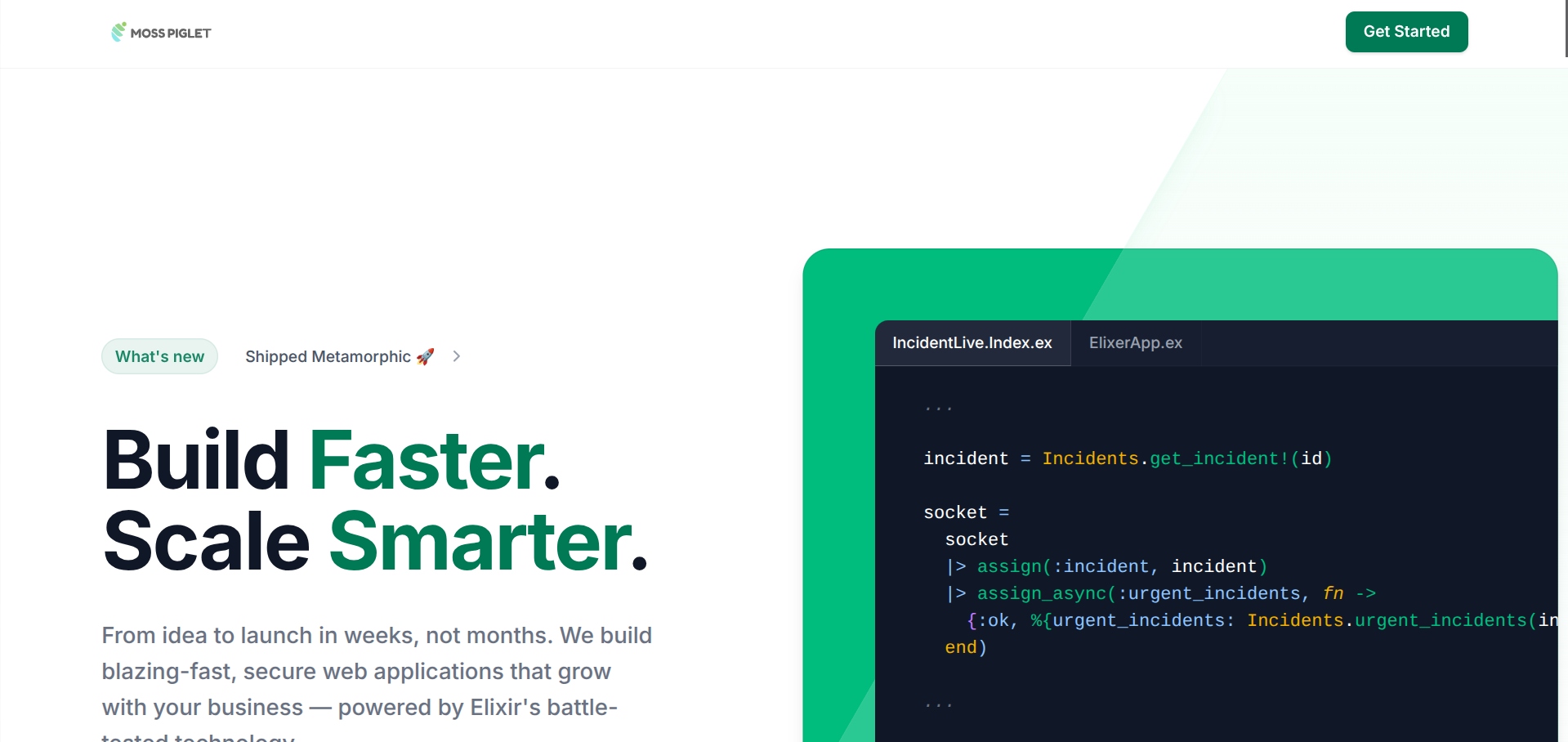
Six years later, Moss Piglet Corporation has two products live, an open source codebase, and a thesis most of the tech industry still hasn't reckoned with: that software doesn't have to spy on people to be profitable.
Moss Piglet isn't a venture-backed startup chasing the next funding round. It's a public benefit corporation, bootstrapped with personal investment from Mark, his father (who built NASA's early GIS systems), and his cousin (a veteran).
Mark is the sole developer, designer, and marketer. The stack is Elixir, Phoenix LiveView, and Stripe. The mission is baked into the legal structure rather than the marketing. His story is one of the more philosophically grounded founder journeys we've featured, and it's worth reading in full.
The Thing That Was Broken
Ask most founders what gap in the market they spotted, and you'll get an answer about a workflow or a feature. Mark's answer operates on a different scale.
"Everything online — social media, habit trackers, journals, messaging, news sites, health portals — was quietly harvesting our most personal data and selling it, often to become transformed into behavioral futures products and controlling our lives just beyond our awareness."
That's the diagnosis. The cause, in his framing, is structural rather than incidental.
"The thing that's broken isn't one app or one company. It's the entire economic logic — in tech it boils down to the assumption that software has to spy on people to be profitable and that our humanity should be commodified."
You might hear data described as the new oil. Mark thinks the comparison undersells what's actually happening. And until he read Zuboff's work, he says, he could feel the problem but couldn't name it. Naming it, he argues, is the first step to changing it.
"I started Moss Piglet to provide alternatives to the status quo, to do my part in saying 'it doesn't have to be this way', and to prove to myself that's true."
The Backstory: Coffee, Code, and a New Kid
Mark didn't come from tech. He grew up playing competitive soccer, walked away from the sport because the culture around it didn't match his values, and spent the next eight years working as a super specialty barista in Los Angeles. On the corporate side, he wore multiple hats — sales, marketing, and rigging together in-house production studios.
Then came the news he was going to be a dad.
"I hadn't realized it pre-parenthood, but I quickly discovered that there was nothing more important to me than loving your children unconditionally and being a parent. A realization made all the more painful by the 24-hour news cycle that cast the world as growing increasingly out-of-sync with kindness and love and driven further toward greed and destruction."
Around this time he finished Zuboff's book. The intellectual concern became visceral. This was the world his kid was growing up in — a friendly web of "you've got mail" had evolved into dark patterns, dopamine loops, and the pipelines of the surveillance economy.
So he taught himself to build the alternatives. He landed on Elixir specifically because he needed a stack that could handle soft real-time, concurrency, fault-tolerance, and encrypted communication with ease. He also needed to be able to learn it during nap times.
"I often would refer to Elixir and its ecosystem as a superpower because I could do so much with so little."
It took six years for that early social network experiment to become what Mosslet is today.
The Pivot: When Facebook Became Meta
Most founder pivots come from market signals. Mark's came from a press release.
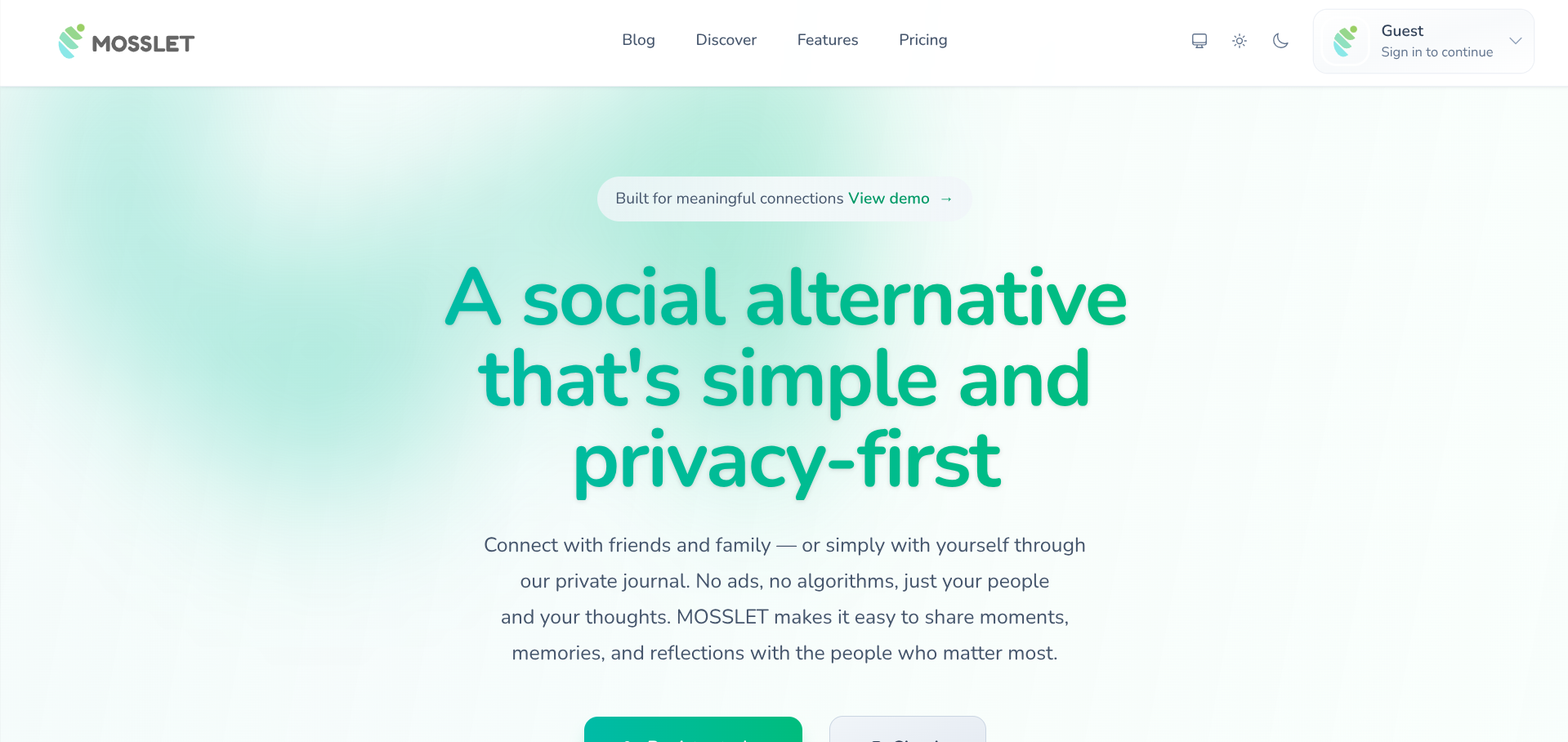
His social network was originally called Metamorphic. When Facebook renamed itself Meta, sharing a naming convention with the company he was specifically building against stopped being workable. So he renamed the social network Mosslet, after the moss piglet — the microscopic tardigrade that can survive almost anything. It fit what he was building.
What he didn't expect was what the rename freed up.
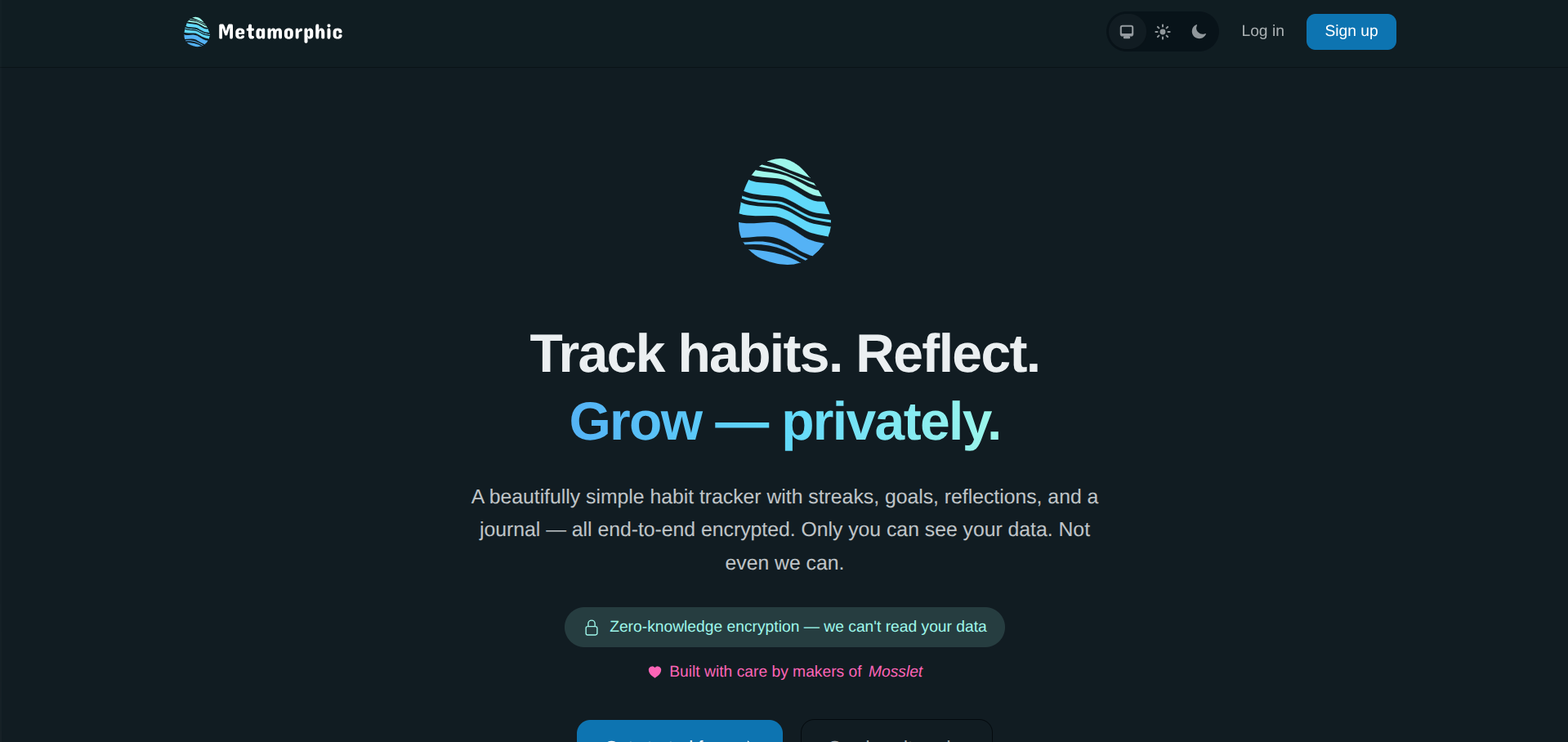
The name Metamorphic was now available. When his partner — who has a background in psychology and a passion for self-improvement — inspired the idea for a privacy-first habit tracker, the name was the perfect fit. Metamorphic, as in transformation, growth, becoming. A habit tracker is literally about personal metamorphosis.
"I had only ever envisioned one product. That forced rename turned Moss Piglet from a single product into a company with a platform philosophy — privacy-first software across different areas of life."
The two products now sit on different architectures but share the same underlying commitment. Mosslet is open source and encrypted, with zero-knowledge end-to-end encryption for direct messages — anyone can verify how it works by reading the code. Metamorphic is zero-knowledge from the ground up: data is encrypted on the device before anything reaches Moss Piglet's servers, meaning the company is architecturally unable to access it.
Both products, in Mark's framing, give users "the ability, not the illusion, to shape and create your life on your own terms."
The Lesson: Don't Build the Hardest Thing First
Ask Mark what he'd tell another founder to avoid, and his answer is unusually self-aware.
"Trying to launch a bootstrapped social network — a paid one, no less — in a world that's trained people to expect social media to be free and forget about the harm that 'free' model causes."
The cold start problem on a social network is brutal. The product is only valuable when other people are on it, and nobody wants to be first. Charging for it makes it harder still — you're not just asking people to try something new, you're asking them to pay for something they've been told should be free, even though that "free" is what funds the surveillance economy.
If he could go back, he'd build Metamorphic first.
"Build the thing that doesn't need a network effect first. Let the community product come second."
A habit tracker, he points out, is useful to you on day one with zero other users. It delivers value immediately. You build trust, you build an audience, and then you introduce the social product to people who already believe in what you're building.
He doesn't regret the order. Mosslet exists, it led to the encryption architecture for Metamorphic, and he's proud of it. But for any founder asking where to start, his answer is clear: the product that doesn't need a network effect comes first.
What the Business Looks Like Today
Moss Piglet doesn't share revenue or user numbers — not publicly, and not privately either. That's a deliberate choice, and Mark frames it as consistent with the kind of company he's trying to build.
"We're not optimizing for growth metrics. We're optimizing for building software that respects people. The numbers will follow the mission, not the other way around."
What he will share:
- Two products live and in active use — Mosslet and Metamorphic
- An open source codebase at github.com/moss-piglet
- A growing footprint in the Elixir community — Mark contributed the official Ecto guide for self-referencing many-to-many relationships, which came out of his early work on Mosslet
- An open source library for checking emails and passwords against the HaveIBeenPwned APIv3
- A readership through the Moss Piglet blog and ongoing features in the privacy and founder spaces
It's the kind of progress that doesn't fit neatly on a pitch deck, but it does fit a thesis. Privacy software, built sustainably, by someone who isn't trying to exit.
The Father's Advice
One line from Mark's submission stuck with us, attributed to his dad: that often the hardest part is making the decision, not the decision itself. You make the best decision you can with the information you have at the time. There's no use looking back and stressing over decisions you couldn't have known to make.
For a solo founder six years into building something most of the industry would say is structurally impossible, that's a useful operating principle.
Moss Piglet's bet is that software can respect people and still work. Still be useful, still be beautiful, still be sustainable as a business.
"Privacy is good for people, and for business."
Where to Find Mark
- Company: mosspiglet.dev
- Mosslet (social network & journal): mosslet.com
- Mosslet Blog: mosslet.com/blog
- Metamorphic (habit tracker): metamorphic.app
- Metamorphic Blog: metamorphic.app/blog
- Medium: @mark-mpc
- GitHub: github.com/moss-piglet
- Bluesky: @markthayer.bsky.social
- LinkedIn: Mark Thayer