

Reddit has a reputation for chewing up founders who show up with a pitch and a link, so I wanted to hear from someone who does this for a living.
Paul Xue runs Spacestation Labs, a Toronto-based agency that only does Reddit marketing (it used to be called Karmic Buzz), and he was kind enough to answer my questions by email.
Below you'll find his take on what actually works for SaaS founders, from the first 30 days on a budget to why anonymous accounts have stopped paying off.
From Reddit user to Reddit-only agency, and the rebrand
I registered my account in 2009 and lurked for most of that time. I only started posting about three years ago, because I'd always been the behind-the-scenes dev guy and got fed up with not knowing how to market or sell. My first real post on r/Entrepreneur did about 150K views and hundreds of comments, and it sold my solo dev agency playbook better than anything else I'd tried.
Clients started asking how I did it, so I wound the dev agency down and did Reddit full time. Karmic Buzz was the name for that first version. Spacestation Labs was always the company behind it, and the work outgrew a name about karma: it's now disclosed accounts, owned subreddits, ads and AI visibility.
Your site says you'll turn down clients whose product is the problem. What tells you within the first few minutes of a call that a SaaS is a good fit for Reddit, and what are the usual red flags?
One question does most of the work: can one person adopt this alone, on their own card, without their company deciding to buy it? If yes, Reddit works, because Redditors act as individuals. The second check is whether people already argue about the problem on Reddit without being asked.
The red flags are demo-gated enterprise sales, anything needing a security review or org-wide rollout, and regulated professional services. The other one is a founder who wants us to "show up in the comments" and mention the product. If the honest thread about your product would be negative, more visibility just makes it worse.
If a bootstrapped founder with no Reddit presence and almost no budget wanted to start tomorrow, what would you tell them to do in their first 30 days?
Week one: make an account in your own name, say who you are in the bio, and post nothing. Find three to five subreddits where people complain about the problem you solve, and read the top posts of the past year.
- Weeks two and three: comment every day and solve people's problems without mentioning your product.
- Week four: write one post with personal stakes: something you got wrong, what it cost and what you learned.
- Alongside: claim your brand's subreddit, and install the Reddit pixel so you can see how much of your existing traffic is already on Reddit.
You work with disclosed, branded accounts rather than anonymous warmed ones. Why do you think the undisclosed approach has stopped working, and how do communities actually react when a founder says upfront who they are?
Reddit started mass removals and bans this summer, and I spent a month testing what triggered them. It wasn't karma, account age, warming or IP. It was undisclosed promotion. High-karma anonymous accounts got suspended the moment they pivoted to promoting outside the niche where they'd built authority, and mine were among them.
A brand-new, openly branded account with one karma promoted the same content and was fine. Reddit isn't anti-promotion, it's anti-astroturfing. And communities react better than founders expect. "I'm the founder, here's what we learned" gets questions. What gets you torn apart is being caught pretending.
SaaS founders often assume r/SaaS or r/Entrepreneur is the obvious place to post. How do you decide which subreddits are worth a founder's time, and when are the big general ones the wrong choice?
I start with weekly visitors, not subscriber counts, because that tells you who is actually there. Then I check whether your buyer is in the room. r/SaaS and r/Entrepreneur are full of founders, so they're great if you sell to founders and close to useless if you sell to nurses or media buyers.
The opposite mistake is a perfectly relevant subreddit with 4,000 weekly visitors, which is too small to matter. I also read how each community treats what you sell. Some audiences look ideal on paper and are hostile to fees or complexity. In slow, low-identity subreddits, the comment is the strategy, not the post.
The Topflight case study shows one post generating 983k impressions and over 100 inbounds. What did that post get right, and what do founders usually get wrong when they try to write something similar?
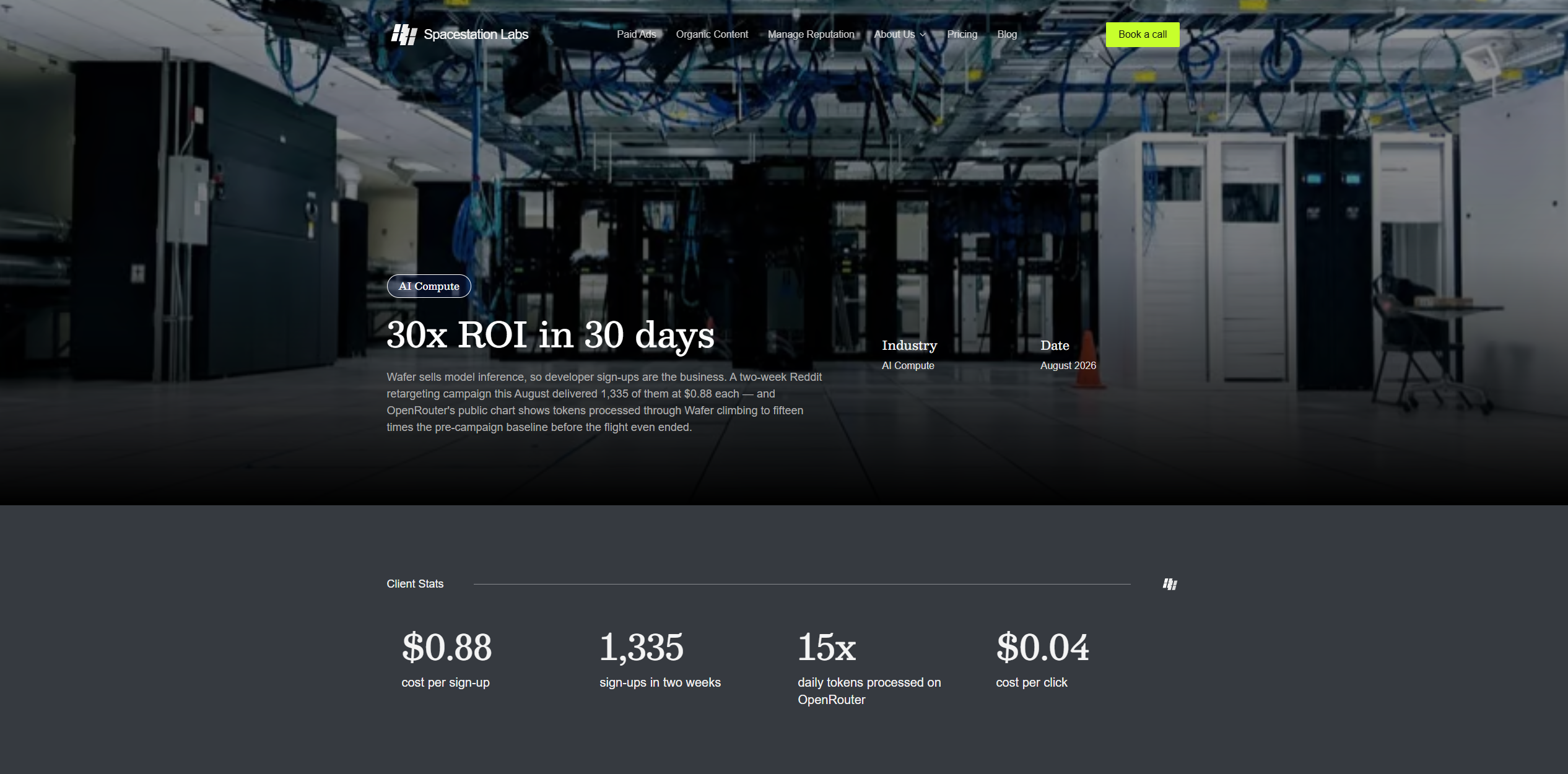
It was a cautionary war story on r/SaaS about software that's technically perfect and practically useless: a $300k build that no doctor adopts, where the demo impresses everyone except the physicians who have to use it. That's the pain Topflight's buyers are living, told by the team that builds the ones that do get used.
One post was the whole campaign: 983k impressions, 2,763 upvotes, 1,326 comments. We bought nothing. People retold it on LinkedIn, Instagram, Medium and other subreddits, and Google's AI Overview now cites those retellings. Founders get the same three things wrong: they write in LinkedIn voice, they make the product the hero, and they add a call to action.
Reddit threads now show up on Google page one and get cited by ChatGPT and Perplexity. How much of what you do is aimed at that, and how should a small SaaS think about Reddit as a search and AI visibility channel?
It's a big part of why clients come to us, but I'm careful about what I promise. I won't guarantee AI citations, because nobody controls what a model says. What I will guarantee is Google page one and a million impressions a month, and those are the inputs the models read.
AI optimises for real people's opinions, not brand copy, and Reddit is where those live. The Topflight post is the example: Google's AI Overview now cites the retellings of it. So a small SaaS shouldn't treat this as a separate workstream. Write the thread that deserves to rank for your problem, and the AI visibility follows from it.
Engagements start at $5,000 a month, and you say you tried a cheaper tier and most clients who left were on it. What would you tell a founder who can't afford that yet but still wants to use Reddit well?
Don't hire anyone yet. We ran a cheaper tier, and almost every client who left us was on it. Lower prices mean volume and templates, and volume and templates are what get accounts banned. A founder doing it themselves beats a cheap agency every time, because the scarce input is a real person with real stakes, and you have that for free.
Use your own disclosed account, spend thirty minutes a day in the three subreddits where your buyers are, and start your own subreddit early. When a post takes off organically, put $50 a day behind it as an ad. Call us when you've got something worth amplifying.
Founders will want to see signs of progress within the first month or two. How should they track Reddit's impact, especially when so much of it lands as "direct" or branded search traffic?
Accept upfront that it behaves like SEO: you won't get clean last-click attribution, and anyone promising it is selling you something. Set up four things before you post:
- The Reddit pixel, installed through Google Tag Manager.
- UTMs on any link you control.
- A "how did you hear about us" field on signup, which catches what analytics files under direct.
- A branded-search baseline in Search Console.
In month one, watch leading indicators: post views, where your threads rank for your problem keywords, and weekly visitors to your subreddit. By month two or three you should see branded search and direct traffic lift in the weeks after a post lands, plus AI referral sessions starting to show up.
What's the most common mistake you see SaaS founders make on Reddit, and what's the quickest way to get banned or burned?
The most common mistake is bringing a display-ad mindset from Instagram or LinkedIn: polished copy, a product pitch and a link. Reddit rewards authority, and you have to be known and liked in your problem space before anything else counts.
The quickest way to get banned is undisclosed promotion, especially an anonymous account that suddenly starts recommending one product. A close second is pasting AI text straight in. It often carries invisible characters, which I think are a likely ban trigger, and people can tell from the prose anyway. Getting burned is slower and worse: you get caught astroturfing, and that thread ranks for your brand name.
What's one thing a founder could do on Reddit this week for free?
Search your brand name plus "reddit" and your category plus "reddit" on Google, then ask ChatGPT what it recommends in your category. That's what your buyers see. Then find one thread where someone is asking about the problem you solve and answer it properly from an account that says who you are, with no link. One useful, disclosed answer in a thread that ranks will outlast a month of posting.