
Most gym software is priced for gyms that can already afford it. Vedad Burgic, a software engineer in Sarajevo, noticed that the well-known products started at around $100 a month and climbed past $500, which is a lot to ask of a studio with 60 members.
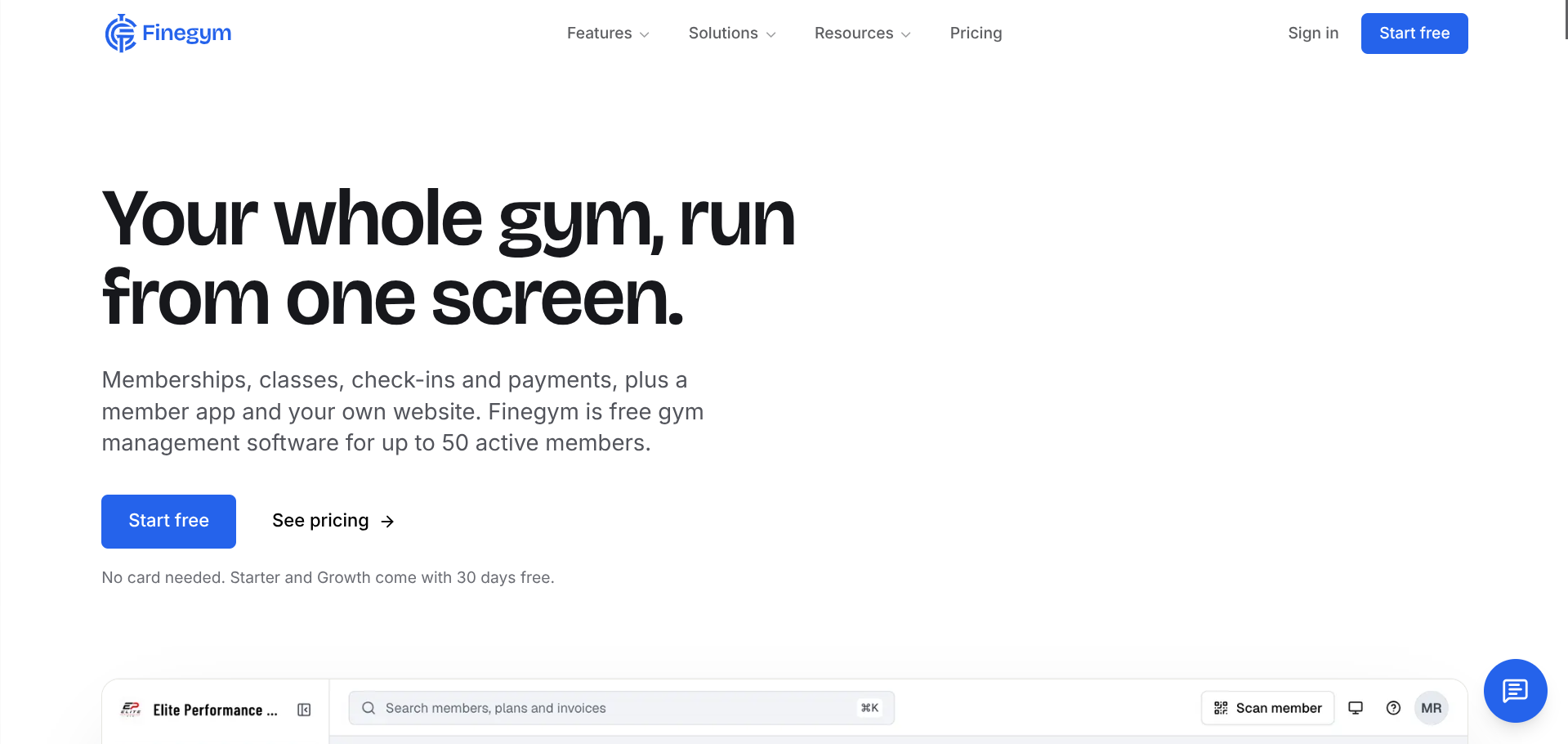
So in September 2023 he started building Finegym, management software for small gyms, studios and martial arts schools that handles class bookings, memberships and billing, QR check-in and digital waivers, with a free plan for up to 50 active members and no investors.
What changed its fortunes was language. He says a gym in Mozambique signed up in December 2025, and four days later Finegym was in Portuguese. Spanish followed in January, and monthly sign-ups went from a handful to more than 250 by August. Today, he says, more than 500 gyms and studios in over 80 countries have signed up, and a little over 100 of them run on Finegym in a given month.
In this Q&A, Vedad explains why nearly half of those sign-ups never added a single member, how a browser's auto-translate broke 28 email templates, why he'd limit the free plan sooner if he started again, and why Mexico is next.
Who are you, and what are you building?
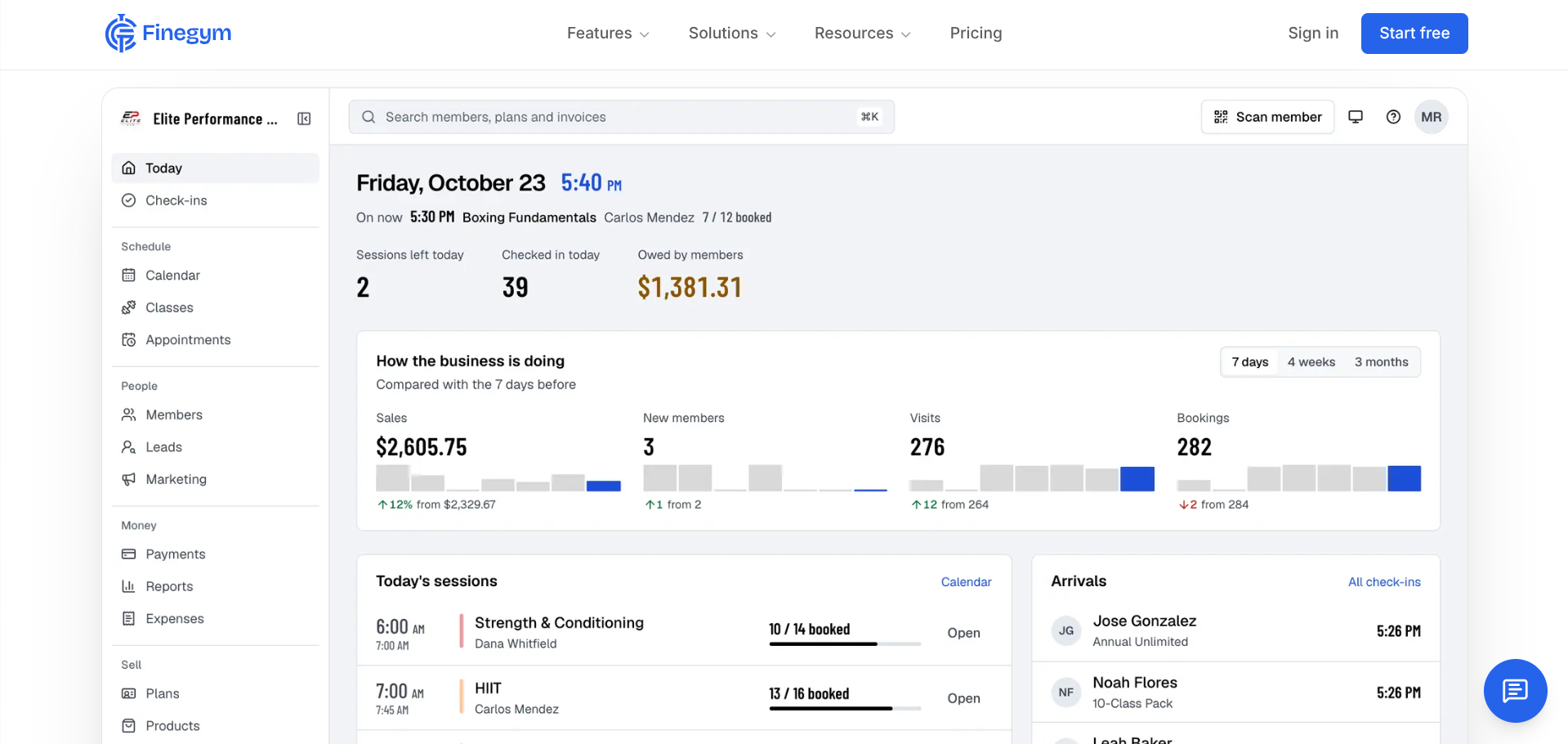
I'm Vedad Burgic, a software engineer based in Sarajevo. I'm building Finegym, management software for small gyms, studios and martial arts schools: the class schedule with online booking, memberships and billing, a member app with QR check-in, and waivers people sign on their phone.
It runs in English, Spanish, Brazilian Portuguese and Bosnian, and it's free for a business with up to 50 active members. There are no investors. The largest group of gyms using it is in Latin America, followed by Europe and the US.
Where did the idea come from, and what tipped you into actually building it?
From looking at what small gyms had to choose from. The well-known products had been around for ten or twenty years, and it showed: dated screens, often a sales call before you could even try them, and prices that started around $100 a month and climbed to $500 or more with every tier or every extra member. Gym owners were saying the same thing in reviews. A studio with 60 members doesn't need an enterprise system, and it can't pay for one.
That gap is what tipped us into building. We started in September 2023 with a small first version, memberships and a QR check-in for members, and with one rule we've kept since: a small gym should be able to afford it. Today that means flat prices and a free plan for up to 50 active members.
What did shipping the first version actually take?
The first commit is from September 27, 2023, and within three weeks we had started three codebases: the API in Django, the admin in React and the member app in React Native. Each gym got its own database schema from the first week, and by the end of October the product was in English and Bosnian.
The first gym went live two years later. Today it's more than 8,000 commits across the three codebases.
How did you get your first users, and what has moved the needle since?
Through Meta ads. In December 2025 a gym in Mozambique signed up, and four days later Finegym was in Portuguese, because of them. Spanish followed in January.
Language is what moved the needle. Through spring 2026 we had a handful of sign-ups a month. With the product in Spanish and small Meta campaigns behind it, that grew to a few dozen a month by July and more than 250 in August.
What we learned next is that signing up isn't the same as starting: nearly half of the gyms that sign up never add their first member. So we rebuilt the first steps around that.
The setup checklist follows the order in which owners drop off, there's a video course of 29 lessons in English, Spanish and Portuguese, and we import the member list for anyone who asks.
How does it make money, and where are you now?
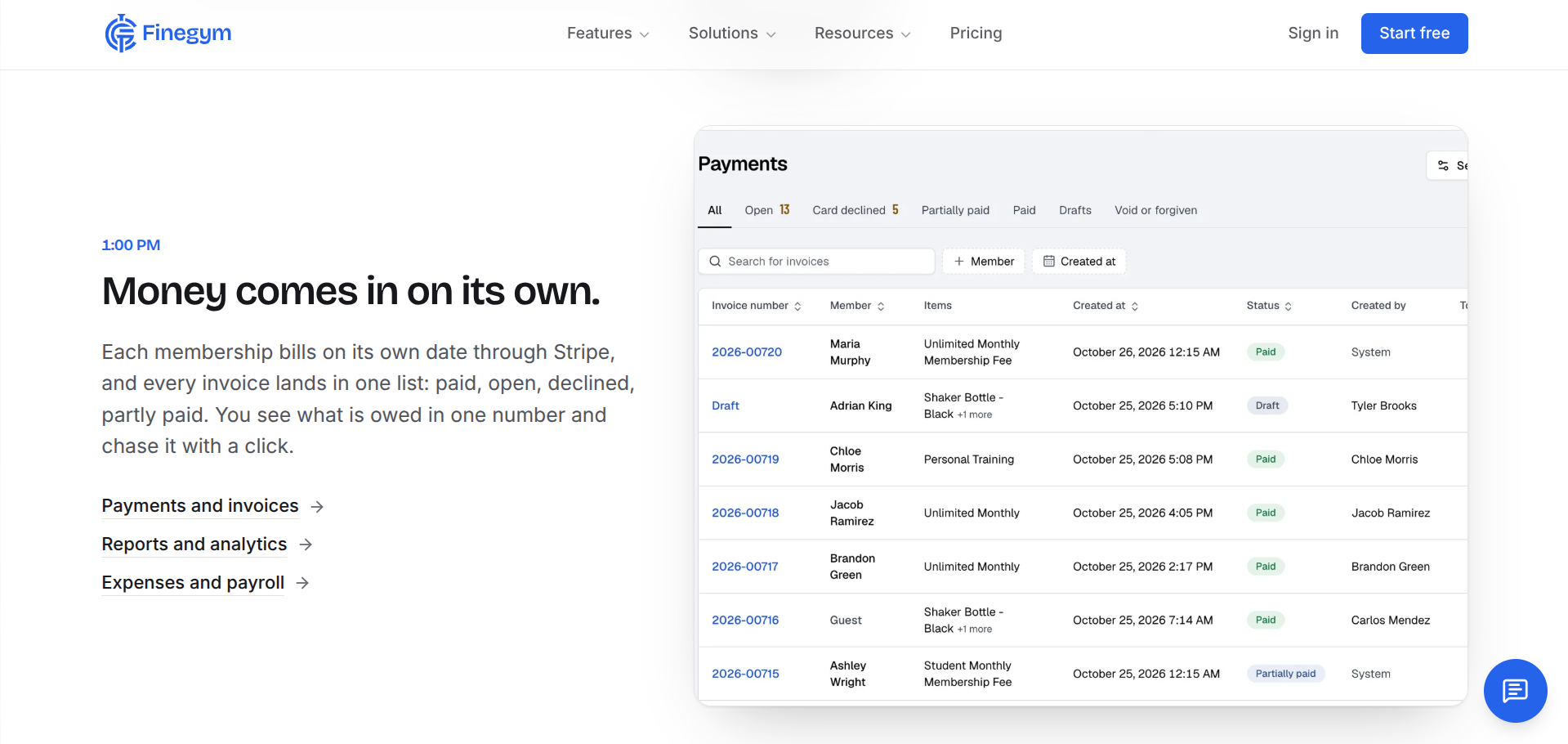
Flat monthly plans: Free for up to 50 active members, Starter at $79 a month and Growth at $149. There's no per-member pricing and no fee on top of Stripe's.
Until this November the free plan had no member limit, which helped us get to 500 sign-ups. This month we limited it to 50 active members, so larger gyms now move to a paid plan, and the first ones already have. It's a new chapter for us, and I'll have real revenue numbers to talk about next year.
What has been the hardest part, and what would you do differently if you started again tomorrow?
Finding a channel that brings customers.
Building the product took two years, and finding the gyms that needed it turned out to be harder. We published more than a hundred blog posts and listed Finegym in the software directories, and search still brings us mostly people who already know our name. Meta ads were the first channel that worked for us.
The other hard lesson was that a product in several languages breaks in ways you don't expect. A studio in Spain edited its email templates with the browser's auto-translate switched on, and the browser translated our placeholders too. Their emails went out without the studio's name until I repaired 28 templates. Since then the editor tells the browser not to translate it, and saving refuses any placeholder it doesn't recognize.
If I started again tomorrow, I'd get the product in front of a first gym sooner, and I'd put the limit on the free plan sooner.
Which founders do you watch or learn from, and what's next for Finegym?
Nenad Milanović, the founder of Clockify. He built a global product from our region without investors, starting from a free plan, and that's the road I'm trying to walk from Sarajevo.
What's next is Mexico, where the most gyms run on Finegym: since this week our Spanish ads run only there. Beyond that, we keep building what gym owners ask for. This week we shipped two scheduling features that a trainer in Cyprus had asked for less than a week earlier.
What to take from Vedad's story
The clearest lesson here is how much language can do for a small product. Finegym spent two years being built in English and Bosnian, then a single gym in Mozambique prompted a Portuguese version in four days, and Spanish turned a handful of sign-ups a month into more than 250.
It's the same pattern Aidar Akmaev described in our NOXI Q&A, where proper Arabic support took Arabic from under 2% of new decks to close to 4 in 10. If your users are asking for a language, it may be worth more than your next feature.
The second lesson is that a sign-up isn't a customer.
Nearly half of Finegym's sign-ups never added a member, and Vedad's answer was to rebuild the first steps around where owners actually dropped off, with a checklist, a 29-lesson video course and a free member import. If your sign-ups look healthy but usage doesn't, the first ten minutes of your product are usually the place to look.
Want to try it? You can find Finegym at finegym.io. Have a story of your own? Share your founder story and we'll feature it.