

The UK job market has cooled a lot from its post-pandemic peak, which means the usual approach of firing applications at every listing on a big board tends to produce a great deal of silence.
Early-stage startups are a different animal anyway, because the best roles often never reach the big boards at all, and the ones that do are buried among thousands of unrelated listings.
These are the places worth your time, with an honest note on what each one is good and bad at.
1. Wellfound
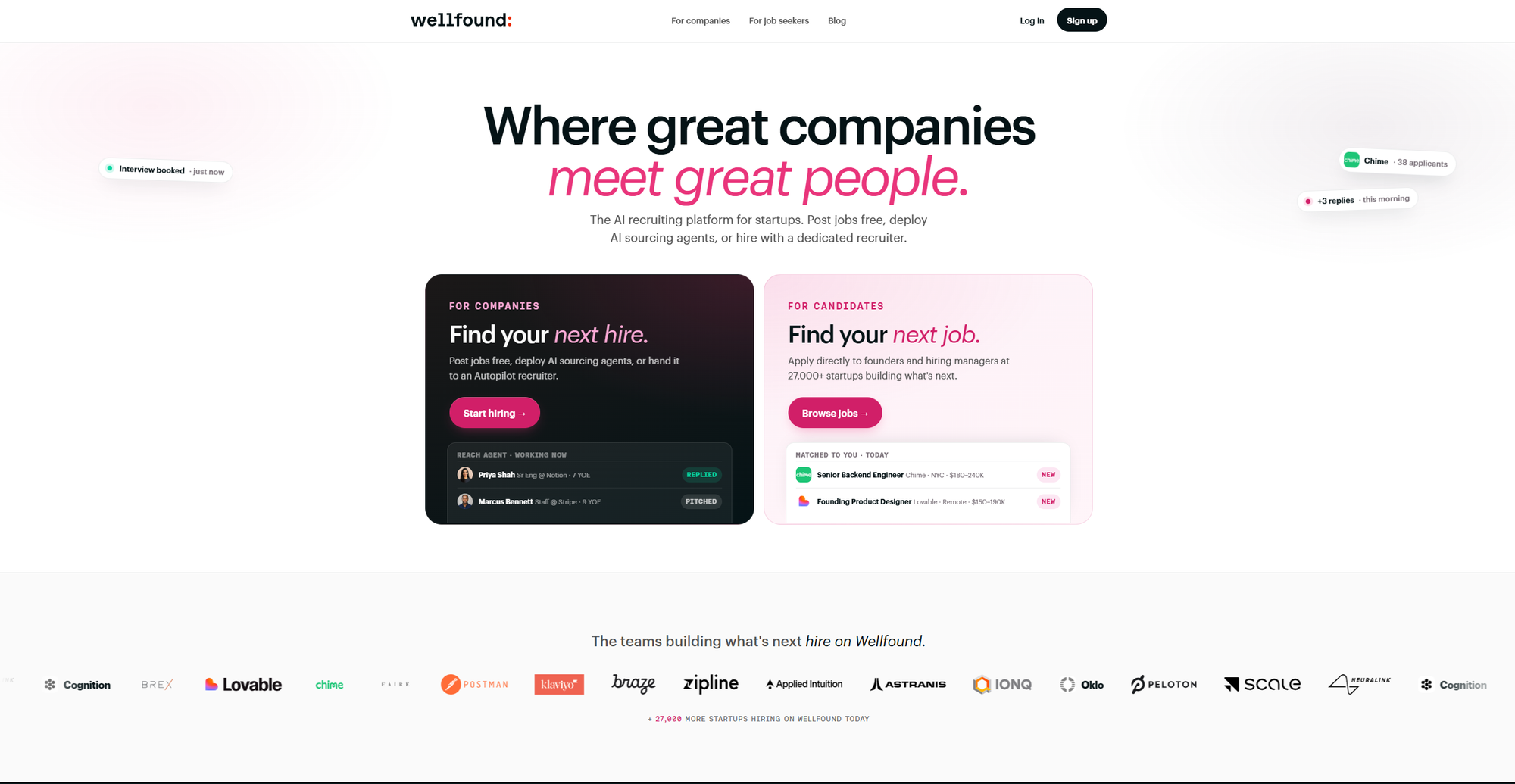
Wellfound (the old AngelList Talent) is the best-known startup-only board, and its main selling point is that salary and equity ranges are usually shown before you apply, with filters for both. That makes it unusually good for comparing offers on a like-for-like basis.
The catch is that it leans heavily towards the US, so UK roles are thinner on the ground and salaries are sometimes listed in other currencies, which is worth checking before you get excited.
2. Welcome to the Jungle (formerly Otta)
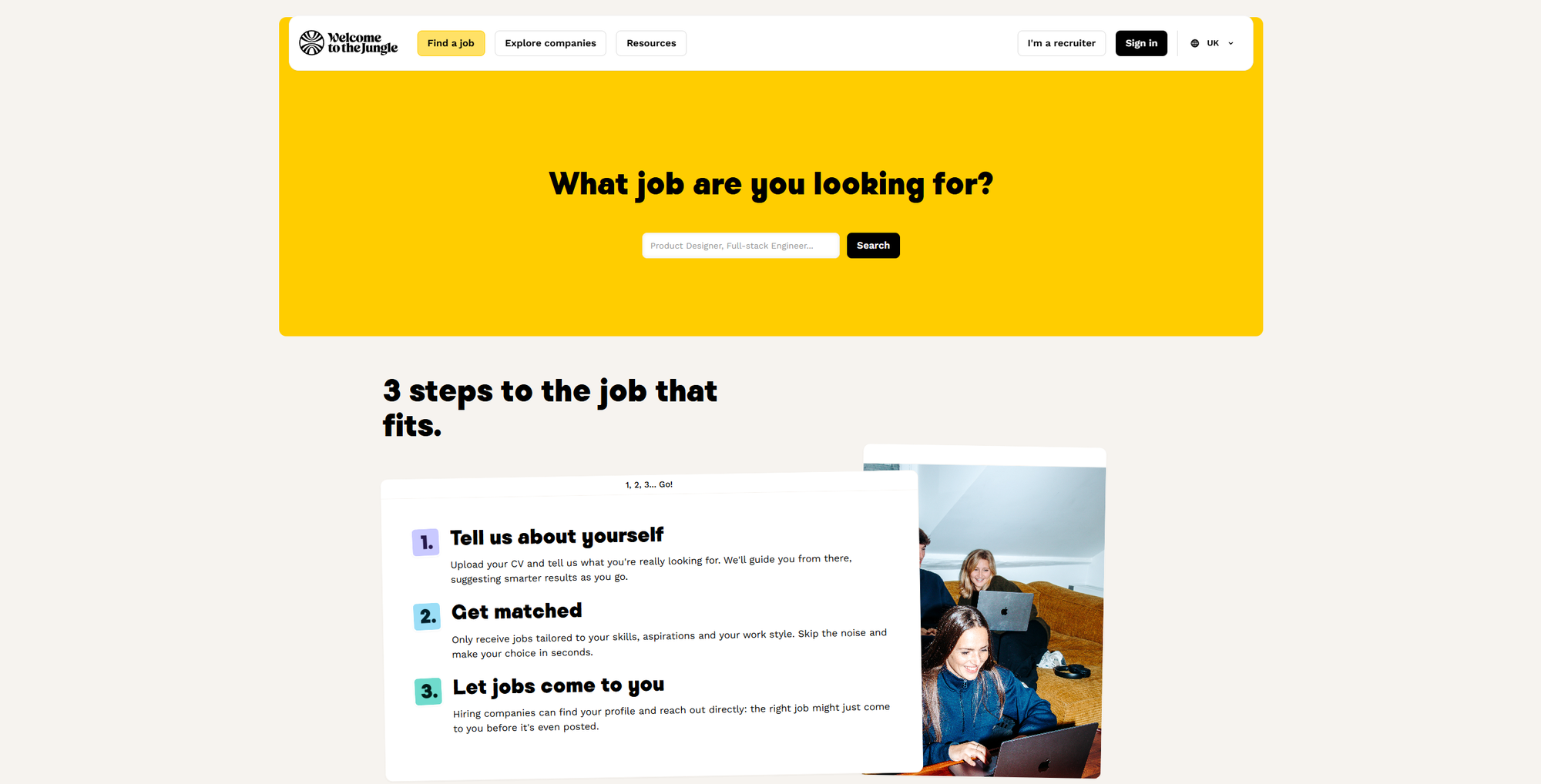
Otta was a London-founded platform that matched candidates to tech and startup roles, and it was bought by French company Welcome to the Jungle in January 2024, with the product now sitting under that name.
It's still one of the more pleasant ways to search, partly because you can filter for things like visa sponsorship and partly because the matching surfaces companies you wouldn't have thought to look for. It covers startups and scale-ups rather than only very early ones, so expect to do some filtering by company size yourself.
3. Early Stage Hires
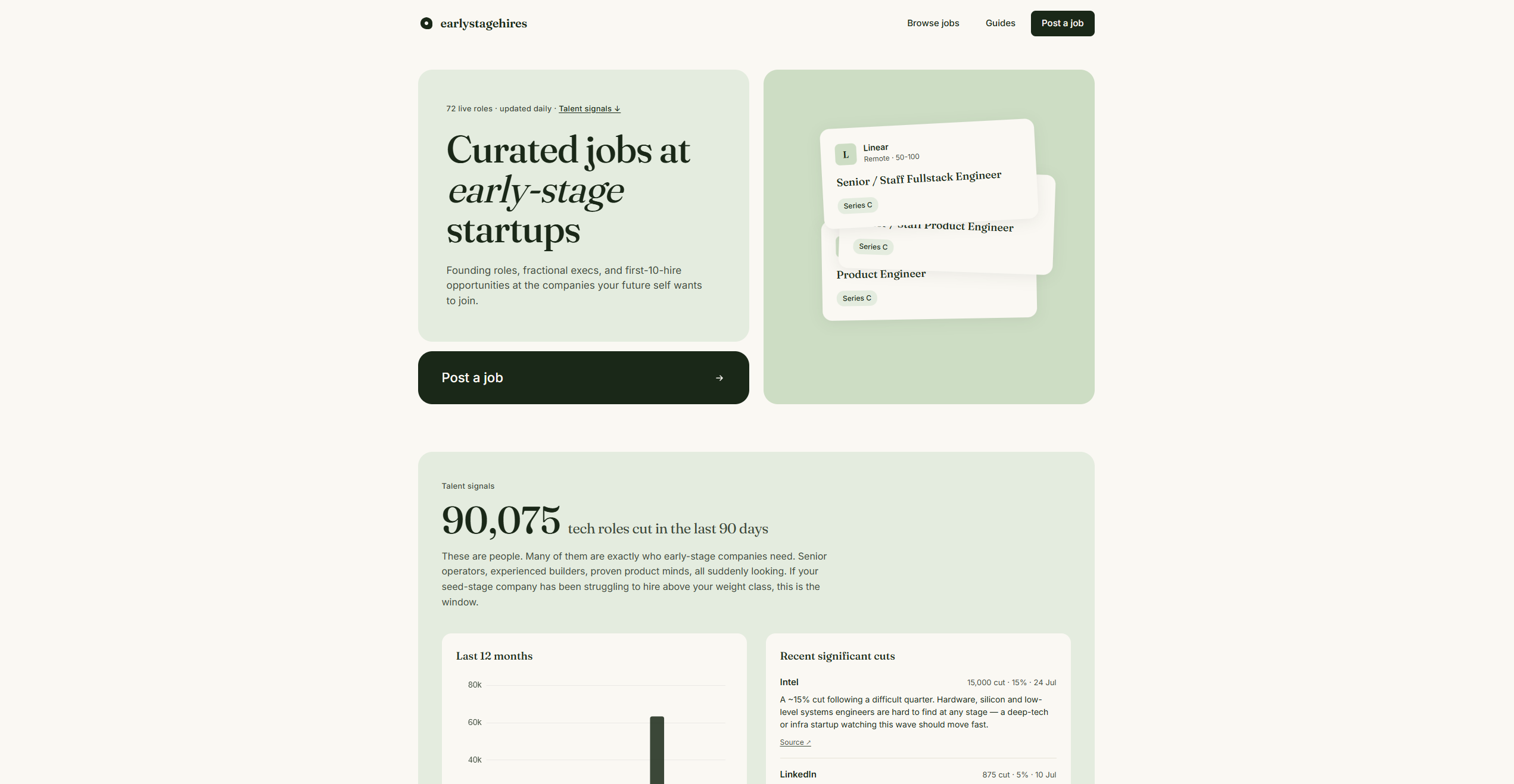
Early Stage Hires is a small, curated board for founding roles, fractional positions and the first ten hires at a company, with a UK-first slant and a UK/US filter. Listings are pulled each day from the applicant tracking systems the startups already use (Ashby, Greenhouse and Lever), which means the roles are real and the apply links go straight to the company.
The honest trade-off is size: it covers a handful of vetted companies rather than the whole market, so it works best as a shortlist of places worth watching rather than as your only search. There's also a set of guides on equity, EMI options and Skilled Worker sponsorship, which are the questions most generic boards leave you to work out alone.
4. Hacker News "Who is hiring?"
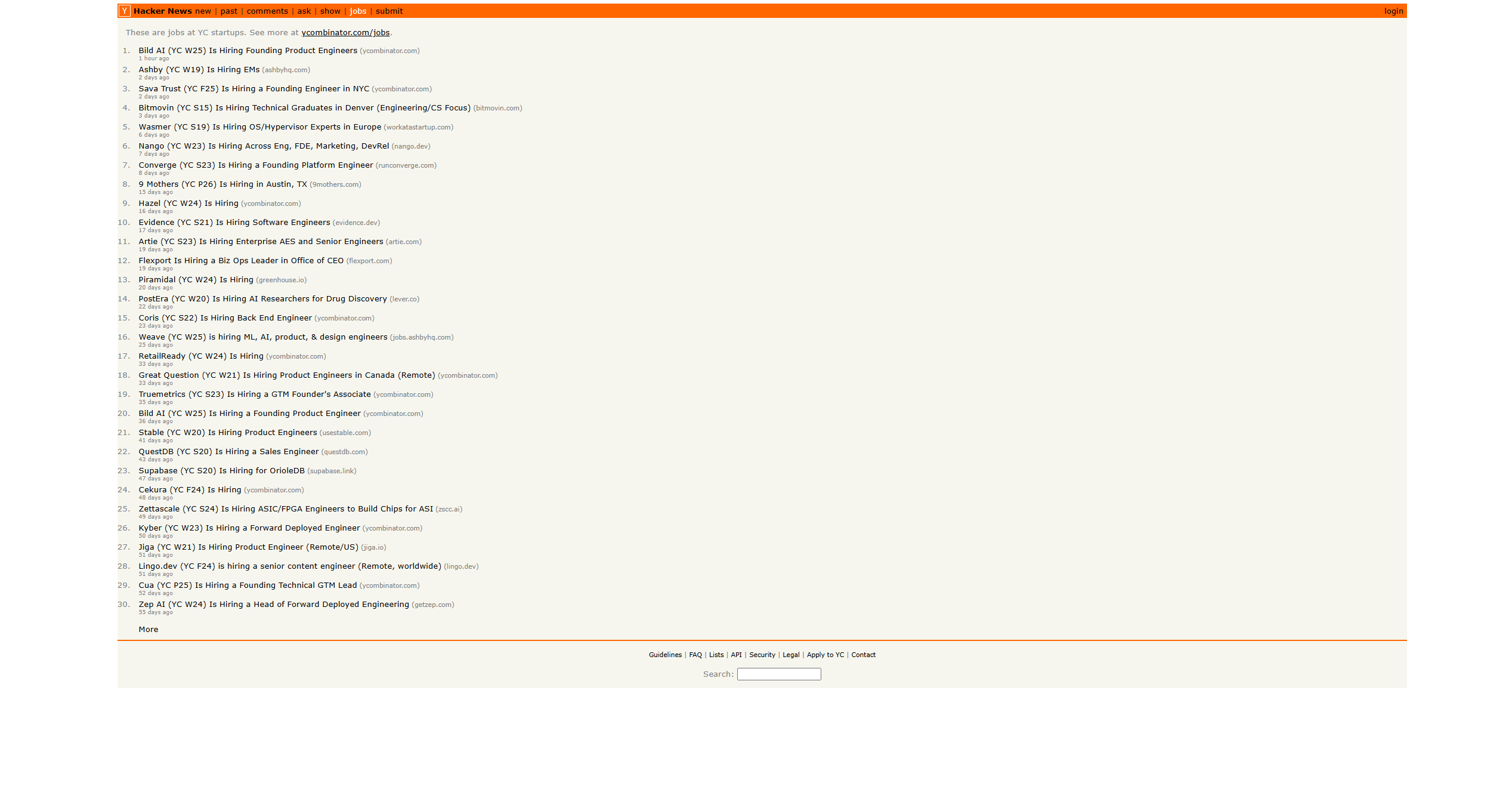
Every month, usually on the first, Hacker News runs a thread where people from hiring companies post their own openings, and only employees of the company are meant to post, one comment per company.
Because the poster is typically a founder or an engineer, you're often applying to a human rather than a recruiter's inbox, which does wonders for response rates. It's engineering-heavy and skews American, but plenty of remote-friendly and European roles turn up, and a one-line email to the person who posted is a perfectly normal way to apply.
5. LinkedIn, used carefully
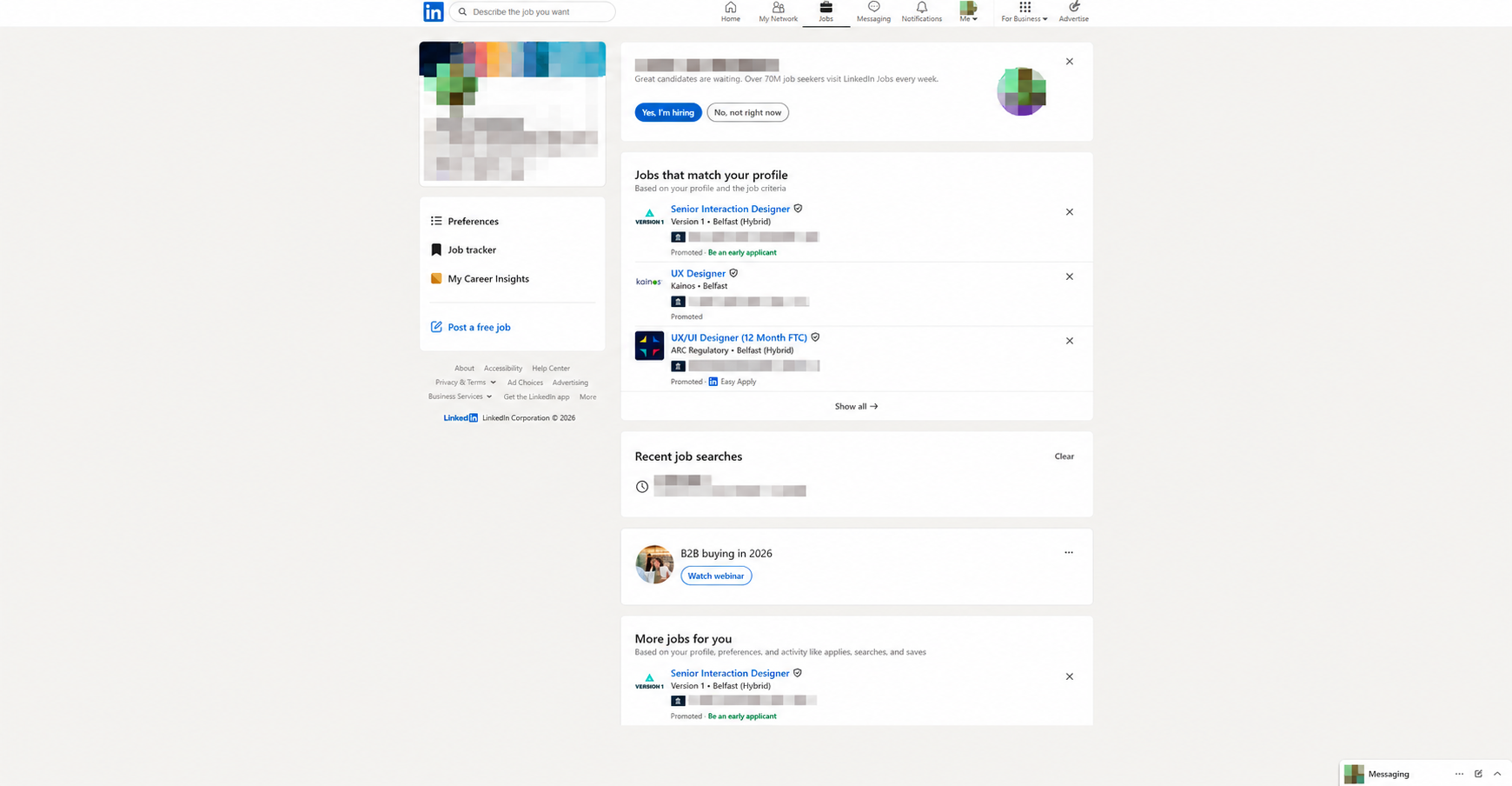
LinkedIn has the sheer volume, and for UK searches nothing else comes close. The trick is to stop searching by job title alone and instead filter by company headcount and posting date, and to treat anything older than a couple of weeks as probably dead.
Plenty of listings on large boards are ghost jobs or reposts, so it pays to check the company's own careers page before spending an evening on a cover letter.
6. Work at a Startup (Y Combinator)
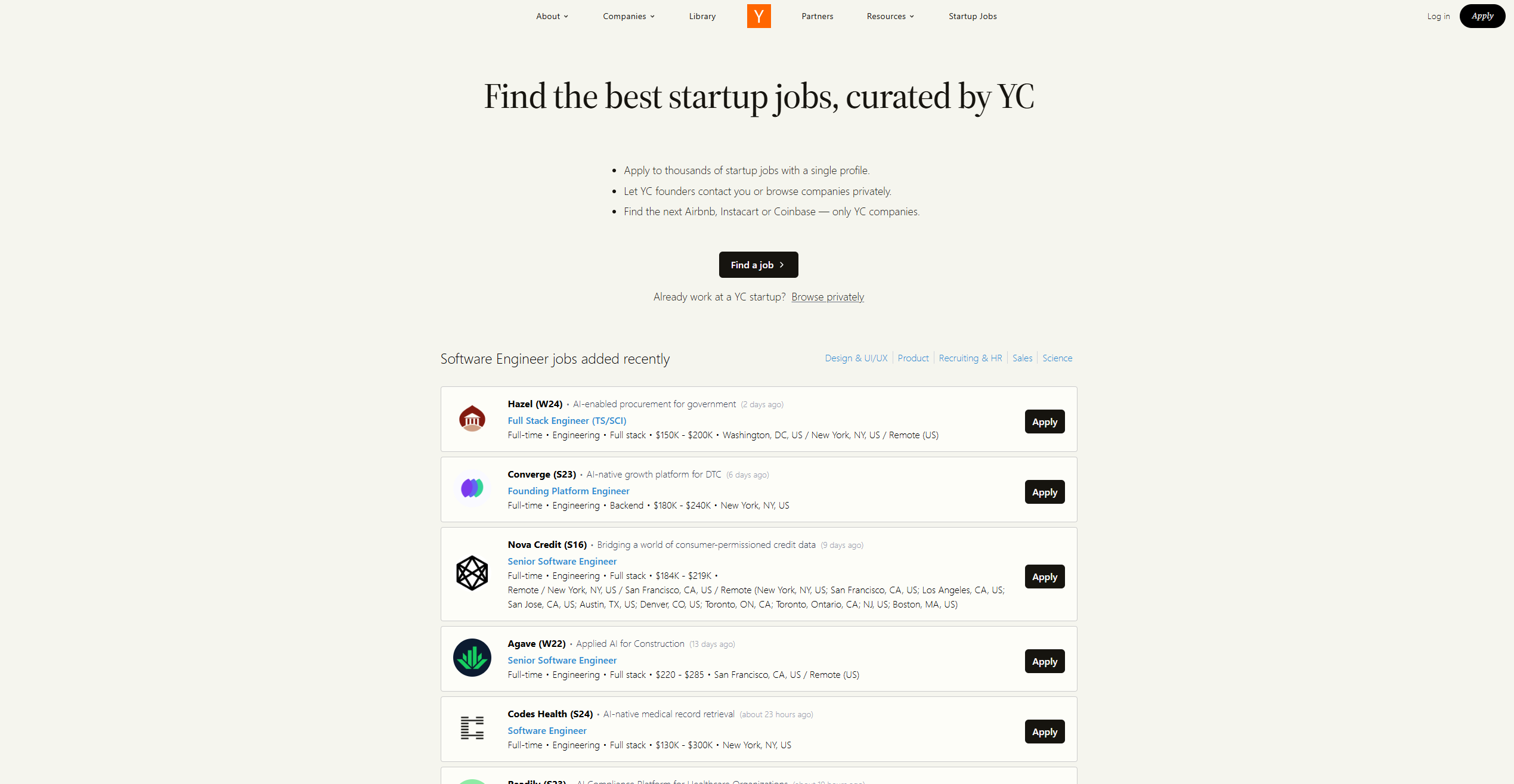
YC runs its own board for its portfolio companies, and one profile lets you apply to many of them at once.
The companies are young, the roles are often genuinely early, and founders tend to read the applications themselves. It's again US-weighted, but a good number of YC companies hire in London and remote across time zones, so it's worth an account even if you only check it monthly.
7. VC portfolio job boards
Most venture funds, UK ones included, publish a talent page or job board covering their portfolio companies. This is one of the better tricks available, because it shows you who has recently raised money and is therefore about to hire. It's also a quiet way of vetting the company, since a fund with a reputation to protect has at least looked at the books. Pick the three or four funds whose portfolios match what you want to work on and check them every couple of weeks.
8. The company's own careers page
Most early-stage startups don't build their own careers software; they use Ashby, Greenhouse or Lever, and the careers page is simply a window onto that.
Going straight to the source means you see the role the day it opens, before it's been copied to a dozen boards, and it's also where you'll catch the roles that never get advertised elsewhere. Keep a short list of companies you'd genuinely like to work for and visit their pages on a schedule, or let a curated board do the watching for you.
How to choose
If you only have an hour a week, spend it on the careers pages and the VC boards, because that's where the early roles appear first. Use Wellfound and Welcome to the Jungle to compare compensation and discover companies, use the Hacker News thread when you want to write directly to a founder, and treat LinkedIn as the wide net you check last.
Whatever you use, ask about equity, runway and what the job really looks like before you get attached to it, since those are the things that separate a good early-stage role from an expensive lesson.