


Imagine a world where designers no longer email PSD files back and forth, where version control nightmares are a thing of the past, and where teams—whether in the same room or across continents—can collaborate on designs in real time, as effortlessly as editing a Google Doc.
That world exists today, thanks to Figma.
Launched in 2016, Figma didn’t just enter the design tool market—it rewrote the rules. While giants like Adobe and Sketch dominated with desktop-only software.
Figma bet big on the cloud, unlocking instant collaboration, cross-platform accessibility, and a frictionless workflow that designers didn’t even know they needed.
What started as an ambitious experiment became one of the most disruptive forces in design history. In less than a decade, Figma:
- Dethroned industry leaders (Adobe XD, Sketch) by making collaboration its superpower.
- Won over millions with its freemium model—turning casual users into evangelists.
- Became a $20 billion acquisition target (before regulators stepped in).
This is the story of how a browser-based underdog redefined an entire industry—and what every innovator can learn from its rise.
This case study explores:
- What Figma Built – The product and its key features
- How They Got Started – The founding story and early challenges
- Key Moves That Worked – Strategic decisions that fueled growth
- Funding and Valuation – Financial performance and major achievements
- What You Can Learn – Takeaways for startups and entrepreneurs
- Sources and Further Reading
What Figma Built
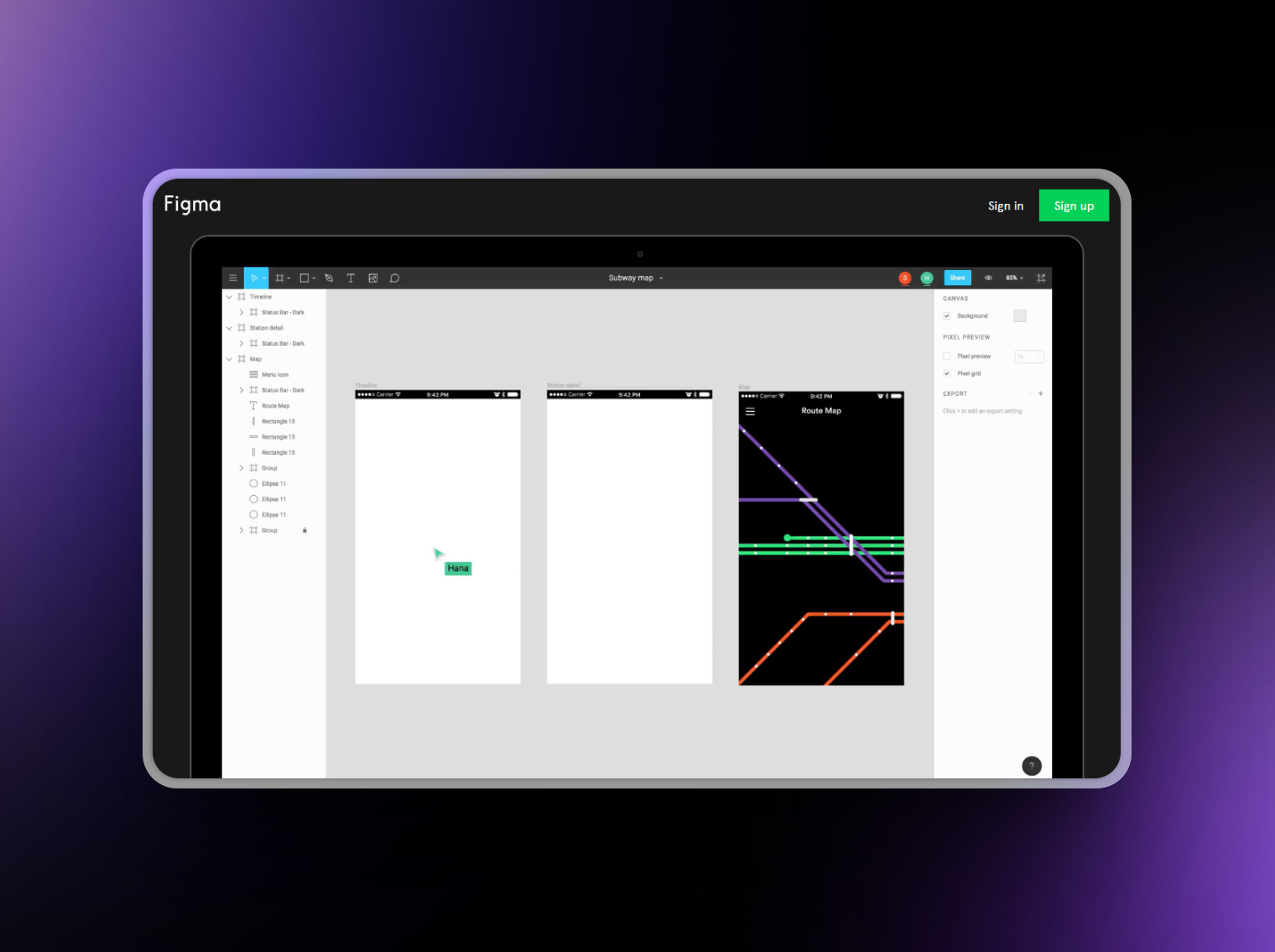
Figma is a browser-based vector graphics editor and prototyping tool primarily used for UI/UX design.
Unlike traditional design software (e.g., Adobe Photoshop or Sketch), Figma operates entirely in the cloud, enabling real-time collaboration.
This was a game changer compared to Sketch, which ran locally and didn't offer a native way to collaborate with others.
Key Features:
| Feature | Description |
|---|---|
| Real-time collaboration | Multiple users can edit designs at the same time. |
| Cross-platform accessibility | Works on Windows, macOS, Linux, and Chromebooks. |
| Design systems & components | Supports reusable elements to maintain consistency across projects. |
| Prototyping & animations | Create interactive mockups without needing third-party tools. |
| Plugins & integrations | Extend functionality with tools like Slack, Jira, and Google Drive. |
| Freemium model | Free tier covers core features; paid plans unlock advanced capabilities. |
Figma’s cloud-native approach didn’t just solve a few annoying problems—it changed how designers work day to day.
Before Figma, teams juggled design files over email or Dropbox. You had to label things like homepage_v8_FINAL_final.sketch just to keep track. Two people editing the same file? Someone’s work got overwritten. Designers on Windows? Out of luck unless the tool supported it.
Figma shifted all that. Files lived in the browser. Everyone could work on the same design at the same time, like Google Docs for design. No more syncing issues, no more asking “Who has the latest version?”
Developers could inspect designs without needing to install anything. Clients could leave comments directly on the design.
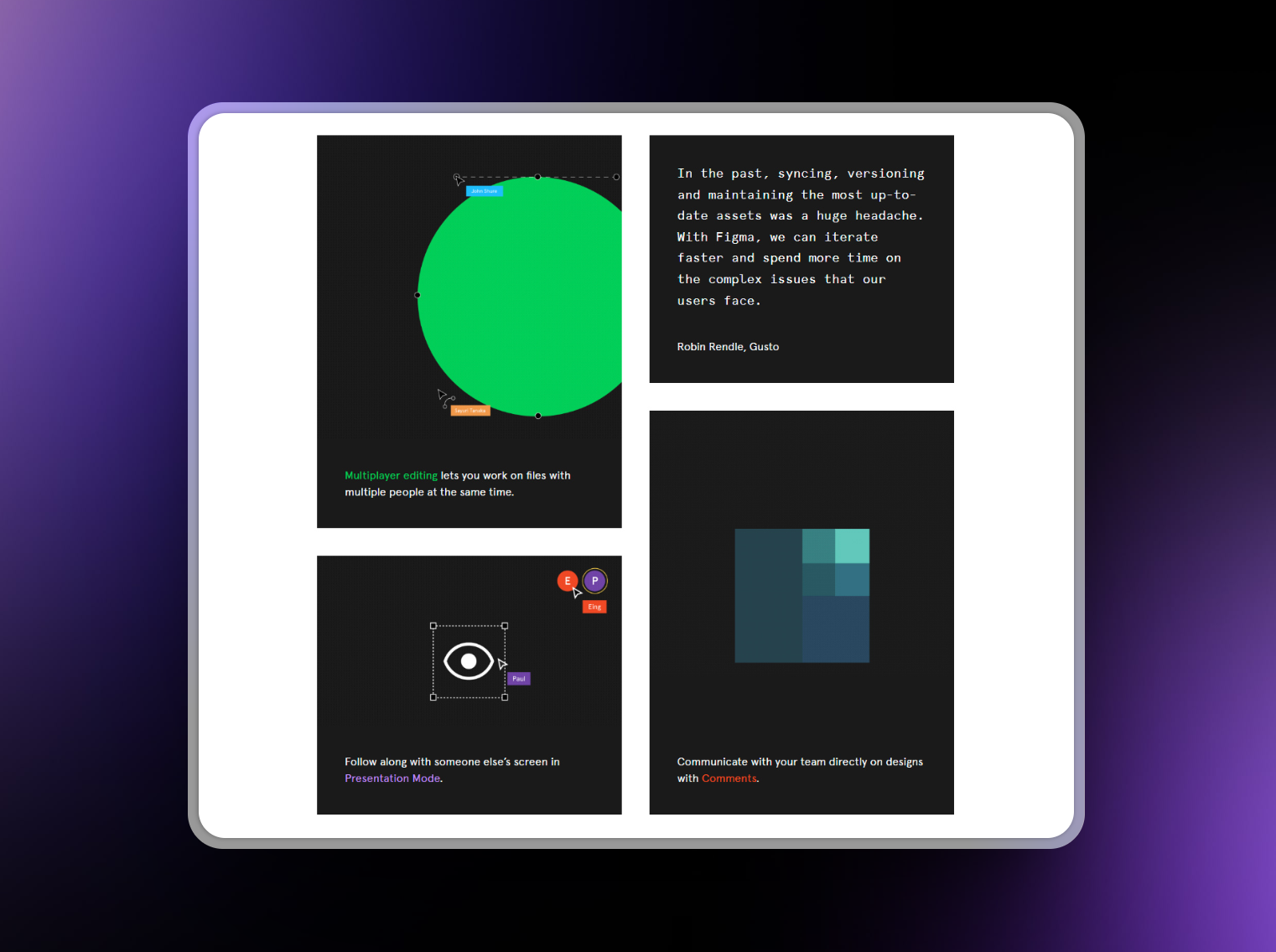
It meant faster feedback loops, smoother handoffs, and less friction. And once teams got used to that workflow, going back felt impossible.
In a nutshell, the team at Figma democratized design and then some. 👏
How They Got Started
Founding Story
Dylan Field, a student at Brown University, came up with the idea for Figma while still in school. He had interned at LinkedIn and Flipboard and saw firsthand how design and collaboration often clashed.
His early vision was to build a design tool that used web technology to make collaboration easier and faster—no more sending files back and forth or managing messy version histories.
In 2012, Field dropped out of college after winning a $100,000 Thiel Fellowship. The grant gave him space to pursue the idea full-time. He teamed up with Evan Wallace, a friend and talented engineer from Brown who had worked at Google. Together, they began building what would become Figma.
Challenges in the Early Days
Technical Hurdles
Building a full-featured design tool in the browser wasn’t common at the time. The team had to solve tough problems around rendering, performance, and stability—all without leaning on native desktop capabilities.
Industry Skepticism
Designers were used to tools like Sketch, which offered fast performance and smooth offline workflows. Many doubted a web-based alternative could match up. Some dismissed Figma as a toy or side project.
Limited Access
The first versions of Figma were invite-only, which slowed initial adoption. The team focused on building the core product, refining the experience, and proving that working in the browser wasn’t just viable—it was better.
Key Moves That Worked
Several strategic decisions contributed to Figma’s rapid growth:
A. Prioritizing Real-Time Collaboration
- Figma’s core innovation was real-time, multiplayer editing—something designers hadn’t seen in a design tool before.
- It worked like Google Docs: multiple people could edit the same file at the same time, with live cursors showing who was doing what.
- This made it ideal for remote teams or cross-functional groups needing fast feedback without waiting on file transfers or version updates.
B. Freemium Model & Viral Growth
- Figma launched with a generous free tier. That made it easy for students, freelancers, and small teams to start using it with no upfront cost.
- As more designers adopted it, they brought it into their companies. Teams started switching organically, without a big sales push.
- This bottom-up adoption led to larger organizations purchasing enterprise plans once they saw how widely it was already in use.
C. Focusing on Community & Plugins
- In 2020, Figma launched the Figma Community—a space where designers could publish and share templates, design systems, and plugins.
- New users could get a head start by using shared resources, lowering the barrier to entry.
- It created a sense of shared ownership and collaboration around the platform.
- Figma also opened the door to third-party developers, who expanded its functionality with tools for:Accessibility checksAnimation previewsWorkflow automationDesign system management
D. Targeting Developers & Non-Designers
- Figma didn’t stop at designers. It built tools that helped others in the product pipeline work more efficiently.
- Developers could inspect elements, copy code snippets, and follow design updates without needing another tool.
- Project managers, marketers, and clients could leave comments directly in the file—no need for screenshots or slide decks.
E. Capitalizing on Remote Work Trends
- When remote work spiked in 2020, Figma was already ahead.
- Its browser-based setup and real-time features made it a natural fit for distributed teams that needed a shared workspace.
- While other tools scrambled to catch up, Figma was already built for the new way of working.
Funding & Valuation
Figma’s funding journey reveals a carefully scaled growth strategy, with each round validating its market dominance.
| Year | Event | Amount | Notes |
|---|---|---|---|
| 2013 | Seed Round | $3.8M | |
| 2015 | Series A | $14M | |
| 2018 | Series B | $25M | |
| 2019 | Series C | $40M | |
| 2021 | Series D | $200M | Valuation reached $10B |
| 2022 | Acquisition Attempt | $20B | Adobe deal blocked by regulators |
The early $3.8M seed (2013) and $14M Series A (2015) financed its risky bet on cloud-based design, while the $25M Series B (2018) and $40M Series C (2019) coincided with explosive user adoption as remote work surged.
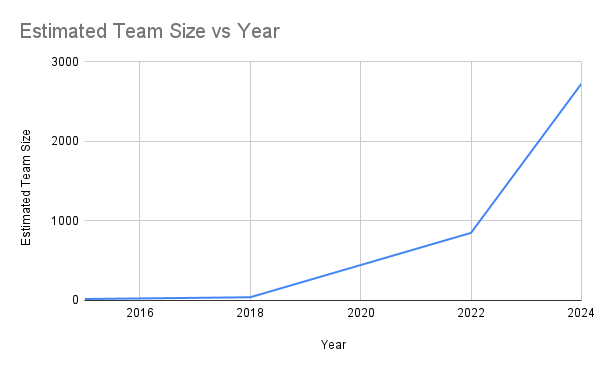
The seismic leap to a $10B valuation in 2021 (Series D, $200M) reflected Figma’s irreversible disruption of Adobe and Sketch—proven when Adobe’s $20B acquisition offer (2022) became one of the largest in SaaS history.
Though regulators blocked the deal, Figma’s trajectory underscores a key lesson: Nailing product-market fit early attracts capital, but category-defining innovation forces even giants to pay attention.
User Growth
| Year | Milestone | Notes |
|---|---|---|
| 2016 | Launched with limited beta access | Initial rollout to select users |
| 2018 | Reached 1M+ users | Steady early growth |
| 2020 | Reached 4M+ users | Doubled user base due to remote work surge |
| 2023 | Surpassed 10M+ users | Continued global adoption |
Figma’s rise from plucky upstart to industry standard reads like a Silicon Valley fairytale—with hard numbers to back it up.
When Figma launched its beta in 2016, industry veteran Sketch already boasted over 1 million paid users, having revolutionized UI design just years earlier.
Yet by 2018, Figma matched Sketch’s user base (1M+) while still free—a warning shot across the bow.
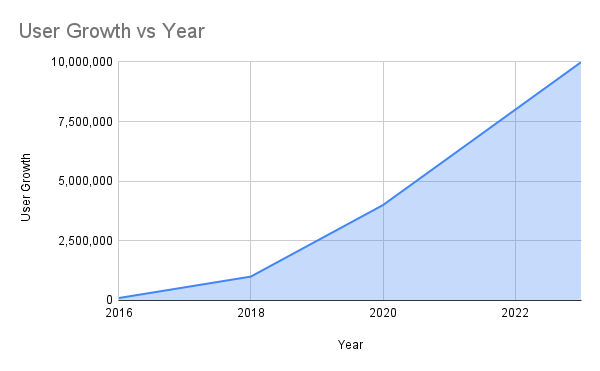
The pandemic became Figma’s watershed moment: while Sketch plateaued near 3M users in 2020, Figma doubled to 4M+, then left competitors in the dust.
Adobe XD, despite its parent company’s resources, stalled at 5M users in 2021—the same year Figma hit 7M. Today’s 10M+ user milestone isn’t just impressive—it’s existential for rivals.
Why it matters:
- Sketch (native/Mac-only) proved vulnerable to cloud disruption
- Adobe’s XD (launched 2016 with $1B+ R&D) failed to out-innovate
- Figma turned collaboration from a feature into the product itself
The lesson? In tech, incumbency means nothing when someone reinvents the paradigm.
Growth drivers behind the numbers:
- Freemium moat: Figma’s free tier hooked students/startups, while Sketch’s $99/year paywall limited adoption
- Platform flexibility: Browser-based worked everywhere; Sketch’s Mac exclusivity became a liability
- Network effects: More users → more community plugins → more enterprise adoption
Revenue Model
- Free tier – Limited projects, basic collaboration.
- Professional ($12/month) – Unlimited files, advanced features.
- Organization ($45/month) – Team libraries, admin controls.
- Enterprise (Custom pricing) – Security, SSO, dedicated support.
Estimated Annual Recurring Revenue (ARR):
- 2020: ~$100M
- 2023: ~$600M+
What You Can Learn
A. Solve a Real Pain Point
Figma addressed collaboration struggles in design, a problem ignored by competitors.
B. Leverage Network Effects
By making collaboration seamless, Figma ensured that adoption by one team member encouraged others to join.
C. Freemium Can Drive Enterprise Adoption
A free tier helped Figma spread virally before converting users to paid plans.
D. Build for the Future
Figma bet on web-based tools before they were mainstream, positioning itself as an innovator.
E. Community & Ecosystem Matter
The Figma Community and plugins created a sticky ecosystem, reducing churn.
Sources and Further Reading
- "How Figma Became the Google Docs of Design" – The Verge
Link - "Figma’s $20B Adobe Acquisition and What It Means for Design" – TechCrunch
Link - "The Rise of Figma and the Future of Design Tools" – Medium
Link - Figma’s Official Blog – Updates on features and growth
Link - "Why Figma Wins" – First Round Review (Product Strategy Deep Dive)
Link