
You don’t need 25 newsletters. Three good ones can cover most weeks. Pick one that keeps you up to date, one that helps with a problem you have right now, and one you’d open even on a busy Friday.
Your choices should change as the business does.
If you’re trying to get your first ten paying customers, an interview with someone who remembers how they found theirs is worth your time. Six months later, when people are signing up and leaving before they’ve tried the product, you’ll want someone who can show you how to fix onboarding.
The Friday Brief is our own weekly pick for founders who like seeing what other people are building. Join The Friday Brief.
Quick picks
- For daily tech news: TLDR. The short summaries make it easy to decide which story deserves another five minutes.
- If you’re preparing to raise: StrictlyVC. Follow the funding news in your sector before you start putting together an investor list.
- For a product or growth problem: Lenny’s Newsletter. Start with the archive and look up the decision in front of you.
- If you’re bootstrapping: Indie Hackers. It’s a good fit for people building a business with their own money.
- For founder stories: Founder Reports for longer interviews, or The Friday Brief for a weekly mix of stories, tools and a product teardown.
Daily news
TLDR
The easiest place to start if you build software and keep missing stories people assume you’ve heard about. Its free daily email summarises news from tech, startups and programming, with links to the original pieces. You can skim most mornings and still follow a story further when it touches your work.
The Hustle
Takes a broader view of business. Its appeal is the odd story about an industry you’d never have thought to look up. Choose this over a second tech digest if you’d like a bit more variety in your morning reading.
StrictlyVC
This is the one to read with an investor list open. When a deal catches your attention, note the investor, the stage and what the company sells. A few weeks of doing that can give you a better starting point for outreach than a spreadsheet of hundreds of names.
The Download
Comes from MIT Technology Review every weekday morning. It’s a good pick when an emerging technology might affect your business and you want to understand what researchers or companies have actually demonstrated. The signup page lets you preview an edition.
Product, marketing and growth
Lenny’s Newsletter
The most useful when you arrive with a question. How should you price a new tier? Where do people drop out of onboarding? Search the archive before deciding whether you need a paid subscription. One article that helps you make a decision this week gives you a better feel for its value than a month of unread emails.
Demand Curve
Makes growth advice easier to judge by showing the business behind a tactic. One example looks at email for expensive, once-in-a-lifetime purchases. That’s a useful distinction if the usual advice to get customers buying again makes little sense for what you sell.
Marketing Examples
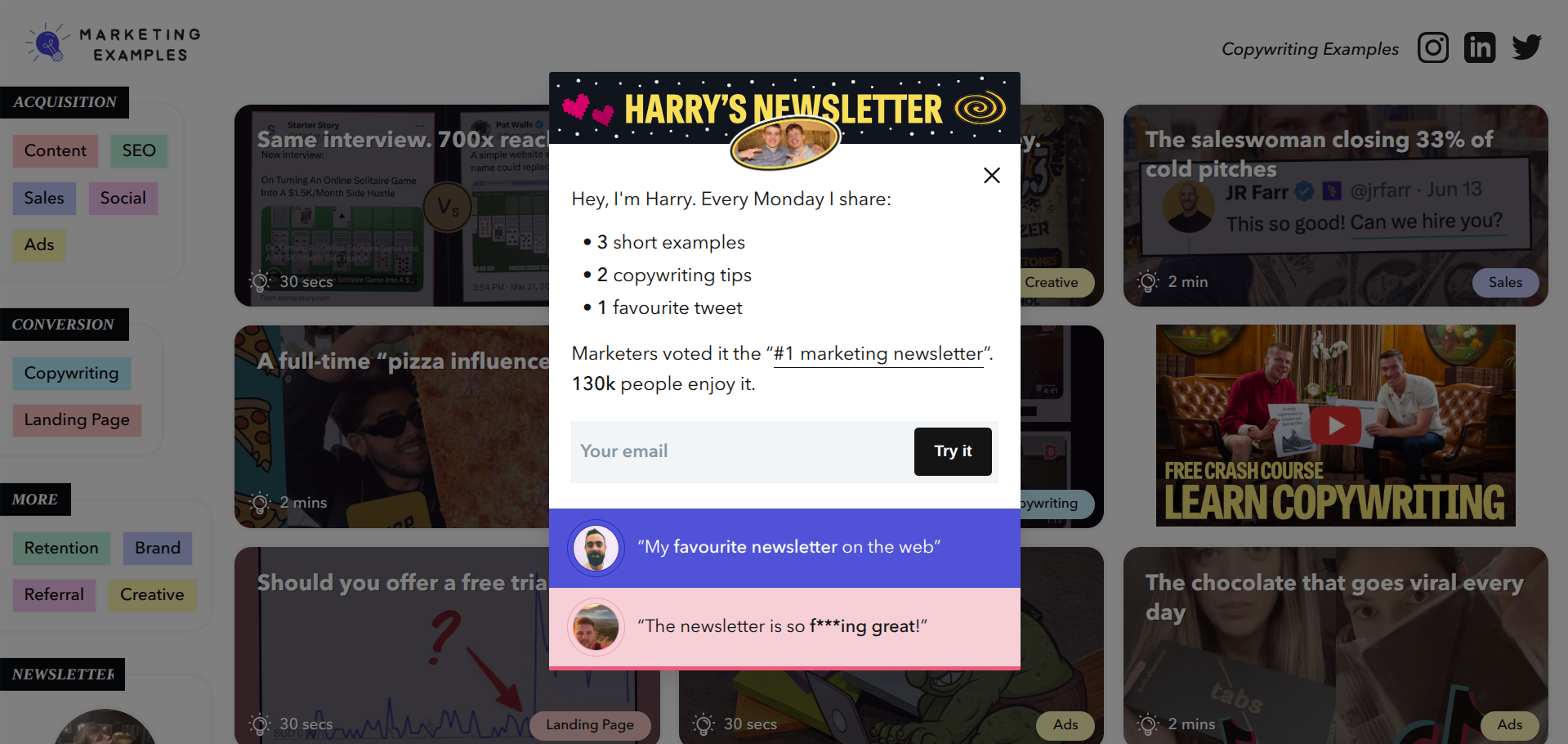
This is the one I’d open while rewriting a landing page. Harry Dry uses short examples and copywriting tips, so you can read an issue with your own headline beside it. You’ll get more from trying one change while the example is fresh than from saving the whole thing for later.
First Round Review
This is worth a longer reading slot. A good starting point is Rahul Vohra’s account of how Superhuman surveyed users about losing access to its product. The interesting bit is what the team did next: it looked more closely at the people who would miss it most and used their answers to decide what to build.
Bootstrapping and early founder decisions
Indie Hackers
Indie Hackers is my first pick for a founder funding the business themselves. When you read a revenue story, look for the detail behind the milestone. Where did the first buyer come from? Did the founder already have an audience? Those details tell you whether there’s anything you could try with the resources you have.
The Bootstrapped Founder
Arvid Kahl has paused the newsletter and closed email signups, but its past editions are available. If you liked his writing or came here looking for a way to subscribe, the archive is the place to start.
Houck’s Newsletter
This one takes a different angle. Michael Houck writes about building a startup from the perspective of a venture-backed founder. That distinction matters if you’re bootstrapping: advice about how fast to hire looks different when the salaries come out of customer revenue.
Founder stories and interviews
Founder Reports
A good choice if the interview is the part you usually scroll to first. Its newsletter includes conversations with entrepreneurs, alongside research and links selected by the editors. Start here if you want to spend time with one founder’s account of building a business.
Foundr
Handy if LinkedIn is already where you read. Its newsletter gives you another route into the publication’s founder interviews and business lessons.
AI & No-Code Exits
This one has a good origin story of its own. After Katt Risen sold a no-code project in 2022, people kept asking how she’d done it. The newsletter grew out of those questions. It’s the most relevant pick here if you’ve built a small tool and are wondering what might make it worth buying.
The Friday Brief
Each Friday, we share what other founders are building, take a closer look at a product and pick out tools worth your time. If the founder interviews are what brought you to We Are Founders, this is how to keep up with them.
Strategy and company deep dives
The Generalist
Mario Gabriele’s archive lets you pick a subject first. If a customer keeps mentioning a technology you only half understand, that’s a good reason to set aside time for a longer piece.
Not Boring
Suits readers who enjoy following an argument. Packy McCormick writes at length about technology and startup strategy. The question to keep in mind as you read is a useful one for your own business, too: what would have to be true for this bet to pay off?
Open Source CEO
Covers how companies operate. Bill Kerr mixes company profiles with founder stories and practical guides. Try this one if you’re more interested in how a team made a decision than in the news that followed it.
Benedict Evans
A good fit if you can follow the daily tech news but want help working out which developments matter. The free edition includes the core news and analysis two days after premium readers get it. If you’re reading for perspective, that’s an easy trade to make.
Brain Food
The Sunday option. Its subject is judgement, which makes it a useful change of pace for someone whose weekday inbox is full of deals and launches. Give it a try if the hardest part of your week was choosing between two reasonable options.
For builders who keep losing an afternoon to Hacker News
Hacker Newsletter is a weekly selection of links from Hacker News. It’s an easy one to judge before signing up. Open a past issue and see how many links you genuinely want to read. If there are three good ones, that might be all you need from a Friday digest.
How to read newsletters without drowning
Give each subscription a job. If you’re about to change your pricing, start with Lenny’s. Once the new pricing is live, you may get more from customer replies than another month of reading about pricing. It’s fine to unsubscribe.
Put longer reads in a folder and give yourself half an hour once a week. When a piece earns a bookmark, save a sentence about what you want to do with it. “Ask the five customers who renewed what they’d miss” is a note you can act on. A folder called “Growth” is easier to forget.
FAQ
How many newsletters should a founder subscribe to?
Three to five is a sensible starting point. For a solo software founder, I’d start with TLDR for news, Indie Hackers for founder experience and Marketing Examples for help explaining the product. Add another when you can name the gap it fills.
Which founder newsletters are free?
TLDR and The Friday Brief are free. Benedict Evans offers a free edition if you’re happy to receive the analysis a little later.
What’s the best newsletter for bootstrappers?
Start with Indie Hackers if you want new emails. For something to read today, try Arvid Kahl’s Bootstrapped Founder archive.