

Most startup stories follow a predictable script: raise massive rounds, burn through cash, raise more money, repeat until IPO or implosion.
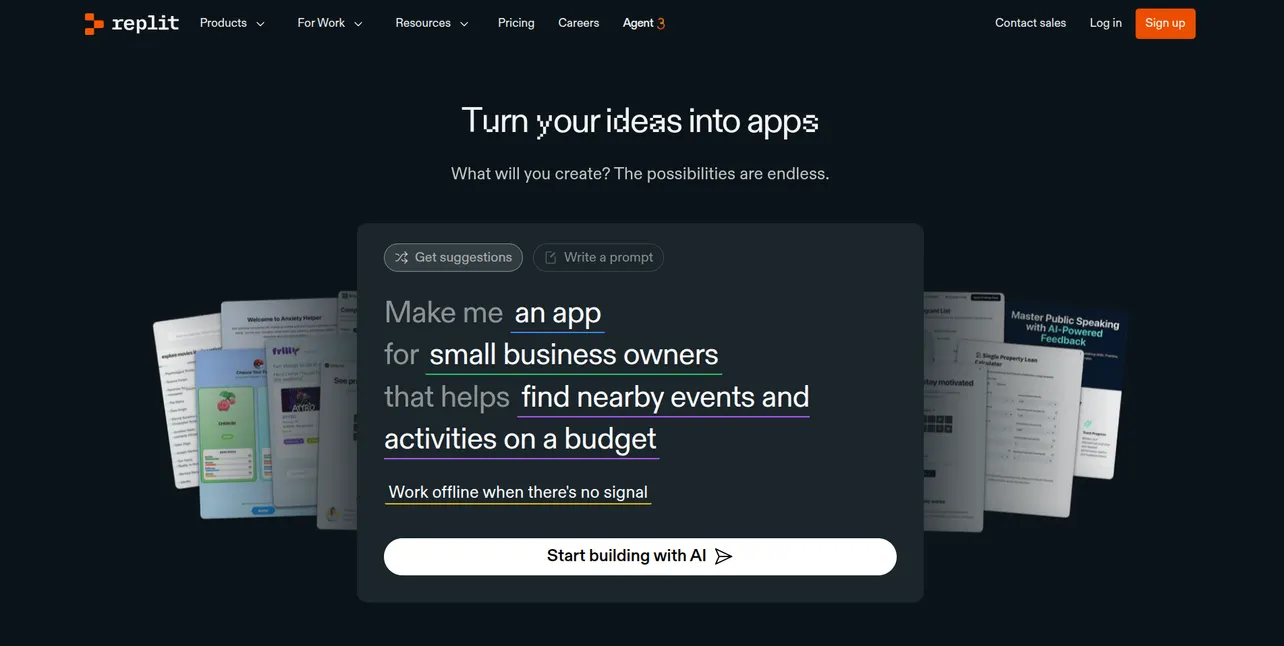
Replit's journey reads more like a case study in doing the exact opposite - and somehow ending up with a billion-dollar developer ecosystem that actually makes sense.
In an era when companies were taking on venture debt like it was free money (spoiler: it wasn't), Replit bootstrapped their way to profitability and built something rare in Silicon Valley: a sustainable business that developers genuinely love.
Let's dig into how they pulled it off.
The Freemium Playbook That Actually Worked
Here's where most developer tools die: they're either too expensive for hobbyists or too limited to be useful. Replit threaded this needle beautifully. Their free tier is actually generous - you can build and deploy real projects without hitting a paywall every five minutes.
This wasn't charity; it was strategy. Every student coding their first project, every developer prototyping on a weekend, every tutorial author demonstrating a concept - they all became unpaid marketing for Replit.
The platform spread organically because it solved a real problem: getting from idea to working application without a CS degree in DevOps.
When users hit the limits of free (and they eventually do), the paid tiers feel like a natural evolution rather than a hostage situation. It's the difference between "pay us or lose everything" and "hey, you're doing cool stuff, want more power?" One breeds resentment; the other breeds revenue.
Community as Moat
While competitors were spending millions on enterprise sales teams, Replit was nurturing something more valuable: a community of millions of developers creating, sharing, and remixing projects.
Their "Repls" (individual projects) became building blocks for others - a multiplayer approach to coding that felt more like GitHub meets social media. This created a flywheel effect. More developers meant more templates, more templates meant easier onboarding, easier onboarding meant more developers.
By 2025, Replit had over 30 million users, many of whom had never written a line of code before finding the platform. That's not just user growth; that's an entire generation of developers who learned on your platform and will probably stick around.
The AI Timing Was Chef's Kiss
Replit didn't invent AI-assisted coding, but their timing was impeccable. When large language models became useful (not just impressive demos), they were perfectly positioned to integrate them.
Their cloud-based architecture meant they could roll out Replit Agent and Ghostwriter to millions of users without everyone needing to upgrade their local setup.
This is where not taking venture debt paid off in unexpected ways. Without the pressure to chase unrealistic growth targets, they could invest in AI features that actually helped developers rather than just generating headlines.
Replit Agent launched as a genuinely useful tool for scaffolding projects, not a half-baked feature rushed out to please investors.
The AI integration also opened new revenue streams. Developers will pay for AI credits when they're actually productive, not just when they're subsidizing someone else's GPU bills. It's a usage-based model that scales with value delivered - revolutionary, right?
 Jessica Hamilton
Education Became a Growth Engine
While enterprise SaaS companies fought over corporate contracts, Replit quietly became the de facto platform for coding education. Schools, bootcamps, and individual educators adopted it because it eliminated the single biggest barrier to teaching code: setup.
No more "can everyone install Python?" No more "it works on my machine but not yours." No more first class spent debugging environment issues. Students could go from zero to coding in seconds, from any device.
Teachers could focus on teaching concepts instead of troubleshooting WSL installations.
This education focus created long-term value. Students who learned on Replit in school became Replit users in their careers. Some became paid subscribers. Some built products that attracted other users. ChatGPT said: The education market brought in revenue and built future customers for the next decade.
Profitable Before It Was Cool
Here's the unfashionable truth that Replit embraced: profitability is actually good. While peers were raising $100M Series Cs and burning $8M monthly on "growth experiments" (read: Google ads), Replit reached profitability and stayed there.
This wasn't because they were small-minded or lacked ambition. It was because they understood something fundamental: sustainable businesses have options. You can invest in long-term bets.
You can weather economic downturns. You can say no to bad deals. You're not on a treadmill where you need to raise bigger rounds at higher valuations to avoid a down round that triggers nasty liquidation preferences.
By avoiding venture debt - that particularly spicy form of startup financing that's "not equity" but comes with terms that can torpedo you if things go sideways - Replit kept their options open. No warrants to worry about. No revenue-based repayment obligations eating cash flow.
Just clean cap table and straightforward equity.
The Infrastructure Play
What looks like a coding platform is actually infrastructure play disguised in a friendly UI. Replit built a system for instant cloud development environments that scales to millions of users. That's hard. That's valuable. That's defensible.
Traditional cloud providers make you think about servers, containers, regions, load balancers, and seventeen other things you don't care about. Replit abstracts all of that away. You write code; they handle everything else. This sounds simple but required years of infrastructure engineering to pull off.
This infrastructure became an asset they could monetize in multiple ways: individual developers, teams, enterprises, and education. The same underlying system serves a student building their first website and a startup deploying their SaaS product.
That's efficient scaling.
 Chloe Ferguson
What They Got Right That Others Missed
The genius of Replit's approach wasn't any single decision - it was the compounding effect of many aligned choices:
Start with developers, not enterprises. Enterprise sales would come later, after product-market fit was undeniable. Building for individual developers first meant building something people actually wanted.
Make the free tier genuinely useful. Crippled free tiers breed resentment. Generous free tiers breed evangelists.
Bet on education when others chased enterprise. Longer payback period, but infinitely better long-term positioning.
Build community into the product. Social features weren't an afterthought; they were core to the experience.
Stay profitable and independent. Boring? Maybe. Smart? Definitely.
The Venture Debt Question
So why specifically avoid venture debt?
It's worth understanding what they dodged. Venture debt typically comes with warrants (options to buy equity at favorable prices), covenants (rules about how you run your business), and repayment schedules that don't care about your growth trajectory.
It's sold as "less dilutive than equity" and "extends your runway," which is true - until it isn't. When markets turn sour or growth slows, that debt still needs servicing. Companies have been forced into fire sales or down rounds because venture debt terms became untenable.
Replit's path meant more equity dilution from traditional venture rounds, sure. But it also meant flexibility. When they wanted to invest heavily in AI, they could. When they wanted to be patient with enterprise sales rather than forcing growth, they could.
Financial structure enabled strategic patience.
The 2025 Reality Check
By 2025, Replit's approach looked prescient. While competitors with bloated valuations and complex debt structures struggled to raise their next rounds or hit profitability targets, Replit was growing sustainably with a business model that actually worked.
Their billion-dollar valuation (achieved in their 2023 Series B) wasn't based on fantasy projections or "if we capture 10% of TAM" math. It was based on real revenue, real users, and real product-market fit across multiple segments.
The developer ecosystem they built was sticky in all the right ways. Projects hosted on Replit stayed on Replit. Developers who learned on the platform recommended it to others. Businesses that started as side projects grew into paying customers. The flywheel kept spinning.
Lessons for the Rest of Us
What can other founders learn from Replit's journey?
Profitability is power. It gives you control over your destiny and removes the gun-to-head dynamic of raise-or-die.
Community compounds. Every engaged user who brings another user is worth ten users acquired through paid marketing.
Free tiers should be genuinely generous. If your free tier feels like a hostage negotiation, you're doing it wrong.
Timing matters, but fundamentals matter more. Replit caught the AI wave at the right moment, but they'd built a solid foundation first.
Not all capital is good capital. Venture debt might make sense for some companies, but understanding what you're signing up for is crucial.
Think in decades, not quarters. The education play wouldn't pay off immediately, but it positioned them perfectly for long-term dominance.
As we head into 2026, Replit faces new challenges. Competition is fierce - Cursor, GitHub, and others are all vying for developer mindshare. AI coding tools are evolving rapidly, and staying ahead requires constant innovation.
But they've built something rare: a profitable, beloved, growing platform with millions of users and clean financial structure. They're not frantically searching for a business model or pivoting to chase trends. They're executing a strategy that's working.
Whether Replit reaches $10B valuation or gets acquired by a tech giant, they've already proven something important: you can build a massive developer ecosystem without mortgaging your future to venture debt. You can grow sustainably, build genuine community, and create lasting value.
In a startup world obsessed with blitzscaling and growth-at-all-costs, Replit's story is a refreshing reminder that sometimes the boring path - profitability, patience, and product-market fit - is actually the smartest one.