

TL;DR: Cursor AI hit $1B ARR in under 24 months — the fastest any B2B company has reached that milestone. Here's how:
- Freemium at scale: Over 1 million paying developers at $20-$200/month, with an average contract value of just $276.
- Product-led growth: Individual developers adopt it, love it, and push for team-wide rollout — no enterprise sales team required.
- Relentless iteration: From VS Code fork to proprietary AI models, Cursor kept shipping while competitors stalled.
The result? A $29.3B valuation and OpenAI trying to acquire them.

Founders are building. We’re telling their stories. Get the raw wins, near-misses, and lessons behind real startups—straight to your inbox.
Let's talk about Cursor AI, the AI-powered code editor that ate GitHub Copilot's lunch.
In under 24 months, this four-person MIT startup hit $1 billion in annual recurring revenue. For context, that's faster than Wiz (18 months to $100M), Deel (20 months), and Ramp (24 months). Cursor blew past $100M in 12 months, then 10x'd it.
SaaStr called it "the fastest value creation in B2B history." They're not wrong.
And here's the thing: Cursor didn't do it by chasing enterprise contracts. They did it by winning over 1 million individual developers with a freemium model and product-led growth strategy that turned users into evangelists.
Let's break down how they pulled it off, and what's changed since the early days.
The Numbers Don’t Lie
First, let's put Cursor's growth into perspective. When you compare it to other SaaS rocketships, the original numbers were already jaw-dropping:
- Wiz: 260 customers, $384K ACV
- Deel: 1,800 customers, $55K ACV
- Ramp: 5,000 customers, $20K ACV
All of these companies targeted enterprise customers with sky-high average contract values.
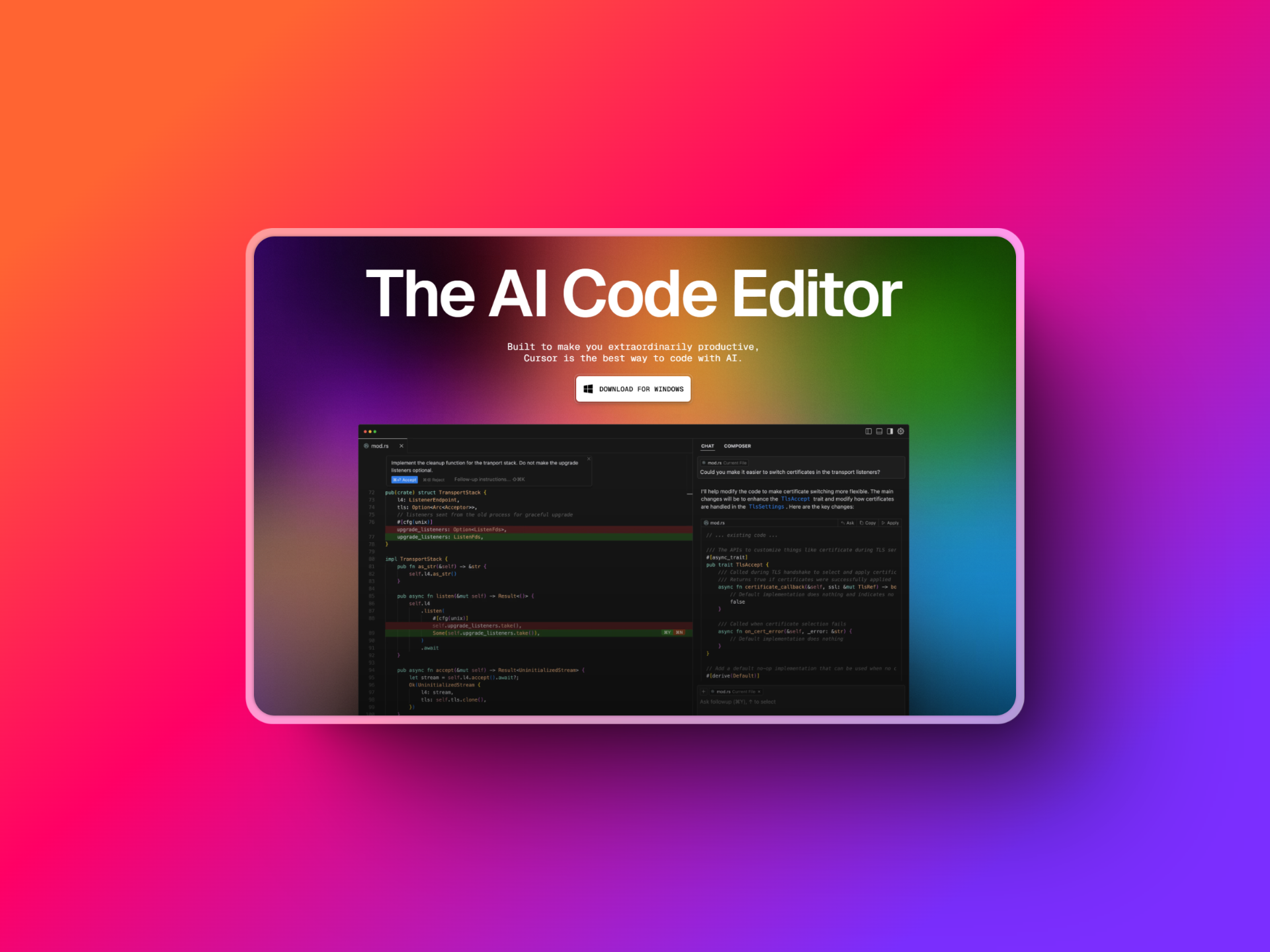
Cursor went the opposite direction, and then kept going. By early 2025, their customer base had grown from 360,000 to over 1 million paying developers at $20-$200/month, with an ACV of just $276.
That's $1 billion ARR built on individual credit cards, not enterprise procurement cycles. SaaStr called it "the fastest value creation in B2B history."
And the valuation followed: from $400M Series A to $29.3 billion in January 2025 — a 73x jump in under two years.
The team started with a simple thesis: AI-powered coding tools shouldn't feel like autocomplete with extra steps. They should feel like a second brain that understands your entire codebase.
Three years later, that four-person team has grown to over 300 employees. Jensen Huang called Cursor his "favourite enterprise AI service." OpenAI tried to acquire them. And they're still shipping faster than anyone else in the space.
 Chris Kernaghan
The Growth Levers: Freemium + Product-Led Growth
Cursor’s success boils down to two brilliant growth strategies:
1. Freemium That Actually Converts
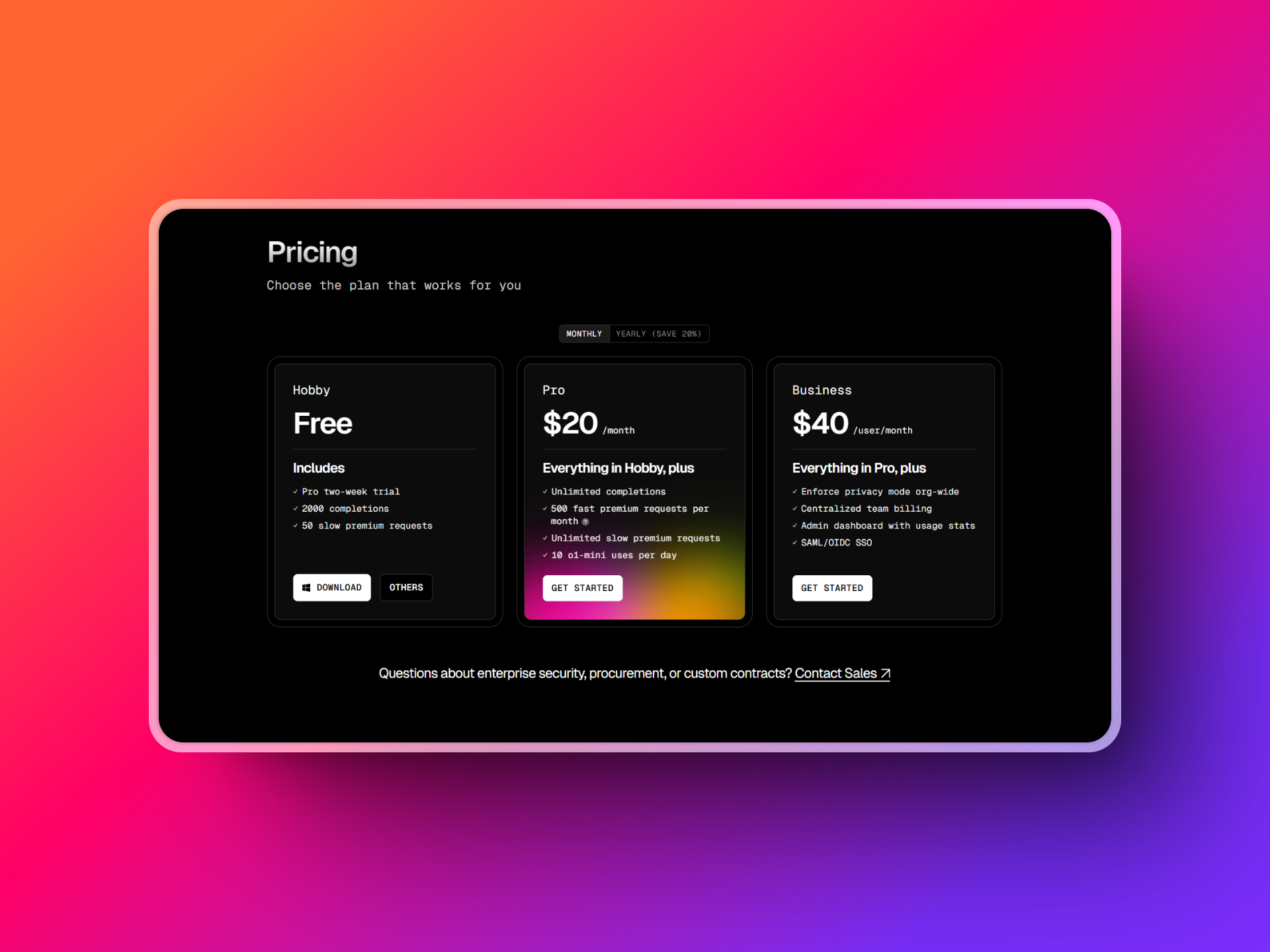
Cursor's freemium model is a masterclass in user acquisition. The free tier offers 2,000 monthly code completions. Enough to get hooked, not enough to stay comfortable.
Once developers hit that limit, upgrading to the $20/month Pro plan feels obvious. For power users, there's a $200/month Ultra tier with unlimited access. Business plans scale from there.
The genius is friction removal. Developers don't need procurement approval. They swipe their own card and start coding faster immediately. By the time finance notices, the whole team is already using it.
2. Product-Led Growth at Scale
Cursor's PLG flywheel is what turned a good product into a billion-dollar business:
- Hook the individual: Free tier gets them in. The "holy shit" moment happens within the first hour.
- Convert to paid: Usage limits push them to Pro. Most never look back.
- Expand into teams: One developer becomes an evangelist. Teams adopt. Companies follow.
This bottom-up motion means Cursor doesn't need an enterprise sales army. OpenAI, Perplexity, Midjourney, Stripe, and Shopify all adopted Cursor the same way. One developer at a time, then company-wide.
How Cursor Beats GitHub Copilot
GitHub Copilot may have been first to market, but Cursor is out-innovating them in two key areas:
1. Model Flexibility — And Now Their Own
Cursor started by integrating GPT-4 and Claude, letting developers choose the best model for their workflow. That flexibility alone set them apart from Copilot's single-model approach.
But in October 2025, Cursor went further. They launched Cursor 2.0 with their own proprietary AI model (Composer) which they claim is 4x faster than competitors. They're no longer just integrating other people's AI. They're building their own.
2. VS Code Compatibility (With an Escape Hatch)
Cursor started as a VS Code fork, which made adoption frictionless. Developers kept their extensions, keybindings, and muscle memory.
But here's the strategic move: Cursor is gradually building features that only work in their native app. They're using VS Code as the on-ramp, then creating reasons to stay in Cursor full-time.
3. Speed of Iteration
While GitHub ships Copilot updates quarterly, Cursor ships weekly. Their October 2025 launch of Composer, background agents, and inline editing came while Copilot was still catching up on basic features.
The gap is widening, not closing.
 Chloe Ferguson
The Bigger Picture: Why This Matters
This is a blueprint for how AI-native companies can outmanoeuvre incumbents.
By focusing on individual developers instead of enterprise procurement, they built a user base that enterprises couldn't ignore. By shipping weekly instead of quarterly, they stayed ahead of better-funded competitors. By building their own AI models, they're creating moats that can't be easily copied.
But the landscape is shifting fast. OpenAI acquired Windsurf for $3 billion in early 2025, signalling they're serious about the coding assistant market. Anthropic launched Claude Code. GitHub Copilot is iterating faster than before.
And then there's the elephant in the room: OpenAI reportedly tried to acquire Cursor itself. The founders said no.
The next 12 months will determine whether Cursor can defend its lead, or whether the giants catch up. But if the first 24 months are any indication, betting against them seems unwise.
Update March 2026: This article was originally published in February 2025 when Cursor had just hit $100M ARR. We've updated it to reflect their continued growth to $1B ARR and $29.3B valuation.