

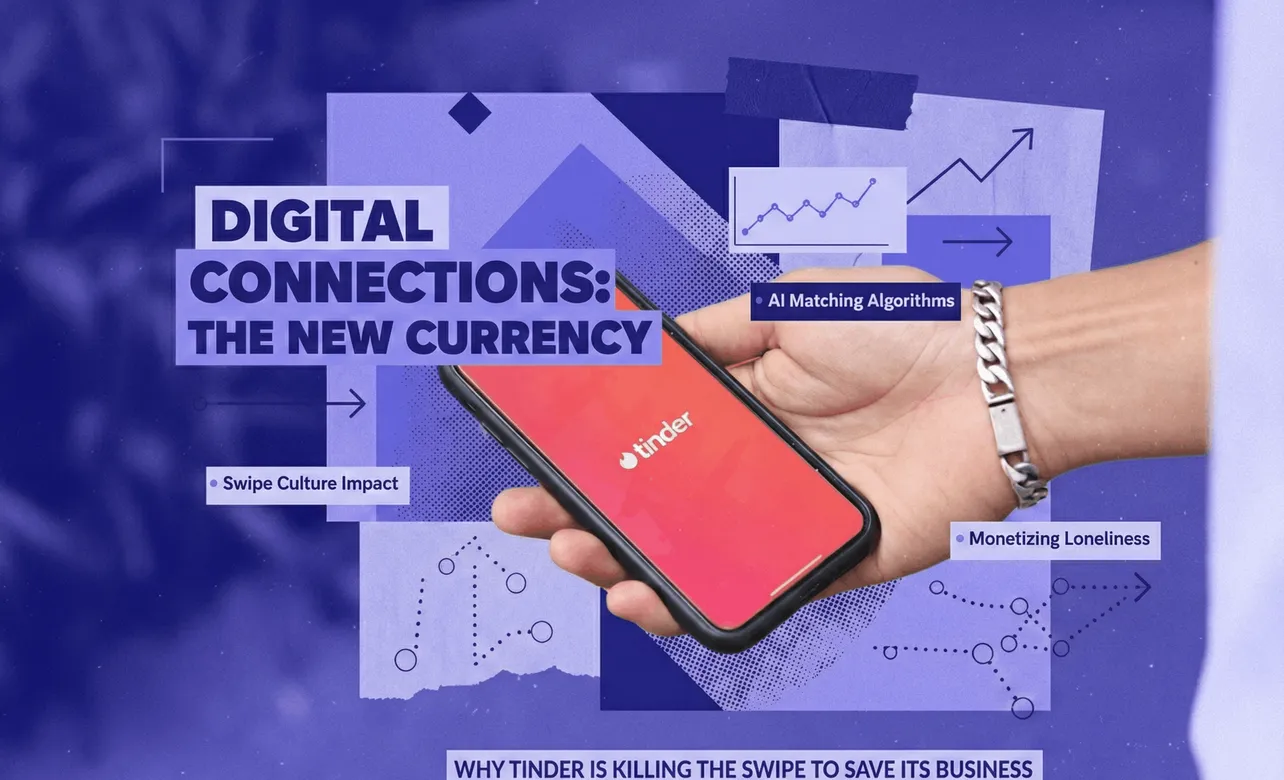
TL;DR: Tinder is abandoning its iconic swipe for AI-driven "Chemistry" to combat user burnout and declining growth. For founders, this shift signals a move toward high-intent curation over endless, low-value engagement.
The "swipe" changed the world, but now it is dying. Tinder is currently pivoting toward a new AI-powered feature called Chemistry to fight what the industry calls swipe fatigue.
For years, the infinite scroll and the endless swipe were the gold standards of app engagement.
Today, they are the primary drivers of user burnout. Match Group CEO Spencer Rascoff recently noted that users are tired of the "illusion of choice." They want better outcomes with less effort.
So What’s the Problem With Infinite Choice?
Tinder’s data shows a tough reality.
New registrations are down 5%, and monthly active users dropped 9% year-over-year. The gamified experience that made the app a household name is now a barrier to entry for Gen Z.
If your UX relies on "volume" rather than "value," you are building on a foundation of eventual exhaustion.
When users feel like they are working a second job just to find a connection, they leave. This is a massive lesson for any founder building a marketplace or a social platform.
If your UX relies on "volume" rather than "value," you are building on a foundation of eventual exhaustion.
How Chemistry Uses AI to Pivot
The new Chemistry feature is a departure from the low-friction past. It asks users questions and, with permission, scans their Camera Roll to understand their actual interests.
Instead of a thousand low-quality swipes, Tinder wants to give users a "single drop or two" of highly relevant matches. They are moving from a quantity-first model to a quality-first model.
They are also leaning into Face Check technology to rebuild trust, which has already cut bad actor interactions by half.
Lessons for Indie Hackers and Startup Founders
You do not need a $50 million marketing budget to learn from Tinder’s pivot. Here is how you can apply these insights to your own build.
- Solve for Fatigue: Look at your current project. Are you asking users to do too much manual labor? If your app requires constant input for a small reward, you are at risk of "user rot."
- Curated over Collective: The 2026 trend is moving away from "see everything" toward "see what matters." Use AI to filter the noise for your users before they even ask.
- Authenticity Is a Feature: Gen Z values trust over polish. Tinder is using facial recognition and AI-driven personality checks to prove people are who they say they are. In your own startup, transparency can be your biggest competitive advantage.
The Opportunity for New Players
When the big players pivot, they leave gaps.
Tinder is trying to become "cool again" with creator campaigns and AI drops. However, there is still a massive opening for founders to build niche, high-trust communities that never relied on the swipe in the first place.
Building a platform that respects a user’s time is no longer just a nice idea. It is the only way to survive in a market that is officially burned out on "the hunt."

