

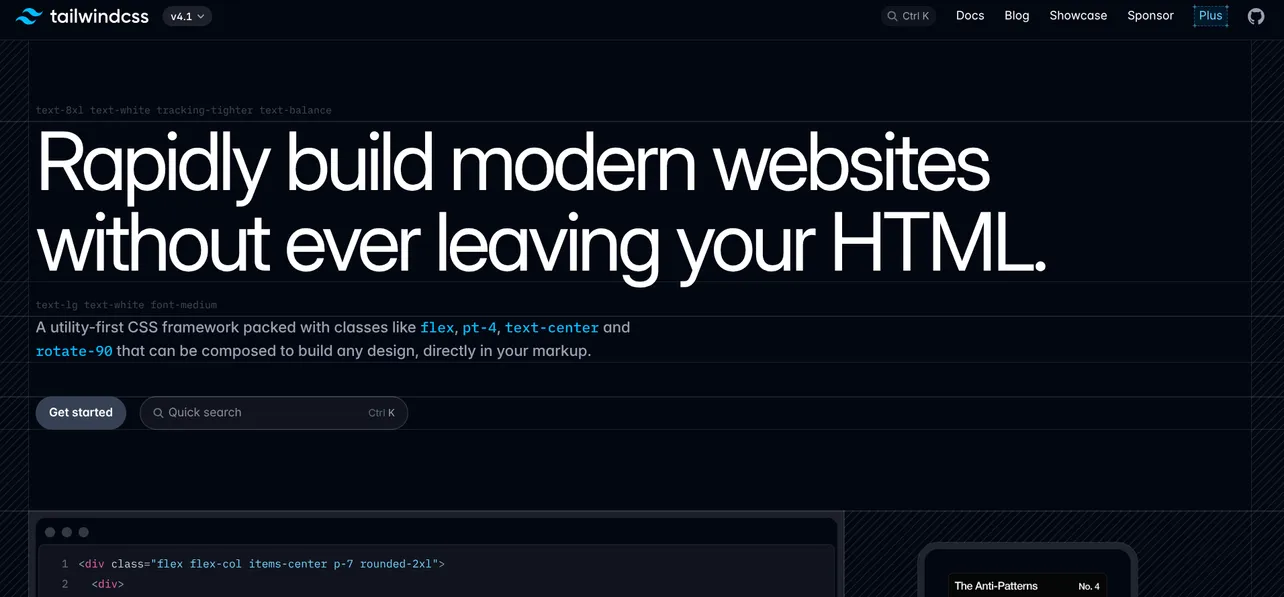
The team behind Tailwind CSS recently announced significant changes to their business structure. Adam Wathan, the creator of the framework, confirmed the company has parted ways with 75 percent of its engineering team.
This decision highlights a growing disconnect in the software market. Tailwind CSS is currently more popular than ever with rising usage metrics. However, the company revenue has fallen by nearly 80 percent.
The primary driver of this downturn is the rapid adoption of artificial intelligence in development workflows.
For years, the business model for Tailwind CSS relied on a specific user journey. Developers visited the official documentation to look up class names or syntax. While on the site, they discovered premium products like Tailwind UI which funded the open source development.
AI agents have interrupted this discovery process. Tools like ChatGPT and Cursor now provide answers directly within the code editor. Developers can get the syntax help they need without ever visiting the Tailwind CSS website.
Wathan noted that traffic to their documentation has dropped by 40 percent over the last two years. This decline has directly reduced the visibility of their paid products.
The challenge extends to the products themselves. Developers are increasingly using AI to generate custom user interface components. This reduces the immediate need to purchase pre-made UI kits and further erodes the revenue stream.
This situation serves as a case study for open source founders. The traditional method of monetizing documentation traffic is becoming less viable as AI becomes the primary interface for knowledge.
There is a positive outcome for the framework itself. Industry leaders including Vercel and Google AI Studio have pledged sponsorship to keep Tailwind CSS stable. This ensures the tool remains a reliable part of the web infrastructure.
The takeaway for indie hackers and founders is clear.
As we explored in The 2026 Founder Urgency Index, the landscape is moving fast. We need to evaluate how we capture value when users no longer visit our websites. Tailwind CSS provides the first clear example of how the digital economy is shifting.