


Every startup hits the same wall.
You have a mountain of ideas, documentation, customer feedback, and the actual work itself. You need a home for all of it. For years Notion has been the answer. It is a big, beautiful digital Swiss Army knife. It can be a database, a wiki, a project tracker, and a recipe book for your sourdough starter. It does everything.
But doing everything means doing nothing fast.
Enter Linear. The fast, highly opinionated competitor built for the folks who get annoyed by loading spinners and endless customization options.
This isn't about features. It is about philosophy. It is the difference between a massive, comfortable library and a finely tuned Formula 1 car.
We have already looked at Linear's fight with Jira. Now we need to see how it handles the ultimate generalist, Notion, to figure out which is better for building and shipping product.
The Contestants
Notion is the ultimate flexible workspace.

It doesn't force you into any workflow. You can build a system that manages your marketing pipeline, tracks your customer service tickets, and maintains your company handbook, all within linked databases. It is a clean slate.
Linear is purpose-built for engineering and product teams who live by sprints and cycles.
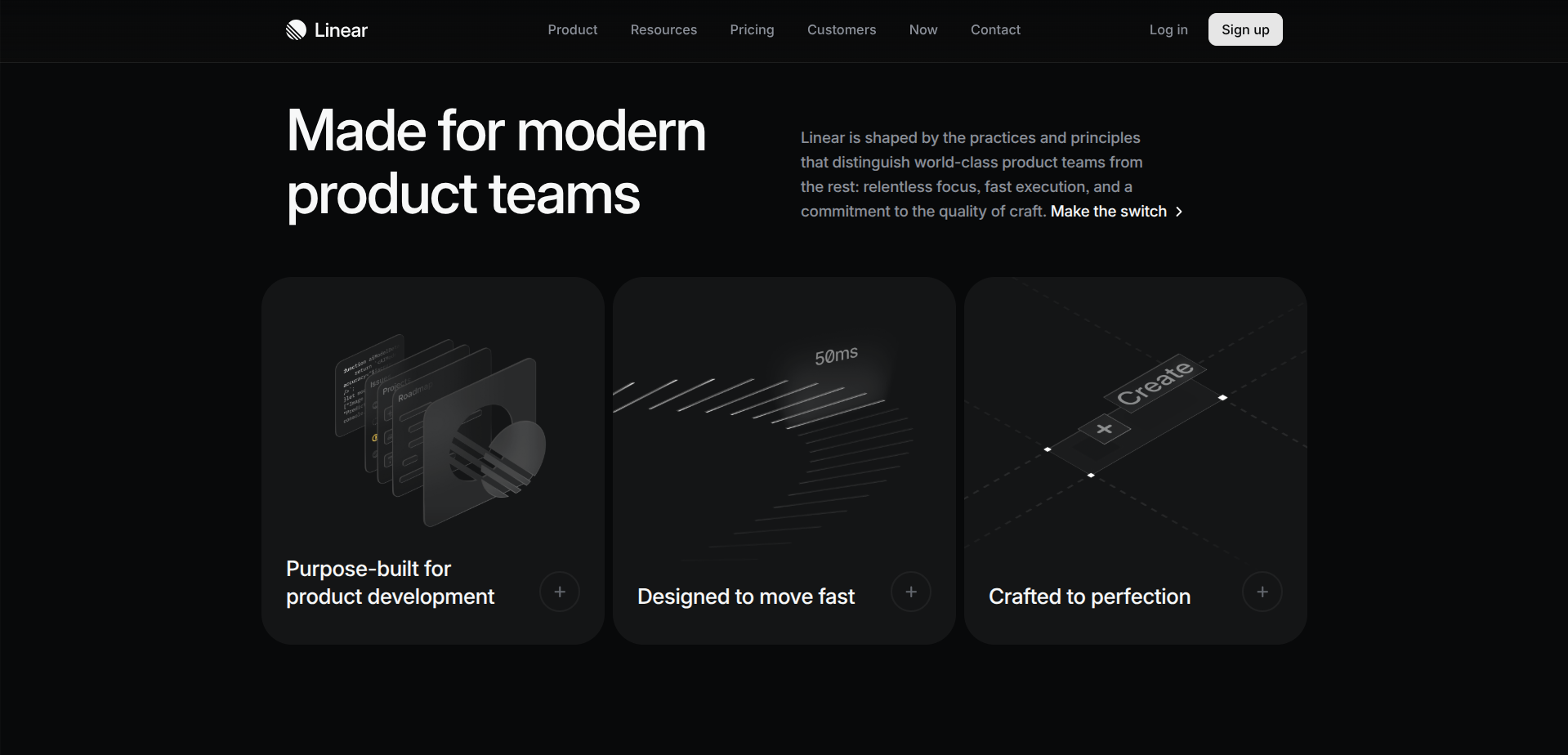
It removes nearly all the clutter that software developers hate. It is keyboard-focused, ridiculously fast, and forces teams to adopt a standardized workflow.
Sprints and Cycles
This is where the two tools fundamentally disagree on how you should work.
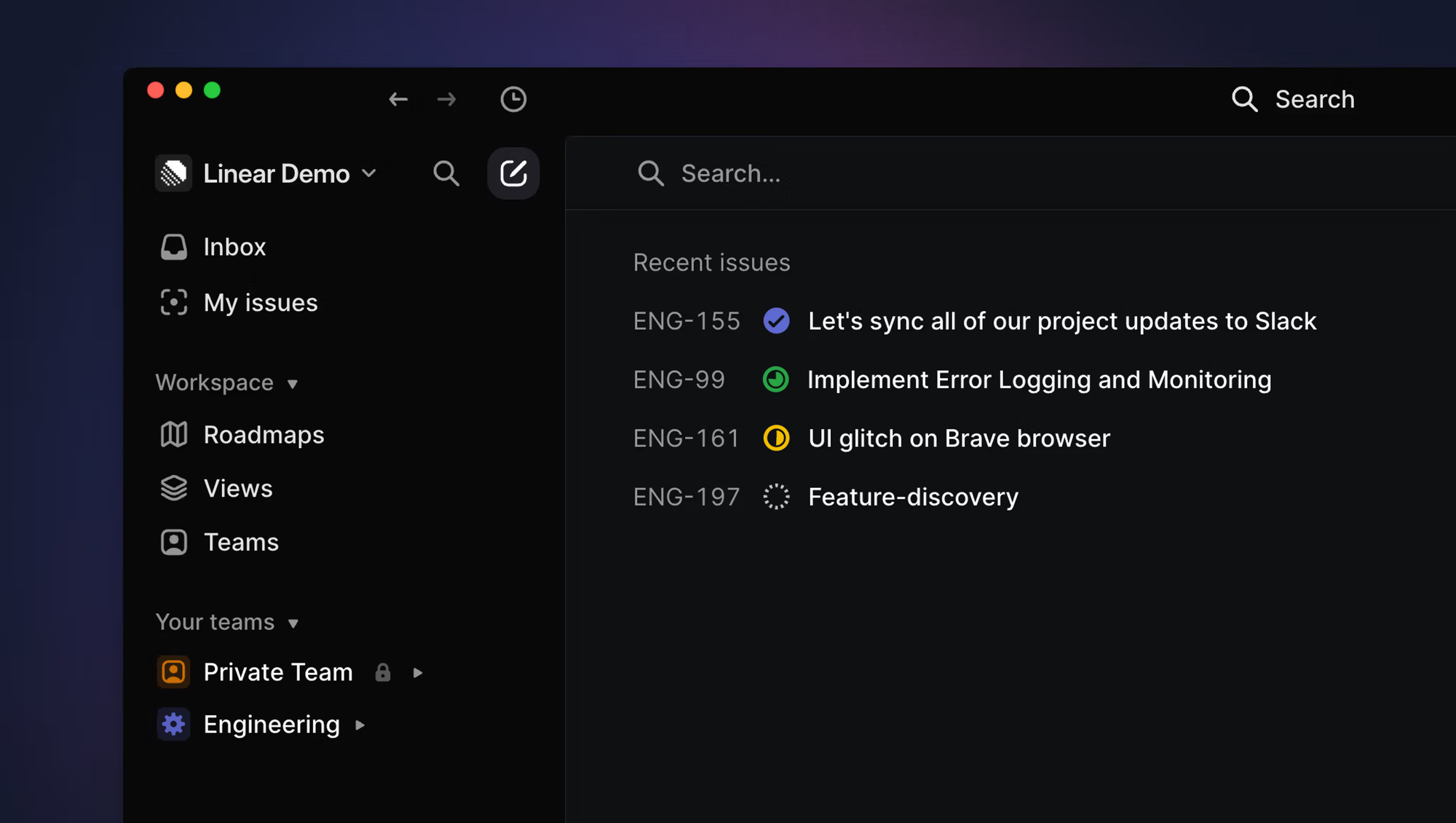
Linear forces a clean, predictable rhythm. It is built around the Cycle. Every two or three weeks the cycle starts, the cycle ends, and the roadmap is updated automatically. You don't have to think about it.
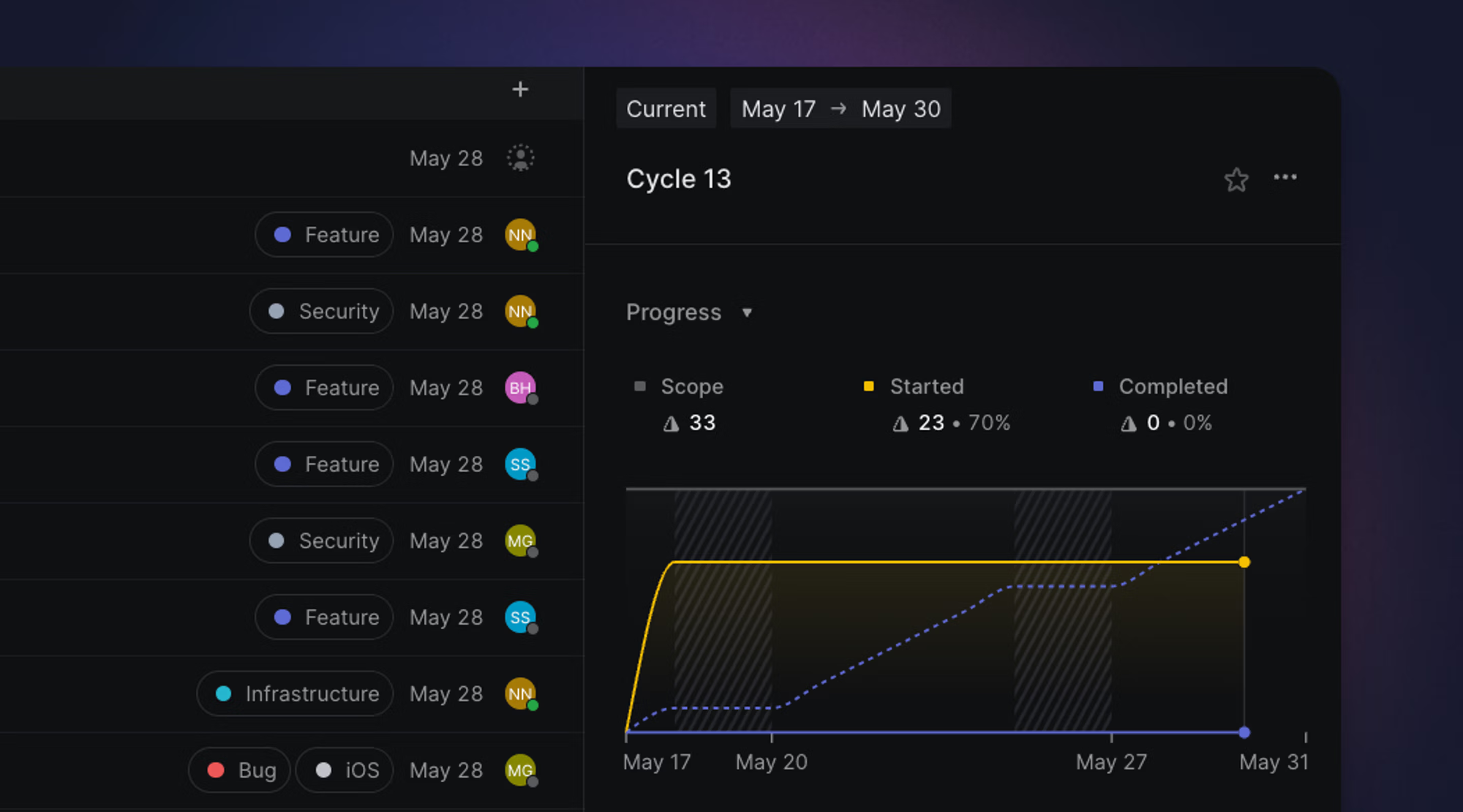
The "Roadmap" view connects high-level projects directly to granular issues without any manual linking. The workflow has fixed states like Triage, In Progress, and Done. This rigidity is a feature. It means the entire team always knows exactly what an issue status means without asking.
Notion can absolutely do sprints, but only if you build the machine yourself. You have to manually define the "Sprint" tag, the "Cycle Start" date, and the "Target End" date. While this lets you customize everything, it requires serious maintenance.
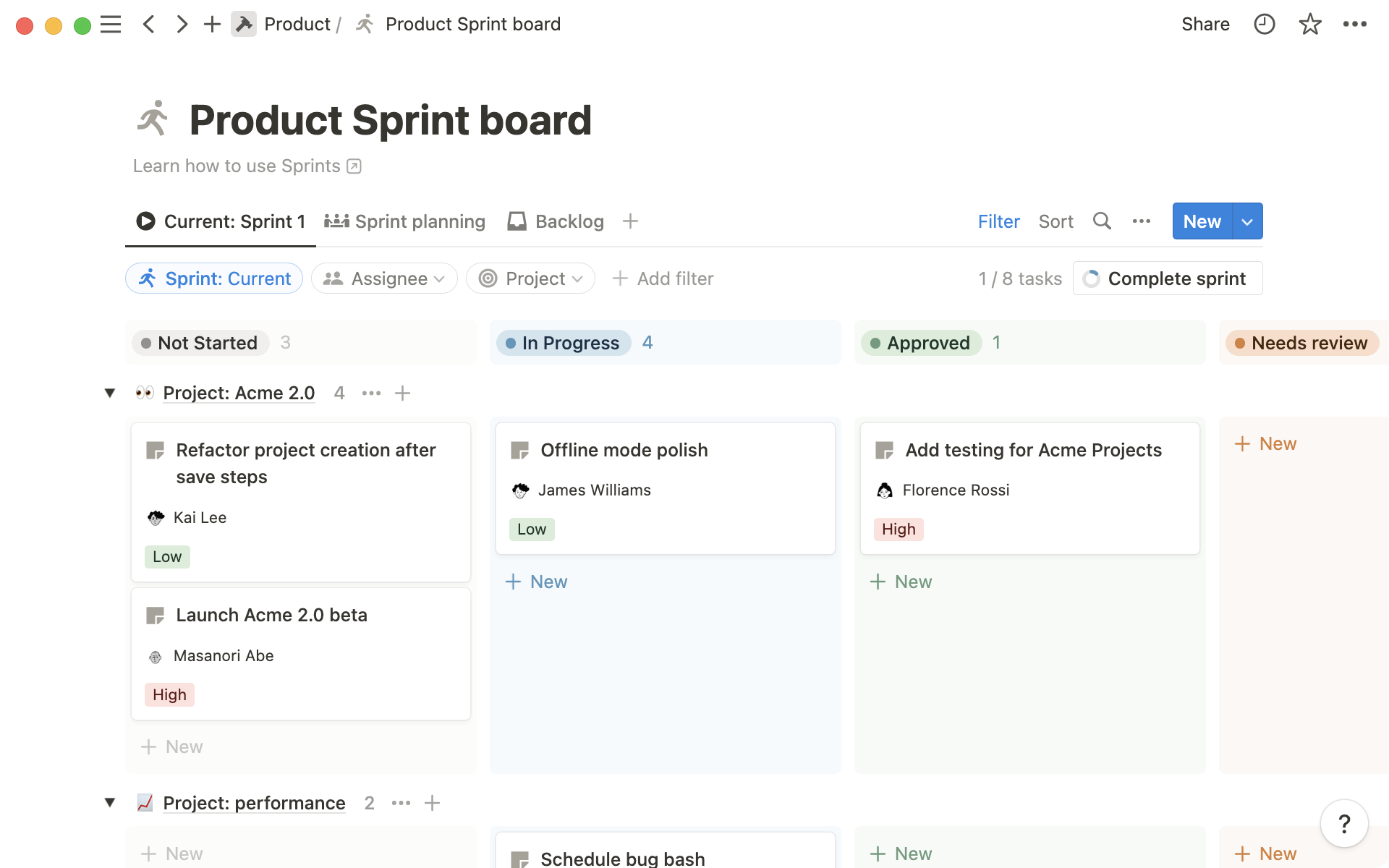
If you accidentally delete a key formula your whole sprint system breaks. Notion is better for exploratory projects where the workflow is unpredictable, whereas Linear is for predictable software iteration.
Documentation
Documentation is the biggest differentiator. It is usually the deciding factor for where the rest of your company lives.
Notion is the undisputed king here. It is a powerful wiki with real-time editing and unlimited hierarchy. It is the ideal place for Product Requirement Documents (PRDs), Request for Comments (RFCs), and the company handbook.
You can link any task to any documentation page, creating a complete lineage from the company goal down to the engineer's pull request.
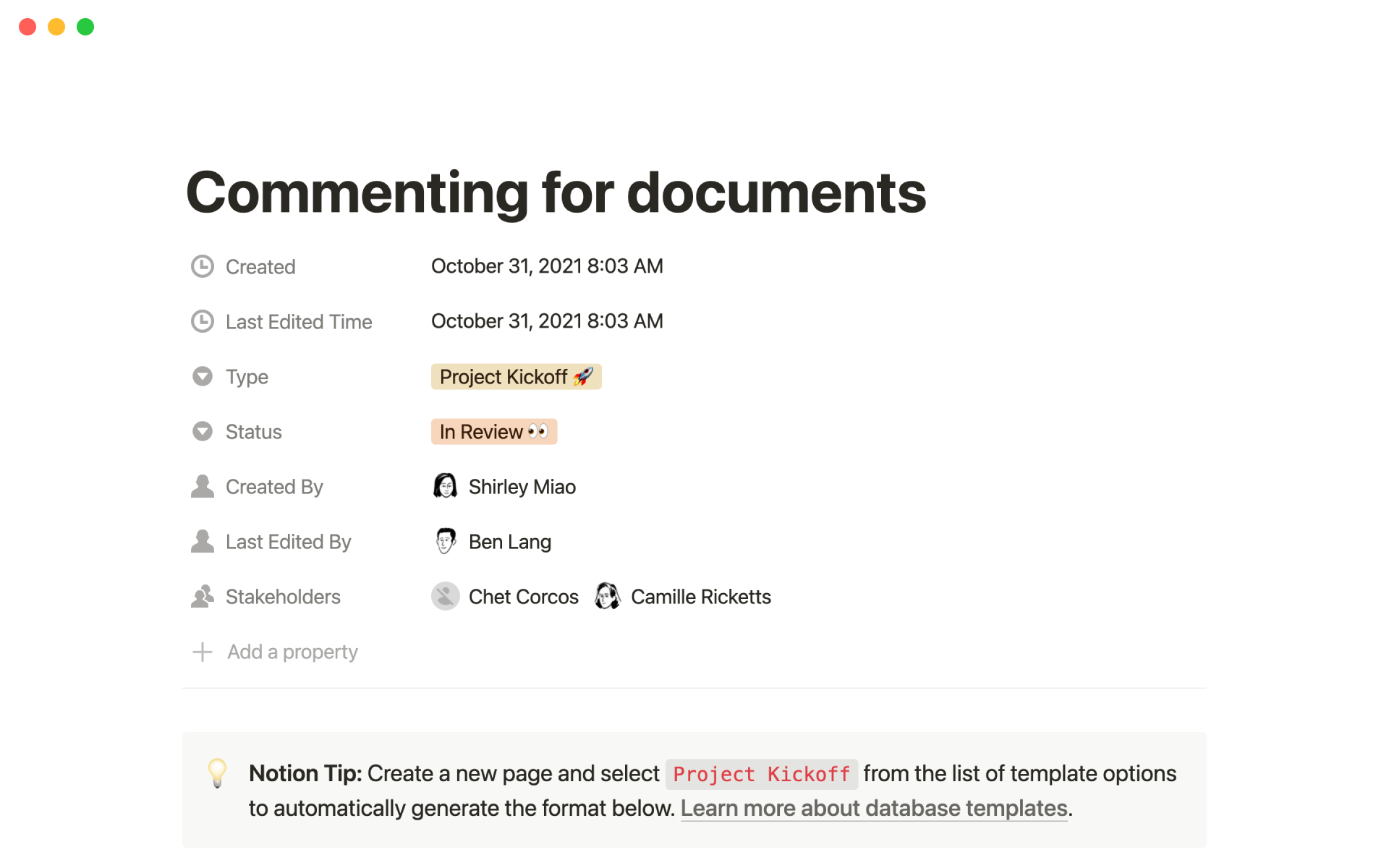
Linear deliberately avoids being a wiki. It is an issue tracker.
It relies on integrations to host technical specs. An issue in Linear will link to the relevant Notion page or GitHub Readme, but the writing and management happens outside of Linear. This keeps the issue tracker clean, but it means you are likely paying for two tools instead of one.
Pricing
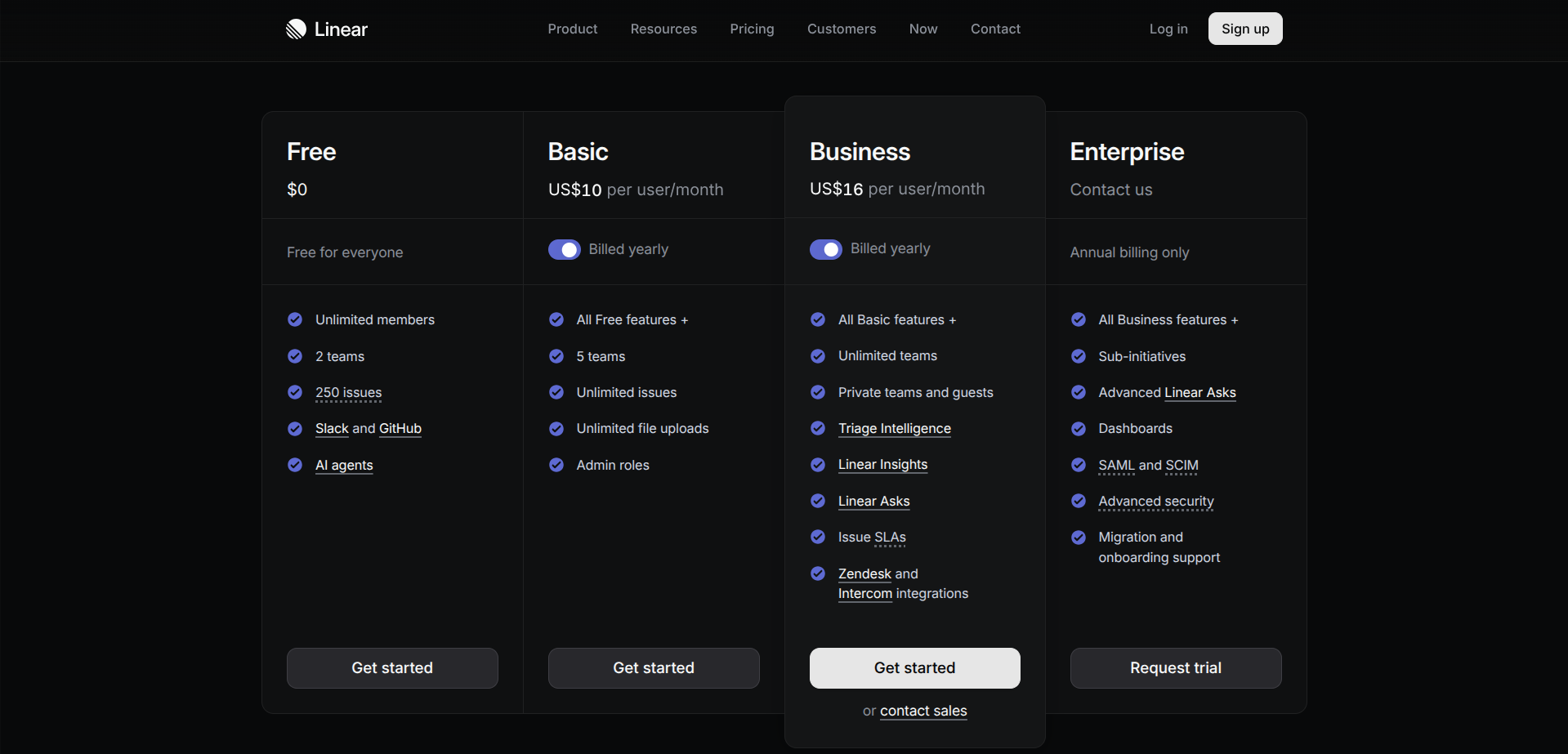
Both tools offer a great free tier, but the paid structure tells you exactly who they are trying to monetize.
Notion starts around $10 per user/month. Its free tier is generous for individuals but limited by collaboration. If you share pages with more than a handful of people or upload too many large files, you hit the paywall fast.

Linear starts around $8 per user/month. Its free tier is limited by active issues. It caps you at 250 active issues. For most small teams this is incredibly generous. You can stay free for a long time by simply archiving completed work to keep your active count low.
The Verdict
Your choice comes down to organizational memory versus speed.
Choose Notion if documentation is your priority. If you need a single, searchable source for HR, marketing, product, and engineering, the trade-off in speed is worth it for the centralization.
Choose Linear if shipping is your priority. Efficiency is the only way to hit the Rule of 40, which is now the primary metric investors use to value your company.
If you want a tool that gets out of the way, forces your team to adopt the discipline of structured sprints, and makes your engineers happy, there is no better option. Just be prepared to buy Notion anyway for your docs.