Sophie caught herself scrolling Instagram for the third time in an hour, despite having deleted the app that morning. She reinstalled it within twenty minutes.
She tried everything. Deleted apps. Set strict limits. Went cold turkey for a week. Nothing stuck. The moment boredom or stress crept in, the phone was back in her hand.
Three weeks into training for a half-marathon, she realized she hadn't mindlessly opened Twitter once. On workout days, the urge to scroll simply vanished. On rest days, it came roaring back.
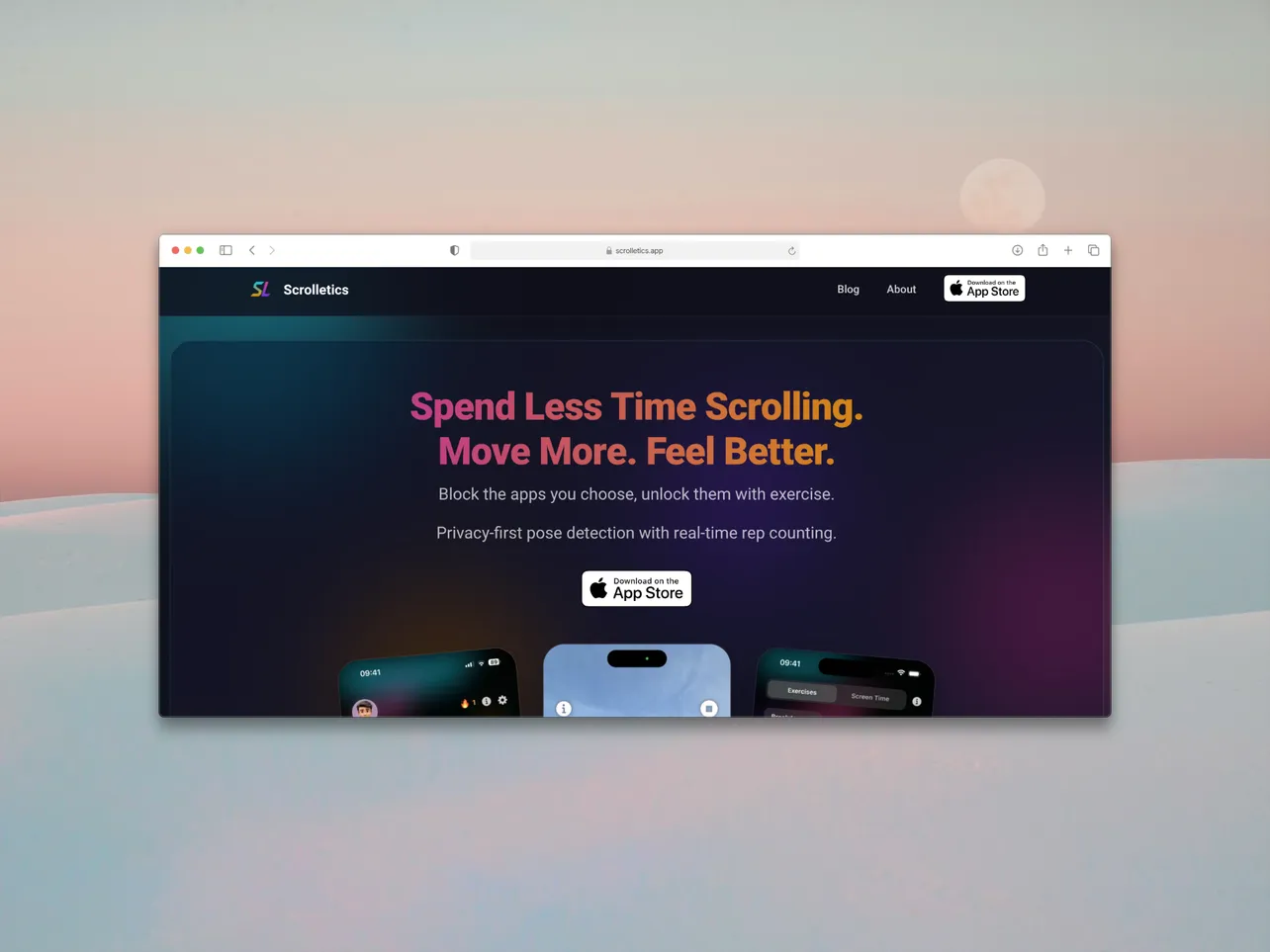
That pattern became Scrolletics, an app that locks your phone until you move.
Most screen time apps rely on shame or rigid barriers. Sophie had tried them all. They felt like fighting herself. "I didn't need more guilt or restrictions. I needed something that actually worked with me."
She's not a fitness guru or wellness influencer. She's a developer who watched her phone transform from a tool into a tether. The solution seemed obvious. Your phone stays locked until you do ten push-ups or hold a plank for thirty seconds.
Building it was another story.
An honor system wouldn't work. People would lie. The app needed to actually see the movement. Sophie and her partner spent months working with SwiftUI and Vision to perfect on-device pose detection.
Everything runs entirely on-device. That means no cloud, no account, no tracking. The camera feed is processed in real time and never recorded or uploaded. Your data never leaves your iPhone, and the app even works in airplane mode.
The early versions were rough. Pose detection proved incredibly difficult to get right, and it took countless iterations before the accuracy was where it needed to be. If the lighting shifted even slightly, the whole thing fell apart.


"There were weeks where I thought this might not be possible."
Then one evening, the camera finally synced perfectly with her movements. She did five push-ups and watched the counter tick up accurately, every single time.
"I just sat there on the floor staring at my phone thinking, okay, this is actually going to work. Everything before that was an idea. Everything after that was a product."
That technical hurdle became the moat. Nobody else had cracked reliable pose detection that worked on-device without sending data to servers. But Sophie still made the classic founder mistake. She spent months polishing features nobody wanted.
She built a complex dashboard with graphs and streaks, convinced users would obsess over the stats. When she finally showed the app to testers, they barely glanced at the charts. They just wanted to unlock their phones.

"Put it in someone's hands before you think it's ready. Their confusion will teach you more than your own testing ever will."
She'd spent months building the wrong things because she was afraid to ship something unfinished. Now she tells other founders to share a rough version the moment the core functionality works.
The app launched in late 2025. Growth has been steady but not explosive. Sophie kept the team lean and stayed bootstrapped.
"We're pre-profit, which is expected at this stage. We're not burning money."
The product works. Retention is high. People who use Scrolletics are genuinely lowering their screen time while moving more. The challenge now is getting it into more hands.
Sophie's working on that part. She figured out the hard technical problem. Distribution is just the next one.
Visit scrolletics.app to find out more.