

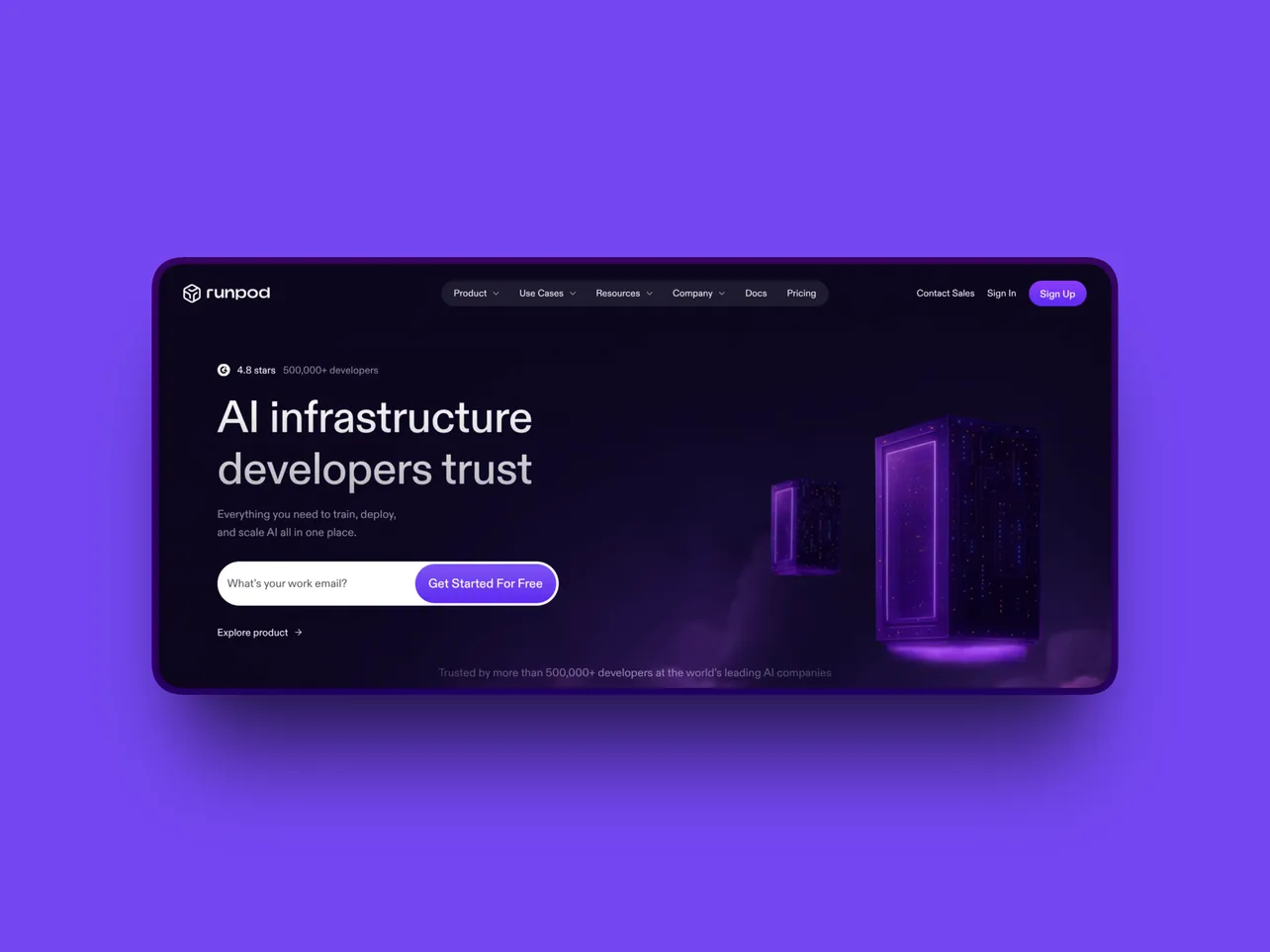
The best startup stories usually start with a problem that feels personal. For Zhen Lu and Pardeep Singh, that problem was a $50,000 hole in their pockets and a basement full of "boring" crypto mining rigs.
Back in 2021, the two Comcast developers had a dilemma. They had convinced their wives to let them invest heavily in Ethereum mining, but the hobby wasn't paying off. When the network changed its tech, their expensive GPUs were about to become paperweights.
They needed a way to make the hardware pay for itself to keep the peace at home. Since they were already working on machine learning at their day jobs, they decided to pivot their home rigs into AI servers.
Solving the hot garbage problem
As they started repurposing their equipment, they realized that the software available to manage GPUs was, in Lu’s words, "hot garbage." It was clunky, slow, and frustrating for developers.
They didn't set out to build a unicorn.
They just wanted a better way to host AI apps. They built Runpod to focus on speed and ease of use, making it simple for other devs to get their projects live without the headache.
When it came time to find users, they didn't hire a marketing agency. They went where the builders were. They posted on Reddit and offered free access in exchange for honest feedback. The response was immediate. Within nine months, the "basement project" was making $1 million in revenue and both founders had quit their corporate jobs.
The power of being seen
The growth of Runpod is a masterclass in organic community building. They didn't even think about venture capital at first. They focused on "revenue-share" partnerships to grow their capacity.
Their big break came from being active in the places where tech leaders hang out. A partner at Dell Technologies Capital discovered them through their Reddit posts. Another key investor, the co-founder of Hugging Face, actually found them through their own support chat because he was already using the product.
By the time they raised their $20 million seed round in 2024, they had already bootstrapped their way to over $24 million in revenue. They proved that you don't need a polished pitch deck if you have a product that people actually use.
Lessons for the next generation
Today, Runpod has a $120 million annual revenue run rate and serves 500,000 developers. They have moved out of the basement and into 31 global regions, serving giants like OpenAI and TikTok.
For Gen-Z founders and indie hackers, the Runpod story is a reminder that timing and execution matter more than fancy offices. Lu and Singh didn't wait for permission or funding to start. They built a tool they needed, charged for it from day one, and let the community lead the way.
As software development shifts toward AI agents, these founders are proof that the next big thing might be sitting in your basement right now.

