If you're building a startup right now and feeling like you're one bad month away from shutting down, you're in good company. Notion - yes, the productivity tool that seemingly everyone uses today - almost died.
Four times.
Ivan Zhao, Notion's CEO and co-founder, has been refreshingly honest about how close his company came to complete collapse. His story might be exactly what you need to hear if you're in the trenches right now.
The First Near-Death: Running Out of Money (Pre-2018)
Before Notion became the workspace darling it is today, it was a struggling tool that barely anyone used. The team was tiny, money was running out, and growth was painfully slow.
Here's the thing most founders don't talk about: that awkward phase where you've built something, but the market just isn't biting. You're not failing spectacularly enough to quit, but you're not succeeding enough to feel confident.
You're just... existing.
Notion spent years in this limbo. They had to make the brutal decision to stay small and lean, which meant saying no to hiring, saying no to expensive marketing, and saying yes to ramen profitability. It wasn't glamorous, but it kept them alive.
The lesson? Don't scale prematurely.
Staying small isn't admitting defeat - it's strategic survival. Many founders kill their companies by hiring too fast or spending on growth before finding product-market fit.
The Second Near-Death: The COVID-19 Gut Punch
When COVID hit in 2020, Notion was finally gaining traction. Then the world shut down, and suddenly their growth engine stalled.
Remote work was exploding, which should have been perfect for Notion, right? Wrong. The chaos of early pandemic months meant companies were cutting costs, not adopting new tools. Decision-makers were overwhelmed, and buying cycles froze.
Zhao has mentioned how terrifying those months were - watching the momentum they'd worked so hard to build suddenly evaporate. They had to adapt quickly, doubling down on community building and free tiers to keep users engaged during the uncertainty.
The lesson? External shocks will happen. Economic downturns, pandemics, market shifts - you can't control them. What you can control is how quickly you adapt.
The companies that survived COVID weren't necessarily the strongest; they were the most flexible.
The Third Near-Death: Technical Debt and Scaling Issues
As Notion finally started growing, they hit a different kind of wall: their own product couldn't handle the load. Performance issues plagued the platform. Users complained about lag, sync problems, and crashes.
Nothing kills momentum faster than a product that doesn't work. You can have the best idea in the world, but if your app is slow or buggy, users will leave. And they won't come back.
Notion had to make the painful decision to slow down feature development and focus on infrastructure. For a startup trying to compete with giants like Microsoft and Google, pumping the brakes felt suicidal. But it was necessary.
The lesson? Technical debt isn't just a developer problem - it's a business problem. If you're moving fast and breaking things, make sure you're also fixing things. Otherwise, you're building on quicksand.
The Fourth Near-Death: Identity Crisis and Competition
Even after finding traction, Notion struggled with positioning. Were they a note-taking app? A project management tool? A database? A wiki? All of the above?
Trying to be everything to everyone is a classic startup trap. Meanwhile, competitors were nipping at their heels with more focused solutions - Airtable for databases, Coda for docs, ClickUp for project management.
Notion had to make a bold choice: lean into their all-in-one positioning rather than shy away from it. They embraced being the "workspace for everything" and built their narrative around flexibility and customization.
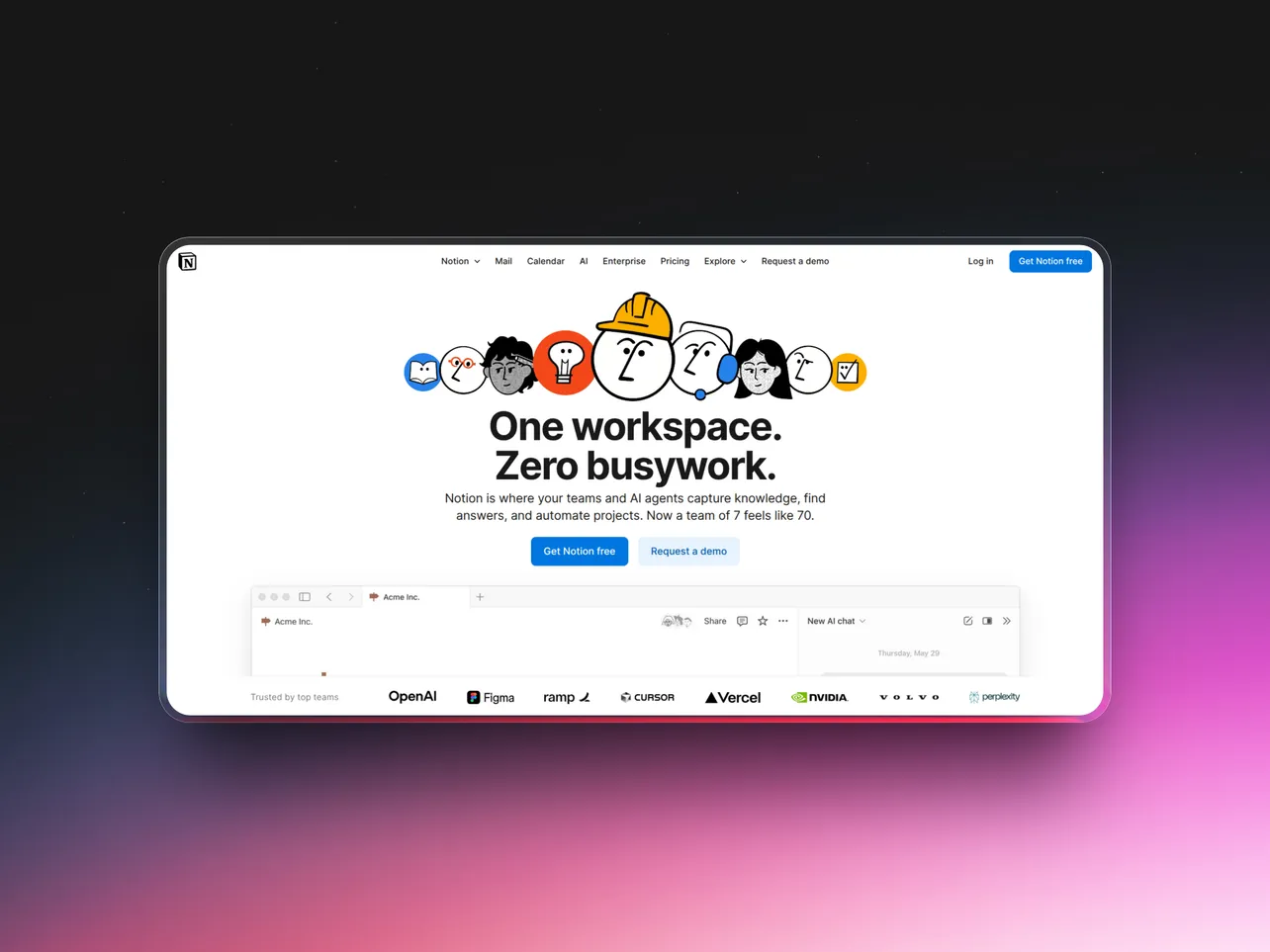
You can read more about how Notion transformed from a struggling tool to a workspace powerhouse and the strategic decisions that made the difference.
The lesson? Positioning matters more than you think. You need to own your category, even if that category is messy or unconventional.
Clarity wins customers.
What This Means for You
If you're building something right now and it feels impossibly hard, that's normal. The companies you admire all went through their own near-death experiences - they just don't always talk about them.
Here's what Notion's story teaches us:
- Stay lean longer than feels comfortable. Burn rate kills more startups than bad ideas.
- Adapt quickly when the world changes. Stubbornness is not a virtue when the ground shifts beneath you.
- Fix your foundation before building higher. Technical and operational debt will catch up with you.
- Own your positioning, even if it's weird. Being clearly different beats being vaguely better.
The difference between Notion and the thousands of startups that didn't make it? They survived just long enough for things to click. They didn't give up during near-death experience one, two, three, or four.
So if you're in your own near-death moment right now, remember: every company that made it had to survive their version of this. The question isn't whether you'll face existential threats - it's whether you'll adapt fast enough to survive them.
Keep building. Keep adapting. Stay alive long enough to get lucky.
Because sometimes, that's all it takes.