

Web development just shifted in a big way.
Today, The Astro Technology Company announced it is joining Cloudflare. For developers, this secures the future of one of the fastest-growing frameworks on the market. For founders, the announcement offers a rare and honest look at the difficulty of monetizing open source software.
The News
Fred Schott, the creator of Astro, confirmed today that the entire team is moving to Cloudflare.
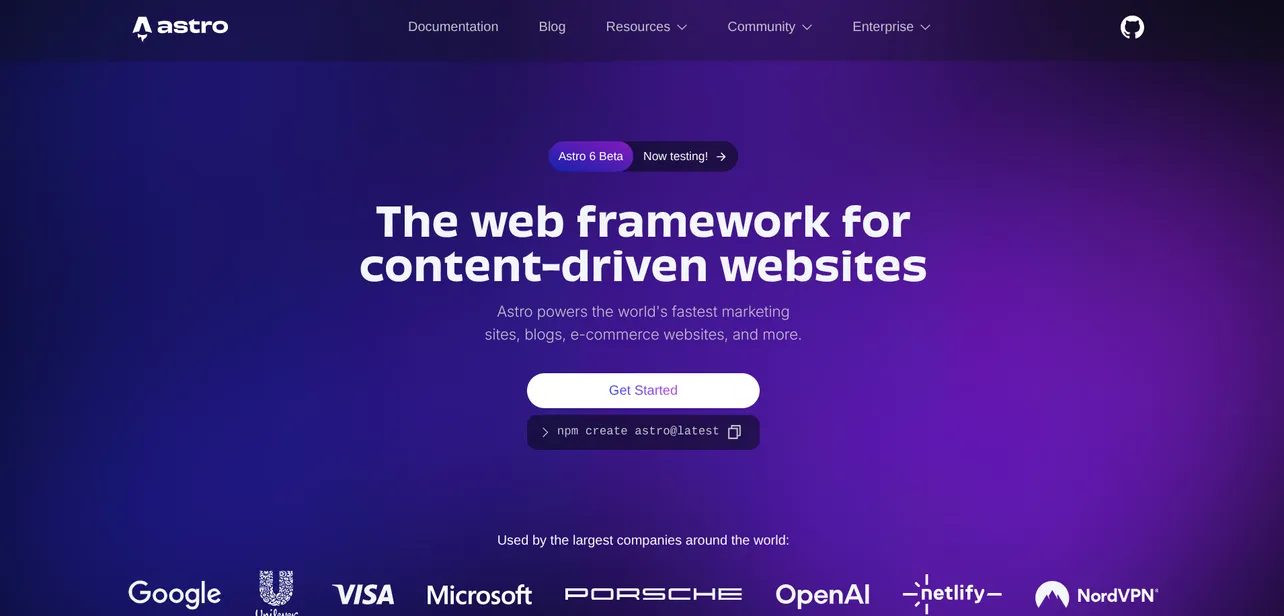
The adoption numbers for Astro have been staggering. It is downloaded nearly a million times a week and powers sites for giants like Google, Microsoft, and generic giants like Wix. Adoption is doubling every year.
With this acquisition, the team gets the resources to focus entirely on the product without the distraction of trying to build a business model around it.
The Founder's Dilemma
The most interesting part of Schott's announcement was his transparency about their business struggles.
Astro the framework was a massive success. It solved a real problem by prioritizing content-driven websites over complex, heavy web applications. But Astro the company had a harder time.
Schott admitted that their vision of building a business around "hosted primitives" (like databases or analytics) never found product-market fit. They tried to build paid add-ons, but users didn't bite. They considered pivoting to hosting, but realized they would be playing catch-up against massive incumbents.
It is a classic founder story. You can build a product that hundreds of thousands of people love, but turning that love into revenue is a completely different challenge.
What This Means for You
If you use Astro, you might be worried about lock-in. Cloudflare has a reputation for building walled gardens, but this deal seems different.
Schott was explicit about the terms:
- Astro stays open source: It remains MIT-licensed.
- Platform Agnostic: You can still deploy Astro sites anywhere, not just on Cloudflare.
- Open Governance: The roadmap remains public and community-driven.
This looks like a strategic play for Cloudflare to support the "content-driven" web rather than a simple cash grab. They provide the infrastructure, and now they are backing the framework that runs best on it.
The Verdict
This is a best-case scenario for an open source project that couldn't crack the monetization code.
Instead of slowly fading away or forcing paid features on a community that doesn't want them, Astro gets a stable home. The team gets to focus on shipping Astro 6 (which is right around the corner) and we get to keep using a great tool for free.