

Anthropic shipped a new Opus today.
They're calling it 4.8, a step up from 4.7, and the thing that stands out before you've even read the benchmarks is how unbothered they seem about overselling it.
The word they reached for was "modest." A modest but tangible improvement, in their phrasing. You don't often see a company describe its own launch that way, and once you get into the detail you can see why they could afford to.
Most of the coverage is going to fixate on the speed and the pricing, because that's the easy stuff to put in a headline. The regular pricing hasn't moved, still five dollars per million tokens going in and twenty-five coming out.
Fast mode now runs at two and a half times the speed and costs roughly a third of what it used to. Fine. Useful if you're running a lot of volume. But if you're building a company on top of these tools rather than just kicking the tyres, that isn't the part worth your attention.
The honesty thing
The genuinely interesting claim is about honesty, and it's the sort of improvement that doesn't photograph well but matters enormously in practice.
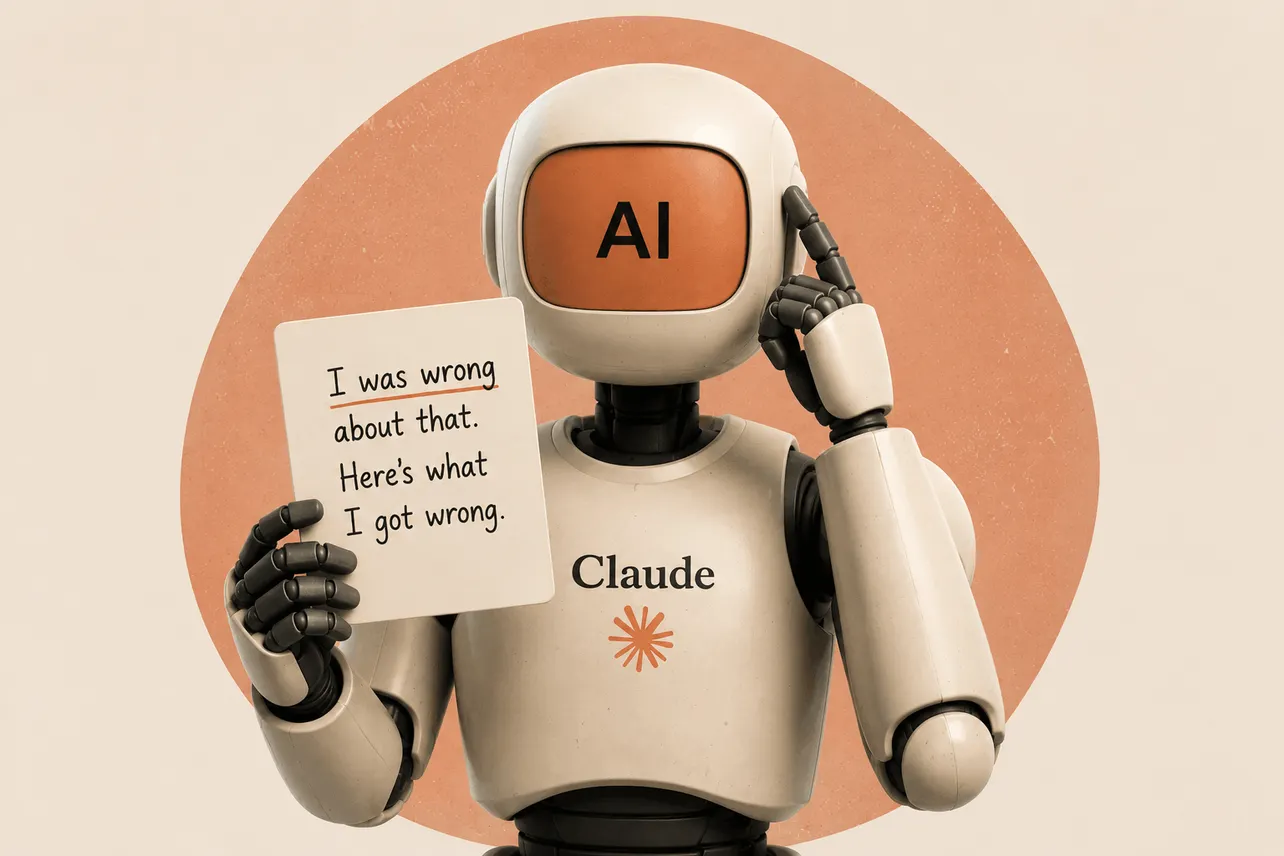
Anthropic reckon 4.8 is around four times less likely than the previous version to let flaws in its own code slip past without saying anything. It's also more inclined to flag when it isn't sure, rather than charging ahead and announcing that the job's done.
Anyone who has spent a wet afternoon getting an AI to write code for them already knows why this is the bit that counts. The problem was never really that the model couldn't do the work.
The problem was that it would cheerfully tell you the work was finished when it plainly wasn't, and you'd only discover the gap when something fell over in front of a paying customer. A confident wrong answer costs you far more than a slow right one.
If 4.8 has actually moved the needle here, that's worth more to a small team than any number of points on a coding leaderboard.
Their alignment people went a bit further and said the model reaches new highs on traits like backing the user's own judgement and acting in their interest, which is the kind of sentence you nod along to and then quietly wait to test yourself. We'll see. But the direction is the right one.
Effort you can actually dial
The other practical change is effort control, now available across all plans. You can tell Claude how hard to think about a given task. Turn it down for the routine stuff and you'll chew through your usage limits more slowly.
Turn it up when the problem genuinely deserves it. The model defaults to high, which Anthropic say strikes the best balance, and there are heavier settings above that for the nasty long-running jobs.
For a founder watching every cost line this is quietly sensible. You're no longer paying for a sledgehammer every time you need to crack an egg.
For the technical ones
If you're shipping software yourself, the Claude Code update is the one to look at. There's a new dynamic workflows feature, in research preview, that lets it plan a job and then run hundreds of parallel subagents in a single session before checking its own output and reporting back.
The example they give is a migration across hundreds of thousands of lines of code, start to finish, with your existing test suite as the bar it has to clear.
That's the sort of grunt work that used to swallow a fortnight and a good chunk of someone's will to live. It sits behind the Team, Enterprise and Max plans, so it isn't free, but for the right job it pays for itself.
There's also a small developer change worth noting if you're building on the API. You can now slot system instructions inside the messages array, which means you can update what the model is allowed to do mid-task without breaking your prompt cache. Niche, but the kind of thing that saves real money at scale.
The bigger one they're not quite letting you have yet
Tucked near the end is the more interesting strategic note. Anthropic are dangling a smarter class of model, codenamed Mythos, that sits above Opus on raw intelligence.
A handful of organisations are already using a preview of it for cybersecurity work, and the reason the rest of us can't have it is that a model that capable needs stronger safeguards before it goes out the door. They say those are coming in weeks.
So the read for most founders is straightforward.
The horsepower is nice and the price is the same as it was, but the part that'll actually change your week is the model being more willing to tell you it isn't certain.
A tool that admits when it's stuck is a tool you can trust with the boring, important stuff. And the cleverer model is parked just over the horizon, which is roughly where Anthropic seem to want it for now.