

Last updated: February 2026
You've built something.
A Notion template, a UI kit, an ebook, maybe even a little SaaS tool. Now you need somewhere to actually sell it. And if you've spent more than five minutes researching, you already know the landscape is a mess of affiliate-driven comparison posts that all say the same thing.
This guide is different. We've actually dug into the pricing, the gotchas, and the stuff that only becomes obvious after you've processed your first few hundred sales. We're comparing the three platforms that dominate the indie founder and creator space: Gumroad, Lemon Squeezy, and Payhip, plus three alternatives that are gaining serious traction.
Whether you're a solopreneur shipping your first digital product or an indie hacker looking to switch platforms, this is the breakdown you need.
TL;DR: The Quick Answer
If you just want the punchline before we get into the detail:
Just starting out and want zero friction? Gumroad. You'll pay more per sale, but you'll be live in ten minutes.
Selling SaaS or software and need tax compliance sorted? Lemon Squeezy. Its merchant of record model handles global VAT and sales tax so you don't have to.
Want the best value and don't mind a slightly less polished UI? Payhip. All features on every plan, and the cheapest option at scale.
Now let's get into why.
The Head-to-Head Comparison
| Gumroad | Lemon Squeezy | Payhip | |
|---|---|---|---|
| Monthly fee | None | None | Free / £29 / £99 |
| Transaction fee | 10% + $0.50 | 5% + $0.50 | 5% / 2% / 0% |
| Payment processing | Included in 10% | Included in 5% | Stripe/PayPal extra (~2.9% + 30p) |
| Merchant of Record | Yes (since 2024) | Yes | No |
| Tax handling | Global (auto) | Global (auto) | EU & UK VAT only |
| Payouts | Weekly (Fridays) | Twice monthly | Instant |
| API | Yes | Yes | No |
| Affiliate system | Yes | Yes (3% extra fee) | Yes |
| Best for | Beginners, quick launches | SaaS, software, dev tools | Budget-conscious creators |
Gumroad: The OG That's Getting Expensive
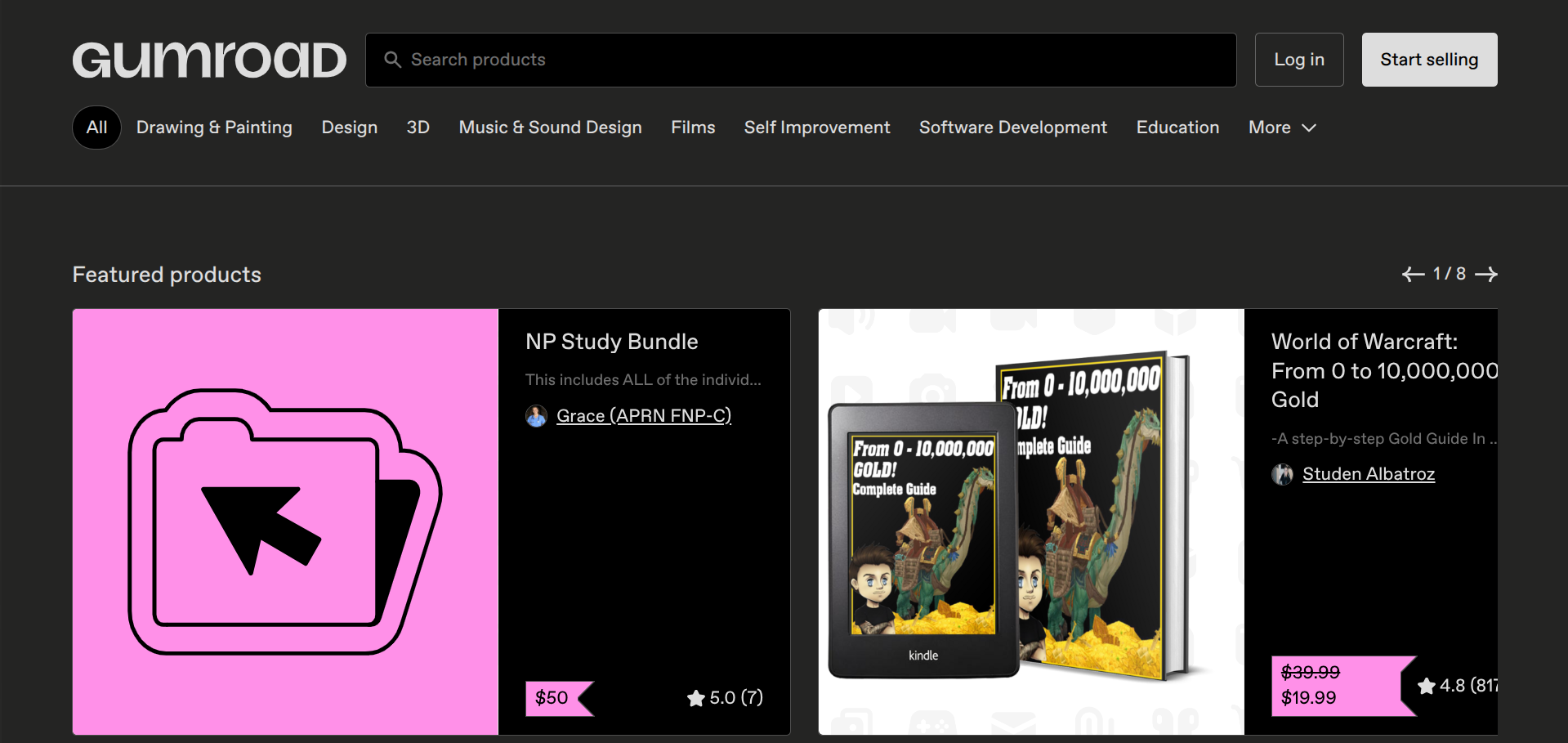
Gumroad has been around since 2011 and remains the default recommendation for anyone selling their first digital product. The setup is genuinely effortless. You can go from zero to a live product page in about ten minutes.
Pricing
Gumroad charges a flat 10% + $0.50 per transaction on direct sales. If a customer finds you through the Gumroad Discover marketplace, that jumps to 30%. There's no monthly fee, which sounds great until you do the maths.
On a $50 product, you're losing $5.50 per sale just in platform fees. Sell 100 of those and that's $550 going to Gumroad. The $0.50 per-transaction charge also disproportionately hurts low-priced products. Selling a $5 template means Gumroad takes $1 (20%) before you've even seen a penny.
What's Good
Speed to launch is unmatched. The checkout experience is clean and well-known. Since January 2025, Gumroad has handled global tax obligations as a merchant of record, which removes a huge headache.
It also includes built-in email marketing, an affiliate system, and a simple course builder.
What's Not
The fees are the elephant in the room. At scale, you're paying significantly more than on any competing platform. Storefront customisation is limited. Multiple users have reported slow or unresponsive customer support, and there are recurring complaints about delayed payouts and opaque account suspensions.
If you ever leave, your recurring subscriptions don't transfer. You lose those customers.
The Verdict
Gumroad is still the fastest way to go from idea to first sale. But if you're doing any kind of volume, you're leaving serious money on the table.
Lemon Squeezy: The Developer's Favourite
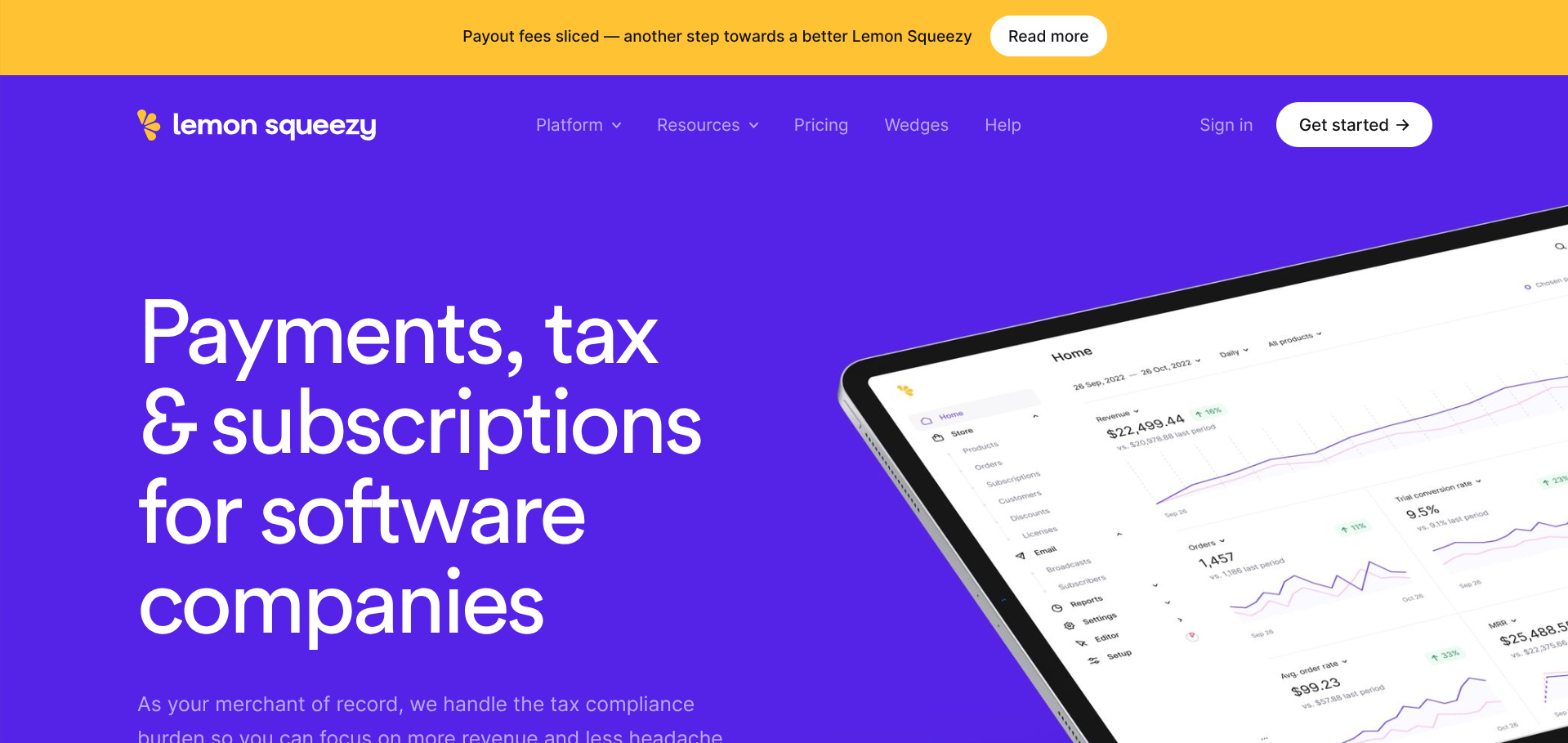
Lemon Squeezy launched in 2022 and was acquired by Stripe in 2024, which instantly gave it a credibility boost. It's positioned squarely at SaaS founders and software developers, with features like license key management, usage-based billing, and a proper API.
Pricing
The base rate is 5% + $0.50 per transaction with no monthly fee. International transactions (outside the US) incur an additional 1.5%. If you use the affiliate programme, there's an extra 3% fee on referred sales. Recovered payments from abandoned cart emails add 5%.
That headline 5% is half what Gumroad charges, but the extras can creep up. If you're a UK-based founder selling globally, almost all your transactions will attract that 1.5% surcharge, bringing your effective rate closer to 7%.
What's Good
The merchant of record model is the real draw. Lemon Squeezy handles VAT, GST, and sales tax in 100+ countries. You don't need to register for VAT in individual EU member states or figure out US state sales tax.
For anyone selling software or SaaS, this alone can save thousands in accounting fees and compliance headaches. The built-in email marketing, AI fraud detection, and Stripe-backed payment infrastructure are all solid.
What's Not
Since the Stripe acquisition, there's been a noticeable dip in platform stability and support response times. Some users have reported checkout errors, missing payments in dashboards, and slow or absent customer service.
The platform is currently in a transition phase, migrating users to Stripe Managed Payments, and it's unclear exactly what the end state will look like. It's also worth noting that Lemon Squeezy processes everything in USD and charges additional fees for non-US transactions, making it less ideal for purely UK or European operations.
The Verdict
If you're selling software and need a proper merchant of record, Lemon Squeezy is hard to beat. But keep an eye on the transition to Stripe Managed Payments and factor in those non-US transaction fees.
Payhip: The Underrated All-Rounder
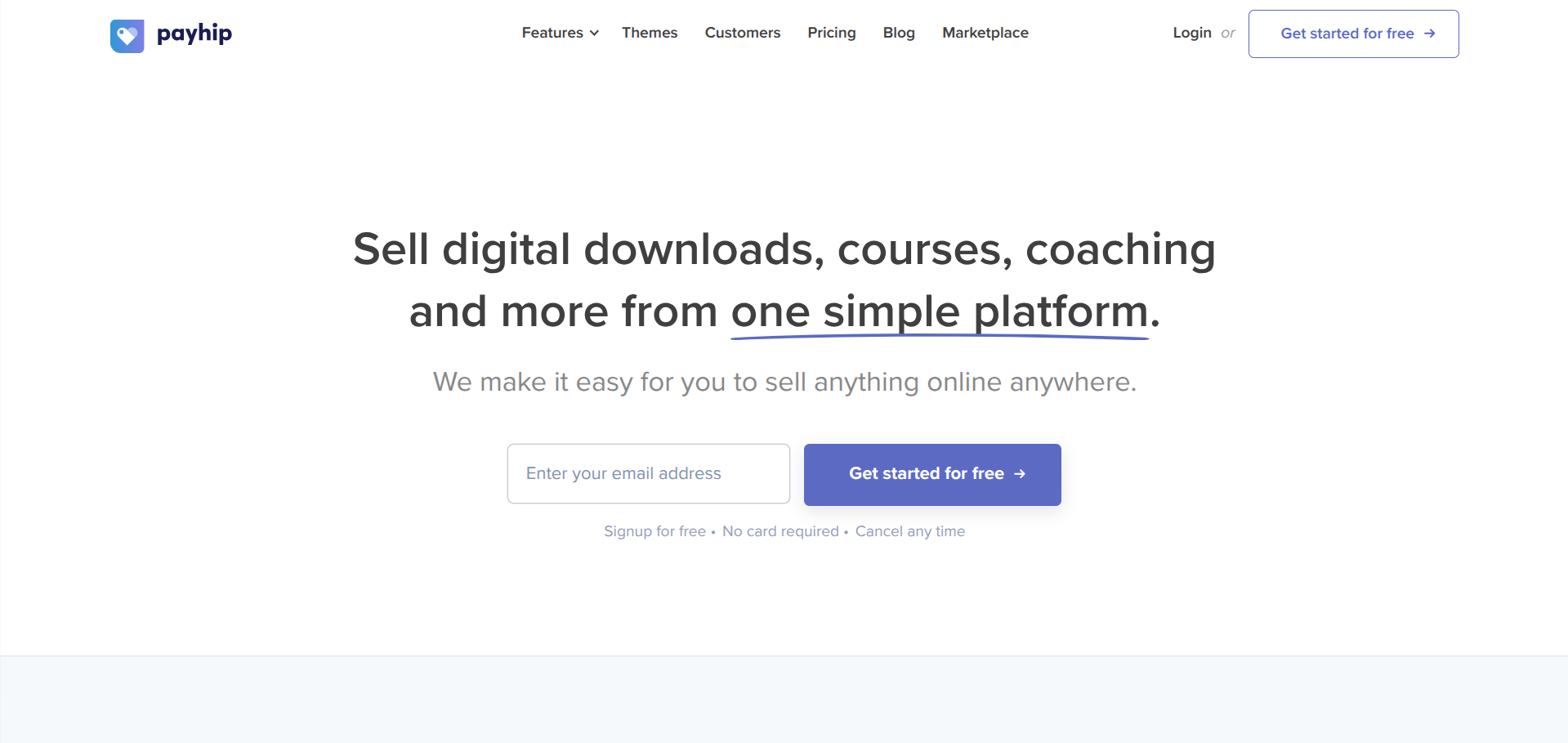
Payhip doesn't have the brand recognition of Gumroad or the developer cachet of Lemon Squeezy, but it's quietly become one of the best value platforms for selling digital products. It's straightforward, transparent, and offers every feature on every plan.
Pricing
Three plans, all with identical features:
Free Forever: $0/month, 5% transaction fee
Plus: $29/month, 2% transaction fee
Pro: $99/month, 0% transaction fee
Crucially, Stripe and PayPal processing fees (around 2.9% + 30p) apply on top of all plans. This is the key difference from Gumroad and Lemon Squeezy, where processing fees are bundled in.
But the maths still works out in Payhip's favour at scale. If you're doing $5,000/month in revenue, the Pro plan costs you $99 plus roughly $145 in processing, about $244 total.
The same revenue on Gumroad would cost you around $550 in fees. That's $300/month you're saving. Enough to fund your next side project.
What's Good
The no-feature-gating approach is genuinely refreshing. Even on the free plan you get unlimited products, unlimited revenue, affiliate tools, coupon codes, a storefront builder, and a course builder. Payhip handles EU and UK VAT automatically. Payouts are instant.
You get paid the moment a transaction completes, which is a massive advantage over Gumroad's weekly schedule or Lemon Squeezy's twice-monthly payouts. Customer support consistently gets positive reviews.
What's Not
Payhip is not a merchant of record. It handles EU and UK VAT, but it won't manage US state sales tax or global tax obligations for you. You're on the hook for that. There's no API, which rules it out for developers wanting to build custom integrations.
The storefront is functional but basic compared to Shopify or even Gumroad. Analytics are minimal. And if you're selling internationally at any scale, you'll need to sort your own tax compliance outside the EU/UK.
The Verdict
For creators selling ebooks, templates, courses, or memberships primarily to UK and EU audiences, Payhip is the best bang for your buck. The Pro plan's 0% transaction fee is unbeatable at volume.
Real-World Cost Comparison
Theory is fine, but let's see what you actually pay. These estimates assume an average product price of $25 and factor in payment processing fees across all platforms.
| Monthly Revenue | Gumroad | Lemon Squeezy | Payhip Free | Payhip Pro |
|---|---|---|---|---|
| $500 | ~$55 | ~$30 | ~$40 | ~$114* |
| $2,000 | ~$210 | ~$110 | ~$158 | ~$157 |
| $5,000 | ~$525 | ~$275 | ~$395 | ~$244 |
| $10,000 | ~$1,050 | ~$550 | ~$790 | ~$389 |
*Payhip Pro's $99 monthly fee makes it the most expensive option at low revenue, but it becomes the cheapest above ~$2,000/month.
The pattern is clear: Gumroad is the most expensive at every revenue level. Lemon Squeezy sits in the middle. And Payhip Pro becomes the outright winner once you're earning more than roughly $2,000 per month.
Three Alternatives Worth Knowing About
Polar
Polar is an open-source, developer-focused platform that's gaining traction fast among indie hackers. It acts as a merchant of record and charges 4% + $0.40 per transaction, making it the cheapest MoR option on the market.
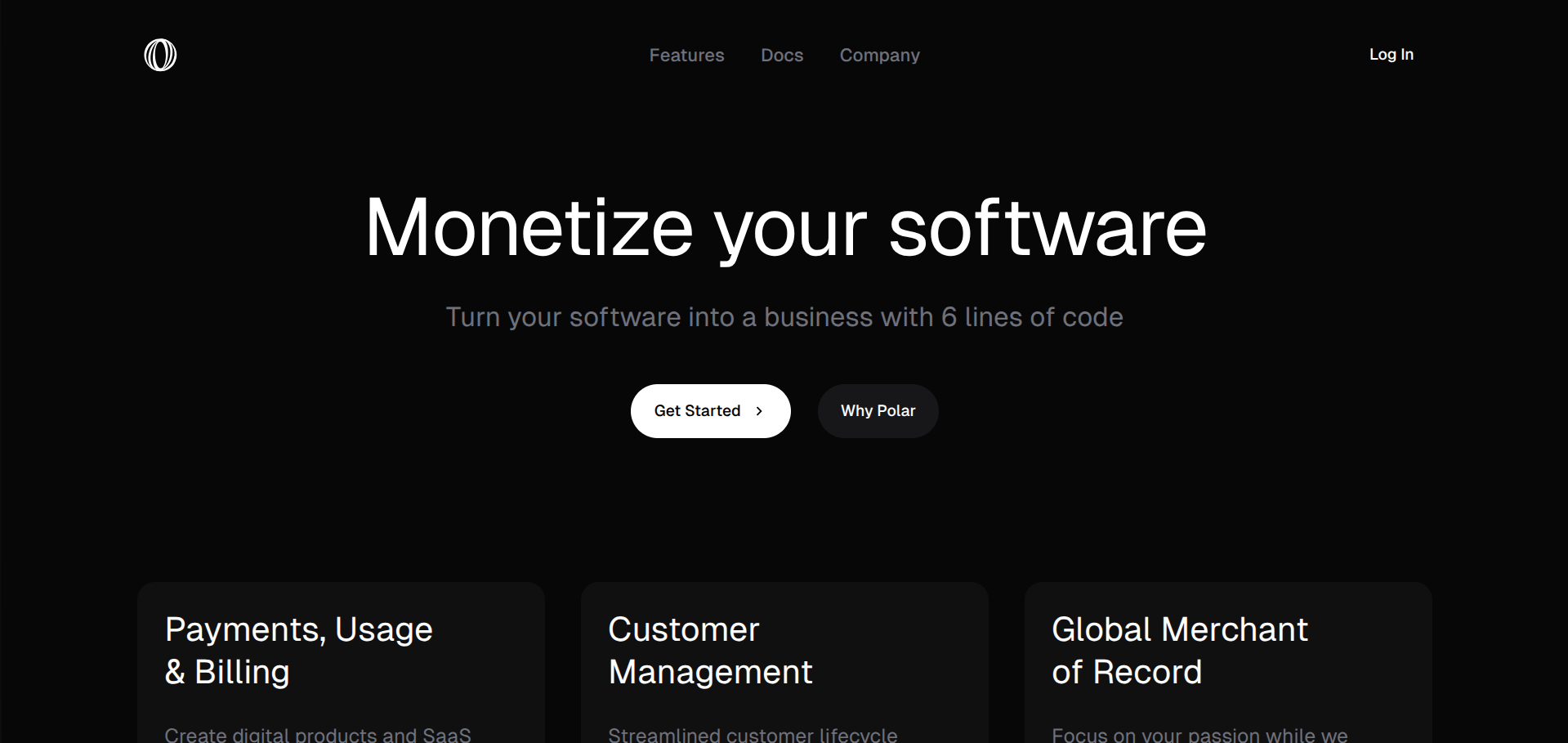
It's particularly strong for SaaS with features like usage-based billing, license keys, and GitHub integration. The downside is it's still relatively new and the feature set is evolving. Payment methods are currently limited to cards via Stripe.
Whop
Whop has exploded in popularity, particularly with Gen Z creators. It's free to use with a 3% commission on sales involving automations (like Discord or Telegram access) plus standard processing fees.

It's more of a community-commerce hybrid. Great for selling memberships, courses, and gated content. Less suited for straightforward digital downloads or SaaS. Think of it as the platform for creators who are building audiences, not just selling files.
Stripe Direct (With a Checkout Page Builder)
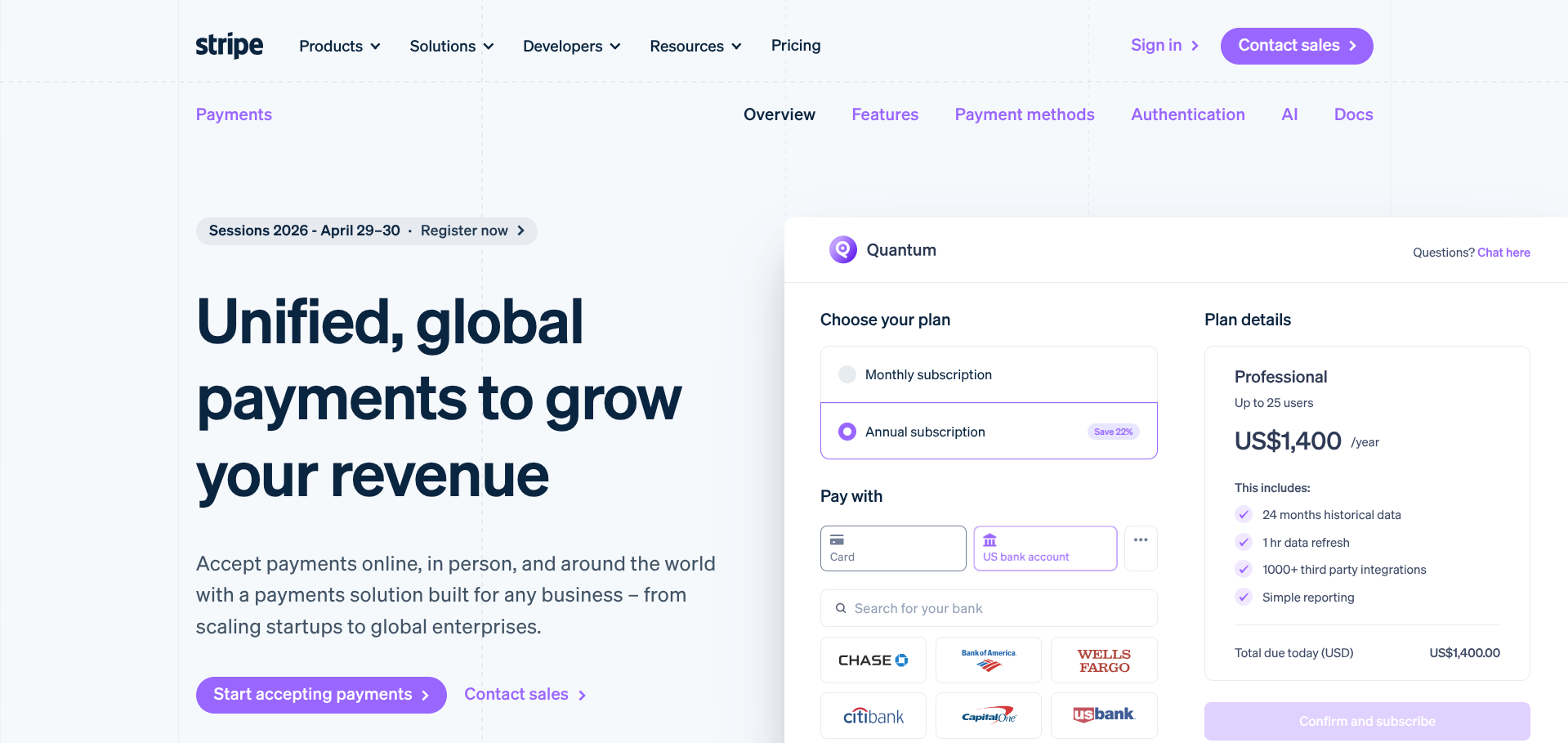
If you're technical enough to wire up Stripe yourself (or use a checkout tool like ThriveCart or even a simple Stripe Payment Link), you'll pay the lowest possible fees: just Stripe's 2.9% + 30p per transaction with zero platform cut.
The trade-off is you're handling tax compliance, file delivery, and customer management yourself. For a solo founder selling one or two products, this is overkill. But if you're building a proper product business, owning the stack gives you maximum control and the best margins.
So, Which One Should You Actually Pick?
Forget the feature matrices for a second. Here's how to think about this based on where you actually are:
You're pre-revenue and just want to test if people will pay: Use Gumroad or Payhip Free. Zero monthly costs, and you're live in minutes. Don't overthink it.
You're making $1,000 to $5,000/month and want to keep more of it: Switch to Payhip Plus or Pro. The maths become very compelling at this range, especially if your audience is primarily UK and EU.
You're selling SaaS or software globally: Lemon Squeezy or Polar. The merchant of record model isn't a nice-to-have. It's a necessity if you don't want to deal with tax authorities in 30 countries. Polar is cheaper; Lemon Squeezy is more mature.
You're building a community-driven business: Whop. It's built for this exact use case.
You're doing $10,000+/month and want maximum control: Go direct with Stripe and build (or buy) the infrastructure around it. At this level, the platform fee savings pay for everything else.
One Last Thing
Whichever platform you pick, remember that switching is a pain. Most of these platforms don't let you transfer recurring subscriptions if you leave. Your subscribers, your billing relationships: they stay behind. So choose with one eye on where you'll be in 12 months, not just where you are today.
And if you're reading this thinking "I'll just stay on the free plan forever", that's fine. But do yourself a favour and actually calculate your platform fees once you're earning. The number might surprise you enough to upgrade.
This post was originally published on wearefounders.uk. If you found it useful, share it with a fellow founder. We update our comparison articles regularly to keep the information accurate.