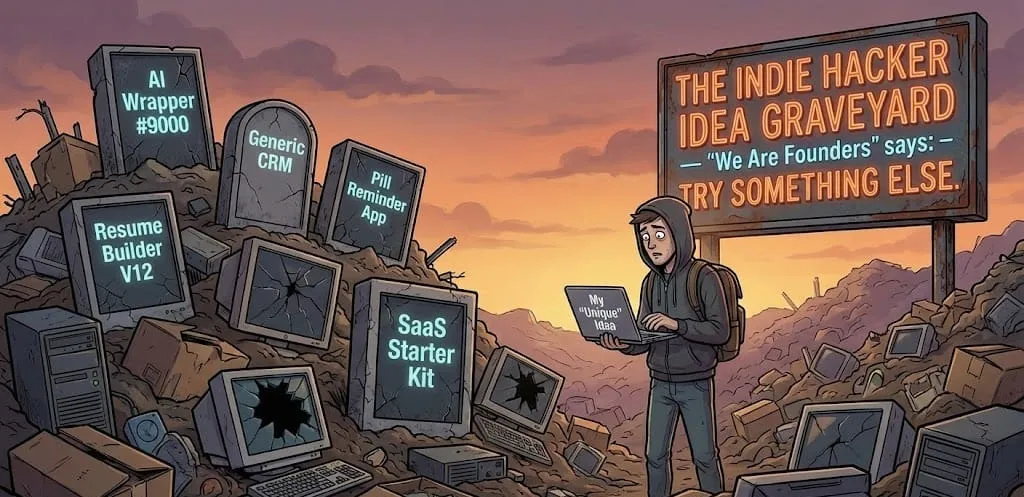
There is a specific kind of fever dream that happens when you spend too much time on r/SaaS. You start to think that the world’s biggest problems can all be solved by a Next.js boilerplate and a GPT-4o wrapper.
We’ve all seen the "Build a SaaS in 24 Hours" threads. They usually end with a product that looks exactly like the ten other products launched that same morning. It is a loop of developers building tools for other developers to build more tools.
If you want to actually build a business that people pay for (and not just a project that gathers dust on Product Hunt) you might want to put down the "validated idea" generator.
Here are ten things you should absolutely stop building in 2026.
1. AI Therapy Apps
This is the ultimate "just because you can, doesn't mean you should" project. Building a LLM-based therapist is a legal and ethical landmine. A hallucinating chatbot giving mental health advice to someone in a crisis isn't a "disruptive startup." It's a lawsuit waiting to happen. Plus, therapy is built on human connection, not a token-per-second output.
2. Reddit "Insight" Finders
These tools promise to scan subreddits to find "pain points" you can solve. The irony? If everyone uses the same scraper to find the same "problems," you all end up building the same "solution." Real insights come from actually talking to people, not from a Python script that flags every post containing the words "I hate when."
3. AI Business Idea Validators
If you need a bot to tell you if your business idea is good, the answer is probably already no. These tools usually just spit out a generic "This is a high-growth market!" response to keep you subscribed. The only real validator is a customer actually handing you their credit card.
4. Resume Builders
The PDF-generator market is officially at capacity. Between LinkedIn, Canva, and the 500 existing indie resume sites, we have enough ways to make a CV. Unless your tool can actually guarantee a job at Google, you’re just building a feature that people use once every two years. That is a churn rate that will keep you up at night.
5. Generic "SaaS Starter Kits"
Every dev who finishes one project suddenly thinks they are the next "ShipFast." We have enough $150 boilerplates that combine Stripe, Tailwind, and Supabase. Most of these creators spend more time marketing the starter kit than actually using it to build anything substantial.
6. Personal Finance Dashboards
Everyone thinks they can fix the "Mint is dead" hole in the market. Then they see the cost of a Plaid subscription and realize that bank APIs break every time a bank changes its font. You will spend 90% of your life fixing broken connections and 10% wondering why you didn't just use Excel.
7. AI Writing "Assistants"
If your product is just a text box that calls an OpenAI API to "make this email more professional," you are competing with a button that is already inside Gmail. Apple, Google, and Microsoft have baked this into the OS level. You cannot win a war against a native "Compose" button.
8. Habit Trackers with "Streaks"
Checking a box because you drank water or went for a run is a hobby, not a business. There are thousands of free versions on the App Store. To compete, you’d need a marketing budget that would make Nike sweat. Most indie versions become ghost towns the moment the creator stops posting about it on X.
9. Keyword Research "Wrappers"
Paying for a Semrush API to show the same data in a slightly different purple dashboard isn't innovation. Professional SEOs already have their tools, and beginners use the free stuff. You are essentially a middleman in a market that is rapidly being disrupted by AI-driven search anyway.
10. Simple Discord or Slack Bots
Unless you are solving a massive enterprise security issue, people expect bots to be free. Most "fun" or "utility" bots are features that Discord eventually builds into the platform for free. It’s a great way to learn how to code, but a terrible way to try and pay your mortgage.